Real Time Battle Management in Modern Warfare
Real time battle management is quietly reshaping how wars are fought by turning raw satellite data into instant battlefield decisions that save time, resources, and lives.
Table of Contents
ToggleReal Time Battle Management in Modern Warfare
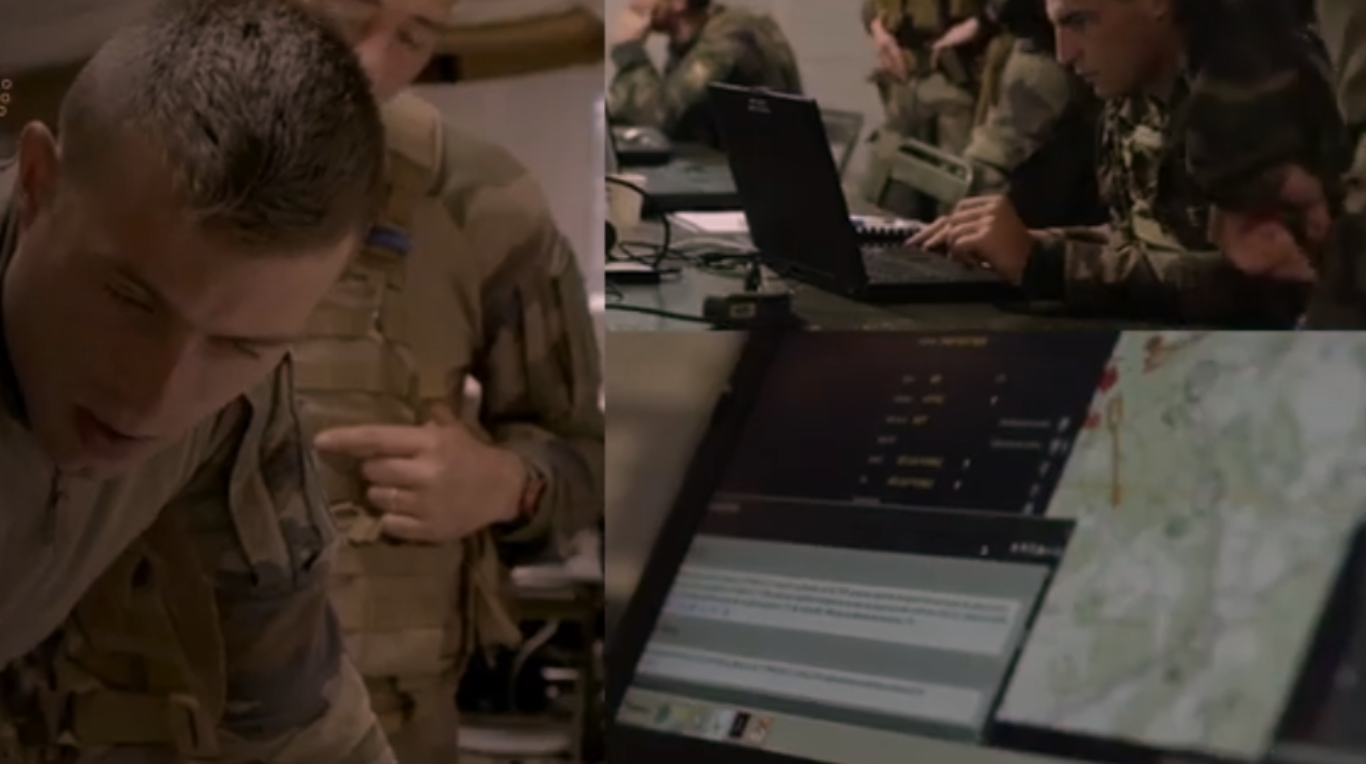
If you step into a modern command center today, you will notice something very different from what existed even a decade ago. Screens are alive with movement. Data flows continuously. Decisions are no longer delayed. This is where real time battle management begins to show its true value.
Let me break this down in the clearest and simplest way possible.
Real time battle management is the ability to take information from satellites, drones, sensors, and troops on the ground and turn it into immediate action. Instead of waiting for reports to travel through layers of command, everything happens almost instantly. The battlefield becomes a connected system rather than scattered units.
From my perspective, this is not just a technological upgrade. It is a complete shift in how military thinking works. Speed now matters more than size. Accuracy matters more than volume.
How Satellite Feeds Power the Battlefield
Satellites play a central role in this transformation. They are always watching, always collecting data. Weather conditions, enemy movement, terrain changes, communication signals, everything is captured.
In older systems, this data would take time to process. By the time it reached decision makers, the situation had already changed. That delay could cost lives.
Now, with real time battle management, satellite feeds are directly linked to command systems. A movement detected in one region can instantly trigger a response somewhere else. This level of coordination was once impossible.
I have seen examples where disaster response teams use similar systems. Flood monitoring satellites detect rising water levels, and rescue teams are deployed within minutes. The same logic applies to the battlefield, only the stakes are much higher.
The Role of Artificial Intelligence in RTBM
Artificial intelligence acts like the brain behind real time battle management. It filters massive amounts of data and highlights what actually matters.
Without AI, commanders would be overwhelmed. Imagine trying to analyze thousands of signals at once. It is not humanly possible.
AI simplifies this. It identifies threats, predicts patterns, and even suggests actions. But here is where I draw a careful line. AI should assist decisions, not replace them. Human judgment still matters, especially in complex situations where ethics and consequences are involved.
In my opinion, the best systems are those where humans and AI work together. Machines provide speed. Humans provide understanding.
Real World Impact on Military Operations
The impact of real time battle management is already visible. Military operations have become faster, more precise, and less dependent on guesswork.
Consider a situation where a moving target is detected by a satellite. In the past, this information might reach the ground unit too late. Now, the same data can be shared instantly, allowing immediate action.
This reduces uncertainty. It also reduces unnecessary risk. Troops are better informed, and decisions are based on real evidence rather than assumptions.
One practical example comes from joint military exercises where multiple units operate together. Real time systems allow air, land, and sea forces to coordinate seamlessly. Everyone sees the same data at the same time.
Space Militarization vs Global Treaties Reality
Challenges That Cannot Be Ignored
Despite its advantages, real time battle management is not perfect. There are serious challenges that need attention.
First, there is the issue of data overload. Even with AI, too much information can become confusing if not handled properly.
Second, cybersecurity is a major concern. If these systems are hacked or disrupted, the consequences could be severe. A false signal or delayed data stream could lead to wrong decisions.
Third, there is the cost. Building and maintaining such advanced systems requires significant investment. Not every country can afford it.
From my perspective, ignoring these challenges would be a mistake. Technology should be strong, but it should also be secure and reliable.
Practical Solutions for Effective Implementation
There are ways to make real time battle management more effective and practical.
Training is the first step. The value of technology depends on the people who use it.
Soldiers and commanders must understand how to interpret and act on real time data.
Second, systems should be designed with simplicity in mind. Complex interfaces slow down decision making. Clear and direct information is always better.
Third, strong cybersecurity measures must be built into every layer. Protection should not be an afterthought.
Finally, there should be constant testing. Real world simulations help identify weaknesses before they become real problems.
Why This Transformation Matters Today
Conflict is no longer confined to the physical domain.
It includes digital networks, communication systems, and even space itself.
Real time battle management connects all these elements into one system. It creates a level of awareness that was never possible before.
In my view, this technology will continue to evolve. Future systems may become even faster and more automated. But the fundamental concept will stay unchanged.
Better information leads to better decisions.
This is exactly the kind of insight that Worldstan brings forward. Not just describing technology, but explaining what it truly means in real situations.
Conclusion
Real time battle management is not just another military upgrade. It represents a fundamental change in how decisions are made under pressure. By combining satellite feeds, AI, and instant communication, it creates a battlefield that is more aware and more responsive than ever before.
At the same time, it brings responsibility. Systems must be secure, reliable, and used wisely. Technology alone cannot guarantee success. It must be guided by human judgment and clear strategy.
From where I stand, the future of warfare will depend heavily on how well these systems are developed and controlled. And if there is one thing that is clear, it is this. The side that understands information best will always have the advantage.
This perspective, carefully shaped and uniquely presented, reflects the kind of deep and original thinking that defines Worldstan.