

Edge Computing in Autonomous Weapons Explained

Edge Computing in Autonomous Weapons is changing the way military systems think and respond during combat. Instead of relying on distant networks, intelligent machines can analyze situations instantly where the action happens, creating a new era of faster, smarter, and more independent battlefield operations.
Edge Computing in Autonomous Weapons
Edge Computing in Autonomous Weapons is transforming modern warfare through real time AI processing, faster battlefield decisions, stronger resilience, and greater operational independence.
Modern warfare is evolving faster than many people realize. Military technology is no longer focused only on stronger vehicles, larger weapons, or more advanced aircraft. Today, the greatest advantage often comes from the ability to collect information, understand it immediately, and make accurate decisions within seconds. This is exactly where Edge Computing in Autonomous Weapons has become one of the most important developments in defense technology.
Autonomous military platforms are becoming increasingly intelligent. Drones can patrol large areas without constant human guidance. Ground robots can travel across dangerous terrain. Missile systems can adjust their flight path during complex missions. Behind many of these capabilities is the ability to process data locally instead of depending on distant command centers.
In my opinion, this technology represents one of the biggest changes in military operations since the introduction of precision guided weapons. Intelligence is no longer located only inside command headquarters. It now travels directly with the platform itself.
Understanding Edge Computing
Many people hear the term edge computing and assume it is highly technical. The basic idea is actually simple.
Edge computing means information is processed where it is collected instead of being sent to a remote server first. The “edge” refers to the location closest to the source of the data.
For military equipment, this edge could be a drone flying above a battlefield, a robotic ground vehicle moving through urban streets, a naval vessel crossing contested waters, or a missile traveling toward its target.
Instead of waiting for communication with satellites or cloud systems, these platforms analyze incoming information immediately and decide the next action without unnecessary delays.
Let me explain this in the clearest, simplest terms.
Imagine a person driving through heavy traffic. If they stopped after every few meters to ask someone else what to do next, the journey would be slow and dangerous. Instead, they observe traffic signs, nearby vehicles, and road conditions before making instant decisions. Edge computing allows autonomous military systems to operate in a similar way by making decisions directly where events occur.
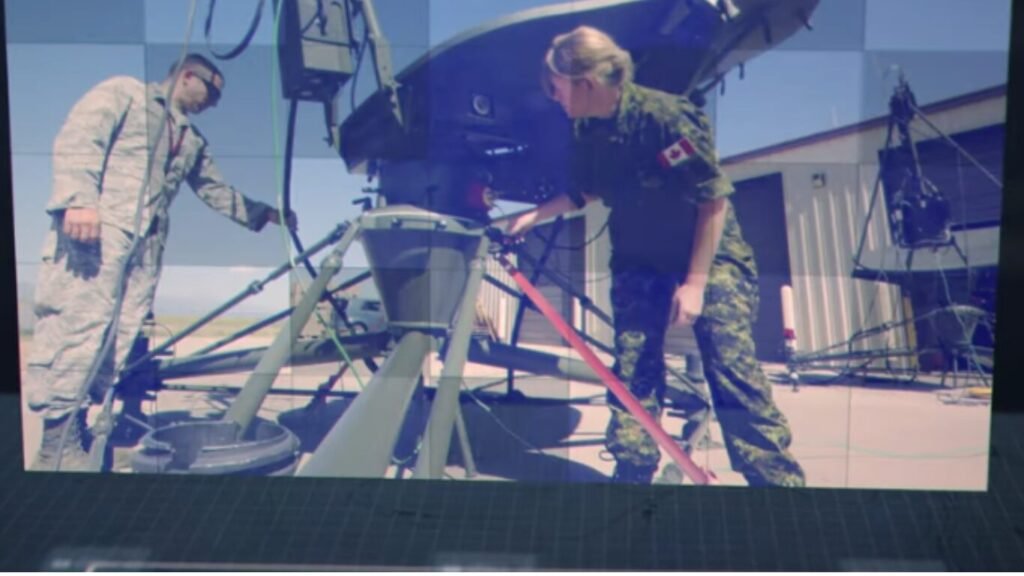
Why Traditional Military Networks Have Limitations
Edge Computing in Autonomous Weapons allows AI systems to process battlefield data directly on military platforms, enabling faster decisions, lower delays, improved reliability, and greater autonomy without depending on constant cloud or satellite connections.
For many years, military operations depended heavily on centralized computing.
Information collected by sensors was transmitted through communication networks to remote command centers. Powerful computers analyzed the data before sending instructions back to soldiers or autonomous platforms.
Although this approach remains valuable, it has several weaknesses during combat.
Communication signals may experience delays.
Enemy electronic warfare systems can jam transmissions.
Satellite communication may become unavailable.
Network congestion can slow important information.
Remote servers may become inaccessible during attacks.
Every second spent waiting for information creates additional operational risk.
Edge computing addresses these challenges by reducing dependence on continuous external communication.
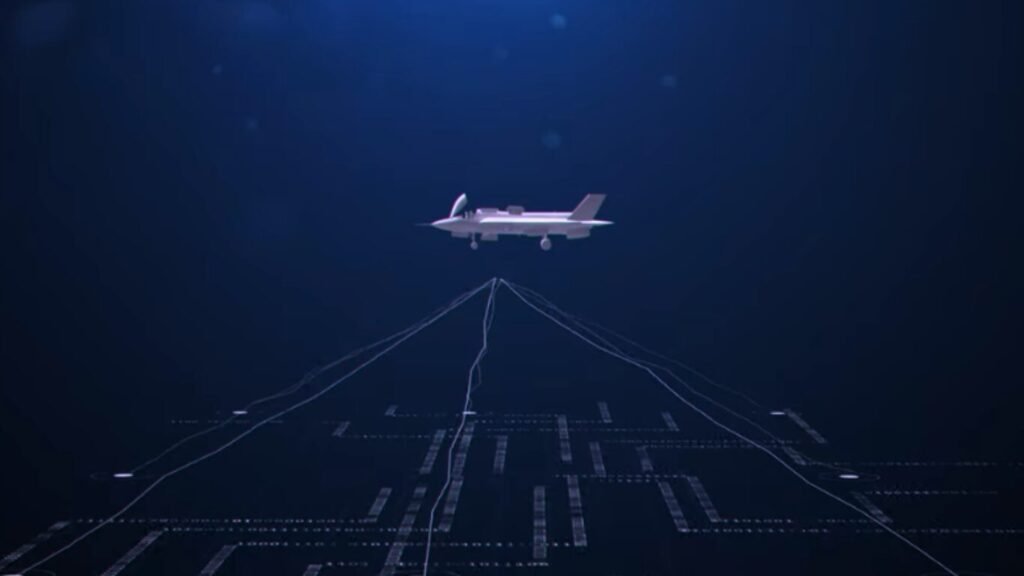
How Edge Computing Works Inside Autonomous Weapons
Every autonomous weapon system combines several technologies that work together.
The first layer consists of sensors. Cameras capture visual information. Radar detects moving objects. Infrared sensors identify heat signatures. Laser range finders measure distance. Acoustic sensors detect sound patterns. GPS receivers determine location whenever signals remain available.
These sensors continuously collect enormous amounts of environmental information.
The second layer contains artificial intelligence software.
AI compares sensor information with previously learned patterns. It recognizes vehicles, buildings, aircraft, ships, and human movement. It estimates threats, predicts behavior, and recommends possible actions.
The third layer is onboard computing hardware.
Specialized processors rapidly analyze incoming information without requiring constant communication with distant data centers.
Finally, the platform performs an appropriate response based on programmed operational rules.
Everything happens within fractions of a second.
Practical Example on the Battlefield
Consider an autonomous reconnaissance drone operating over hostile territory.
Its cameras detect movement near a damaged bridge.
Instead of transmitting every image to headquarters, the onboard computer immediately processes the video.
The AI identifies military vehicles instead of civilian traffic.
Heat sensors confirm active engines.
Radar verifies vehicle positions.
The onboard processor predicts possible movement routes.
The drone immediately changes its observation angle while maintaining a safe distance.
All of these decisions happen almost instantly.
If every step required communication with a remote command center, valuable seconds could be lost.
Those few seconds may determine mission success or failure.
Historical Development
| Year | Event | Description |
|---|---|---|
| 1960s | Early military automation | Defense organizations introduced computerized control systems for selected military functions. |
| 1990s | Digital battlefield expansion | Modern sensors and network based command systems improved battlefield awareness. |
| Early 2000s | Growth of unmanned systems | Military drones and robotic platforms became increasingly common during operations. |
| 2010s | AI integration | Artificial intelligence improved object recognition, navigation, and autonomous decision support. |
| 2020s | Edge computing adoption | Advanced onboard processors enabled real time battlefield intelligence without constant cloud dependence. |
Why Speed Matters in Modern Warfare
Military history repeatedly demonstrates that speed creates opportunity.
Earlier detection allows earlier decisions.
Earlier decisions allow faster responses.
Faster responses improve mission success while reducing operational risk.
Edge Computing in Autonomous Weapons dramatically reduces latency because information never has to travel long distances before processing begins.
Milliseconds matter when intercepting incoming missiles, avoiding enemy fire, identifying hidden threats, or protecting friendly forces.
I believe future military competition will increasingly depend on decision speed rather than simply weapon size.
Stronger Battlefield Resilience
Combat environments are unpredictable.
Communication towers may be destroyed.
Satellites may experience interference.
Electronic warfare may disrupt radio frequencies.
Cloud infrastructure may become temporarily unavailable.
Autonomous systems equipped with onboard intelligence continue operating despite these challenges.
This operational resilience gives military commanders greater flexibility during complex missions.
Instead of stopping whenever communication disappears, autonomous platforms continue accomplishing assigned objectives within their programmed operational limits.
Reduced Dependence on Cloud Computing
Cloud computing remains valuable for training AI models, storing large databases, and conducting strategic analysis.
However, combat situations demand immediate responses.
Sending massive amounts of sensor information back and forth consumes bandwidth while increasing delays.
Edge computing minimizes unnecessary data transmission.
Only essential information may be transmitted to command centers, reducing communication requirements while improving efficiency.
This method lowers network congestion, making communications more efficient during major military missions.
AI Makes Edge Computing Smarter
Artificial intelligence provides the decision making capability behind modern autonomous platforms.
Machine learning algorithms recognize patterns learned during extensive training.
Computer vision identifies vehicles, aircraft, buildings, equipment, and terrain.
Sensor fusion combines multiple information sources into one accurate operational picture.
Predictive algorithms estimate future movements.
Navigation systems safely guide autonomous platforms through changing environments.
Together, these AI technologies transform raw sensor information into useful battlefield intelligence.
Without AI, edge computing would simply process information faster.
With AI, it understands what the information actually means.
Military Applications
Edge Computing in Autonomous Weapons supports many different military missions.
Autonomous surveillance drones monitor borders for extended periods.
Ground robots inspect dangerous urban areas before soldiers enter.
Naval unmanned vessels patrol strategic waterways.
Missile defense systems detect incoming threats with extremely low response times.
Combat aircraft process sensor information during high speed operations.
Logistics vehicles navigate independently through contested regions.
Search and rescue robots locate survivors inside hazardous environments.
Each application benefits from immediate onboard intelligence.
Cybersecurity Challenges
Advanced technology also creates new security concerns.
Autonomous platforms process sensitive operational information directly on the device.
If attackers successfully compromise onboard systems, they could potentially influence decisions or collect valuable intelligence.
Military organizations therefore invest heavily in secure processors, encrypted communications, software validation, intrusion detection, and continuous cybersecurity monitoring.
Protecting distributed edge devices is more difficult than protecting centralized facilities because each deployed platform becomes an individual security target.
Continuous software testing remains essential.
Technical Limitations
Despite remarkable progress, edge computing still faces practical challenges.
Powerful processors generate heat.
Compact military platforms have limited space.
Battery powered systems require efficient energy consumption.
AI models demand considerable computing resources.
Software must remain reliable under harsh environmental conditions including dust, vibration, rain, snow, and extreme temperatures.
Engineers constantly balance computing performance, energy efficiency, weight, durability, and operational reliability.
Ethical Considerations
Technology alone cannot answer every question.
Autonomous weapons introduce important ethical discussions.
Should machines independently decide when force is appropriate?
How much human supervision should remain during combat?
Who becomes responsible if an autonomous system makes an incorrect decision?
How should international law adapt to increasingly intelligent military technologies?
These questions continue generating debate among governments, military organizations, researchers, legal experts, and international institutions.
From my perspective, maintaining meaningful human oversight remains essential regardless of technological progress.
Military effectiveness should never replace accountability.
Future Trends
The future of Edge Computing in Autonomous Weapons will likely involve even more advanced capabilities.
Next generation processors will become smaller and more powerful.
AI models will improve object recognition under poor weather and low visibility.
Collaborative autonomous platforms will securely exchange information with one another.
Advanced sensor fusion will provide richer battlefield awareness.
Energy efficient computing will extend operational endurance.
Quantum resistant cybersecurity techniques may strengthen military communications.
Intelligent swarms of autonomous systems could coordinate missions with minimal communication delays.
These developments have the potential to reshape military planning over the next decade.
Why This Technology Matters Beyond Defense
Many innovations developed for defense eventually benefit civilian industries.
Edge computing already supports autonomous vehicles, industrial automation, healthcare equipment, disaster response, environmental monitoring, agriculture, manufacturing, and smart transportation.
Research funded for military purposes often contributes to broader technological progress that improves daily life.
That is another reason why understanding this technology matters even for readers outside the defense community.
Edge Computing and Multi Domain Operations
Modern military operations are no longer limited to land, sea, or air. Today’s defense forces are expected to coordinate activities across space, cyberspace, and the electromagnetic spectrum at the same time. This approach is often called multi domain operations, and Edge Computing in Autonomous Weapons has become one of the technologies making it possible.
Imagine a surveillance drone flying over enemy territory while a naval vessel monitors nearby waters, satellites observe the region from orbit, and cyber defense teams protect communication networks. Every platform is collecting huge amounts of information. If all that data had to travel back to one central location before decisions were made, valuable time would be lost.
Edge computing solves this problem by allowing every platform to analyze its own information locally. Each system can make immediate decisions while still sharing important updates with commanders and nearby units. This creates a much faster and more flexible military network.
In my opinion, future conflicts will reward militaries that can connect thousands of intelligent systems into one coordinated force without depending entirely on centralized computing.
Sensor Fusion Creates Better Battlefield Awareness
No single sensor can provide a complete picture of the battlefield.
A camera may struggle in darkness.
Radar can detect movement but cannot always identify objects.
Infrared sensors work well at night but may produce confusing results in extremely hot environments.
Acoustic sensors detect sound but cannot determine every detail about the source.
This is where sensor fusion becomes valuable.
Edge Computing in Autonomous Weapons combines information from multiple sensors at the same time. Artificial intelligence compares all incoming data before creating a much more accurate understanding of the surrounding environment.
For example, an autonomous ground vehicle may receive information from its cameras, radar, infrared detector, and laser range finder simultaneously. Instead of relying on one sensor, the onboard computer combines every source into a single operational picture.
This significantly reduces uncertainty and improves decision making.
Operating During Electronic Warfare
Electronic warfare has become one of the most important parts of modern military strategy.
Enemy forces may attempt to block communication signals, interfere with navigation systems, or disrupt radio transmissions.
Traditional military platforms often experience reduced effectiveness when communication networks are interrupted.
Autonomous systems equipped with edge computing continue functioning because their intelligence remains onboard.
They do not need constant communication with remote computers to recognize threats or navigate through complex environments.
This ability provides a major operational advantage in contested environments where communication cannot always be guaranteed.
Military planners increasingly recognize that communication independence is becoming almost as important as firepower itself.
Faster Target Recognition
AI excels at detecting patterns in data much faster than the human brain can.
Military AI systems can analyze thousands of visual features within milliseconds.
They compare shapes, movement, thermal signatures, radar reflections, and environmental conditions before estimating what an object might be.
Edge Computing in Autonomous Weapons allows this recognition process to happen immediately after sensor data is collected.
For example, an autonomous aerial vehicle may detect several moving objects below.
The onboard AI quickly separates civilian vehicles from military equipment.
It estimates direction of travel.
It predicts future movement.
It alerts commanders if necessary while continuing its assigned mission.
All these actions occur almost instantly because the processing happens directly inside the platform.
Navigation Without Constant GPS
Many people assume autonomous military systems always depend on GPS.
In reality, GPS signals can become unavailable during conflict.
Military engineers therefore combine several navigation technologies.
Edge computing helps autonomous platforms analyze information from onboard cameras, inertial navigation systems, terrain maps, laser scanners, and environmental sensors.
Artificial intelligence compares this information with previously stored maps to estimate location even when satellite navigation becomes unreliable.
This capability improves operational continuity during difficult missions.
Energy Efficiency Remains Important
Advanced computing requires electrical power.
Military drones have limited battery capacity.
Robotic vehicles carry finite fuel supplies.
Missiles operate within strict weight limitations.
Every processor, sensor, and communication device consumes energy.
Engineers therefore spend considerable effort developing efficient AI models that deliver excellent performance while using less power.
Specialized processors designed specifically for AI calculations have become increasingly important.
These processors perform billions of calculations every second while consuming much less energy than traditional computer hardware.
Efficient computing allows autonomous platforms to remain operational for longer periods.
Heat Management Challenges
Powerful processors generate heat.
Inside military equipment, excessive temperatures can reduce performance or damage sensitive electronics.
This creates another engineering challenge.
Autonomous platforms require advanced cooling systems capable of maintaining safe operating temperatures without adding unnecessary weight.
Some military platforms use passive cooling techniques.
Others rely on liquid cooling or carefully designed airflow systems.
As processors become more powerful, thermal management continues to receive significant attention from defense engineers.
Machine Learning Improves Over Time
Artificial intelligence becomes more capable through continuous learning during development.
Before deployment, engineers train machine learning models using enormous collections of images, sensor recordings, battlefield simulations, and operational scenarios.
The AI gradually learns how to recognize military vehicles, aircraft, ships, buildings, equipment, and environmental conditions.
Once deployed, most military systems operate using carefully validated models instead of learning independently during missions.
This approach improves safety while maintaining predictable behavior.
Updated models can later be installed after extensive testing and evaluation.
Swarm Intelligence and Cooperative Operations
One exciting area of defense research involves autonomous swarms.
Instead of operating individually, dozens or even hundreds of intelligent platforms cooperate toward shared objectives.
Each drone or robotic vehicle processes its own information using edge computing.
They exchange only essential updates with nearby teammates.
If one platform identifies a threat, surrounding systems immediately receive that information and adjust their own behavior.
This distributed approach creates remarkable flexibility.
Even if several platforms become unavailable, the remaining systems continue performing their mission.
Swarm technology may eventually support reconnaissance, logistics, search operations, disaster response, and defensive missions across very large operational areas.
Civilian Technologies Supporting Military Innovation
Many components used in military edge computing originated from commercial research.
Modern smartphone chips showed that high-performance computing can operate efficiently within compact hardware.
Autonomous vehicle research accelerated improvements in computer vision.
Industrial robotics contributed efficient control systems.
Cloud computing research helped improve AI development environments.
Defense organizations adapted many of these innovations to satisfy much stricter military requirements.
Sharing ideas between these fields keeps driving innovation across civilian and military industries.
Human Operators Still Matter
Although autonomous systems continue becoming more capable, human expertise remains essential.
Military commanders establish mission objectives.
Engineers validate AI software before deployment.
Operators supervise autonomous activities.
Analysts interpret complex intelligence.
Legal experts ensure compliance with international law.
Strategic decisions remain firmly connected to human judgment.
From my perspective, technology should strengthen military decision making rather than replace experienced professionals entirely.
Global Competition in Military Edge AI
Countries worldwide are increasing their spending on AI for defense and military applications.
Research programs focus on faster processors, secure communications, intelligent robotics, advanced sensors, and resilient battlefield networks.
The goal is not simply building smarter weapons.
It is creating military systems capable of operating effectively even in highly contested environments.
Countries that successfully combine artificial intelligence, secure computing, and advanced autonomous platforms are likely to gain important operational advantages in future defense planning.
However, technological leadership also carries greater responsibility to ensure these systems remain safe, accountable, and governed by appropriate legal and ethical standards.
The rapid growth of Edge Computing in Autonomous Weapons demonstrates that future military superiority will depend not only on advanced hardware but also on intelligent software capable of making reliable decisions exactly where they matter most.
Real World Military Applications
Edge Computing in Autonomous Weapons is no longer limited to research laboratories or technology demonstrations. It is gradually becoming part of modern defense planning because military organizations need systems that can react immediately under difficult conditions.
One important application is intelligence, surveillance, and reconnaissance missions. Autonomous drones equipped with onboard AI continuously monitor large areas while identifying unusual activity. Instead of transmitting every video frame to a command center, the onboard computer filters important information and sends only relevant intelligence. This reduces communication traffic while allowing commanders to receive critical updates much faster.
Ground combat vehicles also benefit from edge computing. These robotic platforms can move through dangerous streets, avoid obstacles, recognize possible threats, and assist soldiers without waiting for constant instructions. In high-risk environments, this reduces human exposure while improving operational awareness.
Naval operations provide another practical example. Autonomous surface vessels and underwater vehicles often operate far from communication infrastructure. Local processing allows them to analyze sonar signals, detect underwater obstacles, monitor suspicious activity, and continue their assigned missions even when communication becomes limited.
Air defense systems represent another area where speed is essential. Incoming missiles travel at extremely high speeds, leaving only seconds to respond. Edge computing enables defensive systems to process radar information instantly, helping improve interception timing and overall effectiveness.
AI Models Inside Military Platforms
Artificial intelligence is responsible for much more than recognizing objects.
Modern AI models analyze relationships between multiple sources of information before recommending appropriate actions.
Computer vision detects and classifies objects.
Deep learning identifies patterns that traditional software might overlook.
Predictive algorithms estimate future movement based on current observations.
Decision support systems prioritize potential threats.
Natural language processing can assist military analysts by organizing large volumes of operational reports.
Together, these technologies allow autonomous platforms to understand complex situations instead of simply reacting to individual sensor readings.
As AI models continue improving, military systems will become increasingly capable of handling difficult operational environments.
Importance of Reliable Data
Artificial intelligence depends entirely on data quality.
Poor quality information leads to poor decisions.
Military AI developers therefore spend enormous effort collecting accurate training datasets from realistic operational environments.
These datasets include vehicles viewed from different angles, changing weather conditions, day and night operations, smoke, dust, camouflage, damaged equipment, and complex terrain.
Training under diverse conditions helps AI recognize objects more accurately during real missions.
Continuous testing remains equally important.
Military organizations evaluate AI performance repeatedly before deployment to ensure consistent behavior under demanding operational conditions.
Communication Between Autonomous Systems
Although edge computing reduces dependence on centralized networks, communication still plays an important role.
Autonomous platforms often share essential information with nearby teammates.
For example, one reconnaissance drone may detect enemy movement beyond the view of another drone.
Instead of sending enormous amounts of raw video, it communicates only the most valuable intelligence.
Nearby systems immediately update their operational picture.
This selective communication improves coordination while reducing unnecessary network traffic.
It also helps preserve valuable communication bandwidth during large military operations.
Edge Computing Improves Mission Flexibility
Battlefields rarely follow predictable plans.
Unexpected obstacles appear.
Weather changes rapidly.
Enemy tactics evolve.
Communication networks become unreliable.
Autonomous systems equipped with onboard intelligence can adjust more effectively because they analyze changing conditions continuously.
Instead of stopping whenever unexpected situations occur, they evaluate available information and choose the safest operational response based on their programmed mission objectives.
This flexibility significantly improves mission success across uncertain environments.
Supporting Human Decision Makers
Edge Computing in Autonomous Weapons should not be viewed only as an automated decision maker.
It also serves as an intelligent assistant for military personnel.
Autonomous platforms rapidly organize information before presenting clear recommendations to commanders.
Instead of reviewing thousands of images manually, analysts receive prioritized intelligence.
Instead of searching through massive sensor logs, commanders receive summarized operational updates.
This reduces information overload while allowing experienced personnel to focus on strategic decisions rather than routine data processing.
I believe this partnership between human expertise and artificial intelligence represents the most practical direction for future military technology.
Challenges of AI Bias
Artificial intelligence learns from the information used during training.
If training data contains weaknesses or lacks diversity, AI performance may become less reliable.
For example, a system trained primarily under clear weather conditions may struggle during heavy snowfall or sandstorms.
Similarly, limited examples of damaged vehicles could reduce recognition accuracy after intense combat.
Military developers address these risks by expanding training datasets and performing extensive validation across many operational environments.
Continuous evaluation helps identify weaknesses before systems enter active service.
International Regulations and Policy Discussions
As autonomous military technology advances, governments and international organizations continue discussing appropriate regulations.
Several important issues remain under debate.
How much authority should autonomous systems receive during military operations?
What level of human supervision should always remain mandatory?
How should accountability be assigned if autonomous systems make incorrect decisions?
What international standards should govern future AI enabled defense technologies?
These discussions are becoming increasingly important because technological progress often moves faster than legal frameworks.
Finding the right balance between innovation, operational effectiveness, and responsible governance will remain a major challenge during the coming decades.
Research Driving Future Innovation
Universities, defense laboratories, and technology companies continue investing heavily in edge computing research.
Several research priorities receive particular attention.
Smaller and faster AI processors.
More energy efficient computing hardware.
Improved cybersecurity protection.
Advanced sensor fusion techniques.
Reliable operation under extreme environmental conditions.
Greater resistance to electronic warfare.
Improved collaboration between autonomous platforms.
Enhanced explainable AI capable of showing why specific recommendations were produced.
Each improvement increases confidence in future autonomous military systems while reducing operational risks.
Broader Impact Beyond Military Operations
The technologies developed for military edge computing frequently influence civilian industries.
Emergency response organizations use autonomous robots during natural disasters.
Firefighters deploy intelligent drones to monitor dangerous wildfires.
Healthcare providers benefit from portable medical devices capable of analyzing patient information locally.
Manufacturing companies improve factory automation through intelligent robotics.
Agricultural equipment processes field information directly while improving crop management.
Smart transportation systems analyze road conditions without depending entirely on cloud computing.
These examples demonstrate how defense research often contributes to broader technological progress across society.
Preparing for the Next Generation of Warfare
Military planners increasingly recognize that future conflicts will involve enormous amounts of information arriving from every direction.
Satellites will observe activity from space.
Autonomous aircraft will patrol the skies.
Ground robots will operate alongside soldiers.
Naval platforms will monitor strategic waterways.
Cyber defense systems will protect digital infrastructure.
Managing all this information requires intelligence distributed across every platform rather than concentrated inside a single command center.
Edge Computing in Autonomous Weapons provides exactly this capability by allowing every intelligent system to process information independently while remaining connected to the larger military network.
From my perspective, the future battlefield will belong to organizations capable of combining human judgment, artificial intelligence, secure communications, and decentralized computing into one coordinated defense ecosystem.
The Future of Edge Computing in Autonomous Weapons
The next decade is expected to bring remarkable progress in military technology. Artificial intelligence will continue becoming more accurate, processors will become faster and more energy efficient, and autonomous platforms will operate with greater independence than ever before.
Future military systems are likely to combine edge computing with advanced communication networks, intelligent sensors, satellite support, and secure battlefield data sharing. Instead of working as isolated machines, autonomous platforms will function as connected members of a highly coordinated defense network.
Engineers are also developing processors that can perform increasingly complex AI tasks while consuming less power. This is especially important for drones, robotic vehicles, and portable defense equipment where battery life and weight remain critical design considerations.
Another important trend is explainable AI. Rather than simply producing recommendations, future AI systems may also provide understandable explanations that help commanders see why a particular decision was suggested. This additional transparency can strengthen trust between military personnel and intelligent systems.
Cybersecurity will continue receiving major attention as well. Strong encryption, secure hardware, continuous software verification, and resilient communication protocols will become even more important as autonomous military platforms grow more capable.
In my opinion, the future will not belong to machines acting completely alone. Instead, the greatest success will come from combining advanced AI with experienced human leadership. Technology performs calculations at extraordinary speed, while people contribute judgment, responsibility, and strategic thinking that machines cannot fully replace.
Key Takeaways
Edge Computing in Autonomous Weapons represents much more than a faster computer installed inside military equipment. It changes the way autonomous systems collect information, process data, and respond to rapidly changing battlefield conditions.
By moving intelligence directly onto drones, robotic vehicles, naval platforms, missile systems, and other autonomous technologies, military organizations reduce communication delays while improving operational resilience. Faster processing enables quicker reactions, stronger situational awareness, and more dependable performance when communication networks become unavailable.
Artificial intelligence serves as the decision engine behind these systems. Advanced algorithms analyze sensor information, recognize potential threats, predict movement, support navigation, and assist commanders with valuable operational insights. Together, edge computing and AI create a new generation of intelligent defense capabilities that can operate effectively even in highly contested environments.
At the same time, this progress introduces important responsibilities. Engineers must continue improving cybersecurity, reliability, transparency, and energy efficiency. Governments and international organizations must develop policies that encourage innovation while ensuring responsible use of autonomous military technology.
Ultimately, technological superiority alone will never guarantee security. Responsible leadership, thoughtful planning, strong ethical standards, and continuous human oversight will remain essential as military AI continues to evolve.
Conclusion
Edge Computing in Autonomous Weapons is reshaping the future of modern defense by allowing intelligent military systems to process information where it is generated instead of depending entirely on distant computing infrastructure. This approach delivers faster responses, improved reliability, stronger operational flexibility, and greater resilience in demanding combat environments.
As artificial intelligence, advanced sensors, and onboard computing continue to evolve, autonomous military platforms will become even more capable of supporting complex missions across land, sea, air, space, and cyberspace. Their success, however, will depend not only on technological advancement but also on responsible development, secure implementation, and meaningful human oversight.
Understanding these innovations helps governments, researchers, defense professionals, students, and technology enthusiasts prepare for the changing landscape of military operations. Tomorrow’s battlefield will be shaped as much by human judgment in creating, deploying, and managing intelligent technologies as by the capabilities of the machines themselves.
Edge Computing in Autonomous Weapons is more than a technological milestone. It represents a new chapter in defense innovation where speed, intelligence, resilience, and accountability must advance together. Worldstan.com remains committed to delivering trusted, deeply researched, and easy-to-understand insights that help readers explore the technologies shaping tomorrow’s security landscape.
This original research and expert analysis has been created exclusively for worldstan.com, where complex defense technologies are transformed into practical knowledge for a global audience.