
Top Advantages of Artificial Intelligence Today
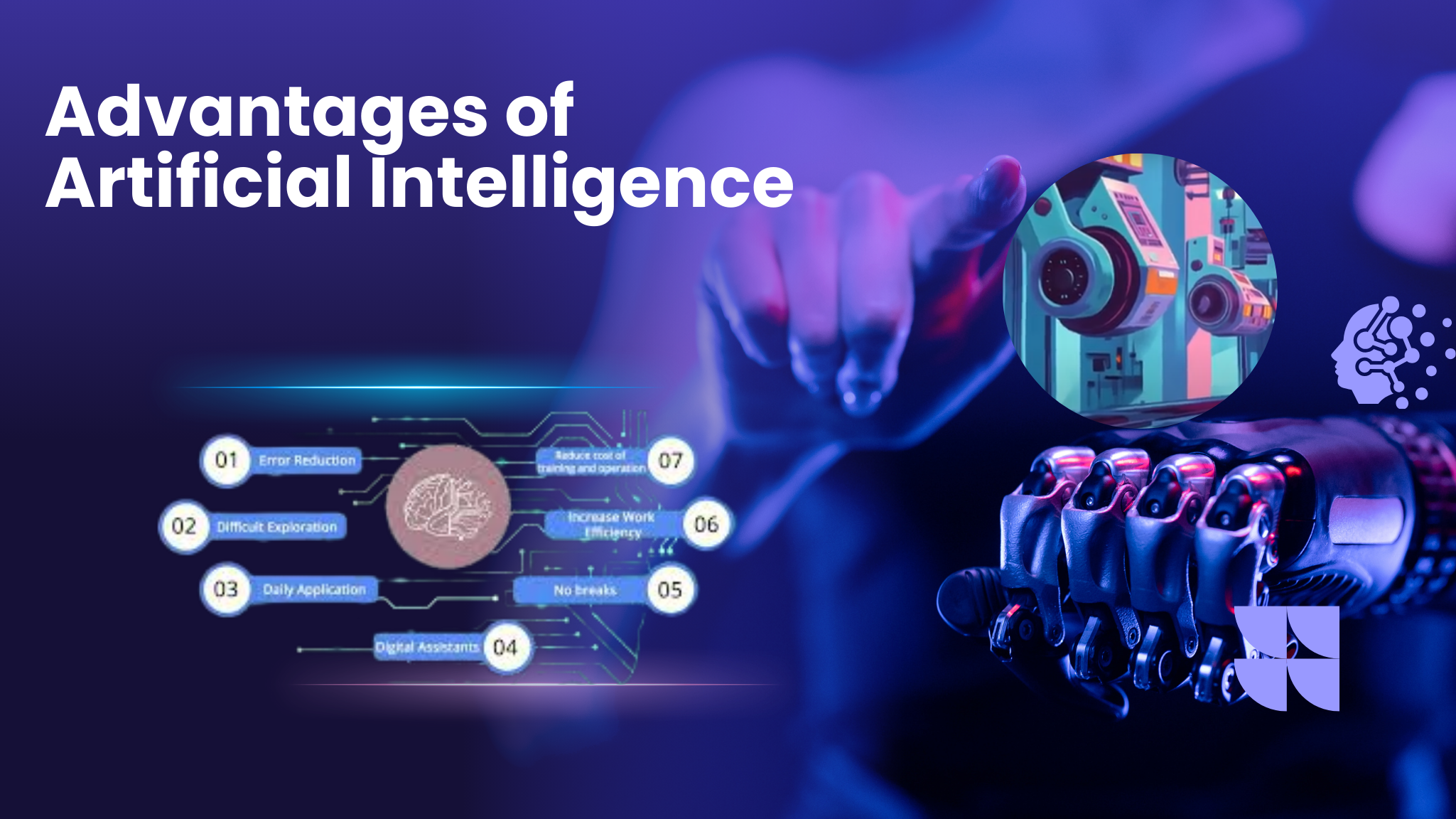
The advantages of artificial intelligence are reshaping how businesses operate, how people make decisions, and how industries evolve in today’s fast digital world.
Advantages of Artificial Intelligence The Technology Transforming the Modern World
The advantages of artificial intelligence are not just improving technology; they are redefining how humans live, work, and interact with digital systems. From small startups to global enterprises, AI is becoming the backbone of smarter decisions and faster operations.
At its core, Artificial Intelligence Artificial Intelligence is designed to replicate human thinking in machines so they can analyze data, learn patterns, and act intelligently without constant human input. This ability is what makes AI so powerful in today’s competitive world.
Businesses are no longer asking whether they should use AI. Instead, they are focusing on how fast they can integrate it into their systems to stay ahead.
At Worldstan, we believe the real power of AI is not about replacing humans. It is about helping people work smarter, faster, and more efficiently. Companies across the world are now investing heavily in intelligent systems because they understand that modern competition depends on speed, data, and innovation.
AI and the Shift Toward Smarter Digital Systems
The modern digital ecosystem is driven by speed, accuracy, and automation. AI helps organizations achieve all three at once. Companies now rely on intelligent tools to manage data, serve customers, and optimize operations in real time.
From my perspective, the real transformation is not visible on the surface. It is happening behind systems where AI silently processes millions of decisions every second.
AI Automation is Redefining Work Efficiency
One of the most important advantages of artificial intelligence is automation. Repetitive tasks that once required hours of human effort can now be completed within seconds.
Let me explain this in the clearest, simplest terms.
Imagine a company handling thousands of customer emails daily. Instead of hiring large teams, AI systems can automatically sort, respond, and prioritize messages based on urgency.
This reduces workload, saves money, and improves response time significantly.
Many organizations now depend on AI automation tools to handle scheduling, reporting, data entry, and even basic customer communication.
How AI Improves Decision-Making Power
In the past, business decisions were based on limited data and human intuition. Today, AI changes that completely.
AI systems analyze massive datasets and extract meaningful insights that humans may miss. These insights help businesses make smarter and faster decisions.
For example, retail companies can understand customer behavior patterns, seasonal demand, and buying trends with high accuracy.
This reduces risk and increases profit margins in competitive industries.
AI in Healthcare A Life-Saving Innovation
Healthcare is one of the strongest areas where AI is making a real difference. Hospitals now use AI to detect diseases early, monitor patients, and support doctors in diagnosis.
AI-powered imaging tools can identify medical issues in scans with remarkable precision. This helps doctors begin treatment earlier, increasing survival rates.
Predictive healthcare systems also analyze patient history and warn about possible future risks.
From my viewpoint, this is one of the most meaningful advantages of artificial intelligence because it directly improves human life.
AI in Finance Security and Smart Transactions
The financial sector depends heavily on accuracy and security, and AI is strengthening both.
Banks use AI for fraud detection by analyzing transaction patterns in real time. If anything suspicious occurs, the system immediately alerts security teams.
AI also supports investment decisions by analyzing global market trends and economic data.
Online banking platforms now use AI chatbots to assist customers instantly, improving user satisfaction and reducing operational costs.
AI and Personalized User Experience
Today’s users expect personalized digital experiences. AI makes this possible by studying user behavior and preferences.
Streaming platforms recommend movies, online stores suggest products, and social media feeds adjust based on interests.
This level of personalization increases engagement and customer satisfaction.
In real business environments, personalized marketing has become one of the strongest growth strategies powered by AI.
AI Customer Support is Changing Business Communication
Customer support has improved dramatically with AI-powered systems.
AI chatbots can respond instantly to common questions, resolve basic issues, and guide users to the right solutions without delay.
These systems work 24/7, ensuring customers are never left waiting.
Over time, AI learns from conversations and becomes even more accurate and helpful.
AI in Manufacturing and Supply Chains
Manufacturing industries are using AI to improve productivity and reduce operational failures.
Predictive maintenance allows machines to alert operators before breakdowns happen. This prevents costly downtime and production delays.
AI also optimizes supply chains by tracking inventory levels and predicting demand fluctuations.
Companies using AI in manufacturing gain a strong competitive advantage in global markets.
AI and Human Productivity Collaboration
A common misconception is that AI replaces humans completely. In reality, AI works best when it supports human effort.
Employees can focus on creativity, strategy, and innovation while AI handles repetitive tasks.
For example, marketing teams use AI to analyze customer insights, while humans design campaigns and build brand stories.
This collaboration leads to better productivity and improved workplace efficiency.
Ethical Challenges in Artificial Intelligence
Despite its benefits, AI also brings serious ethical concerns.
Issues such as data privacy, algorithm bias, and cybersecurity risks must be addressed carefully.
Organizations need to ensure transparency and fairness in AI systems.
Without proper governance, AI can lead to trust issues and legal complications.
Future of AI What Comes Next
The future of AI is expanding rapidly into new industries such as transportation, education, cybersecurity, and energy.
Self-learning systems and advanced robotics will continue to evolve, making processes even more efficient.
Businesses that adopt AI early will have a stronger position in the global digital economy.
At Worldstan, we believe AI is not just a tool but a long-term transformation shaping the future of human progress.
Advantages of Artificial Intelligence in Real Life
The advantages of artificial intelligence are visible in everyday life, from mobile apps to healthcare systems and online shopping platforms.
AI is improving speed, accuracy, and accessibility across industries, making life more convenient and efficient for users worldwide.
Conclusion
The advantages of artificial intelligence are transforming industries at a pace never seen before. From healthcare and finance to business operations and customer experience, AI is becoming the foundation of modern innovation.
Companies that embrace AI responsibly are not only improving performance but also building a stronger future.
Worldstan believes that the real power of AI lies in combining human intelligence with machine efficiency. This combination is shaping a smarter, faster, and more connected world for everyone.