

Chinese AI Innovations 2026-27 Future Trends
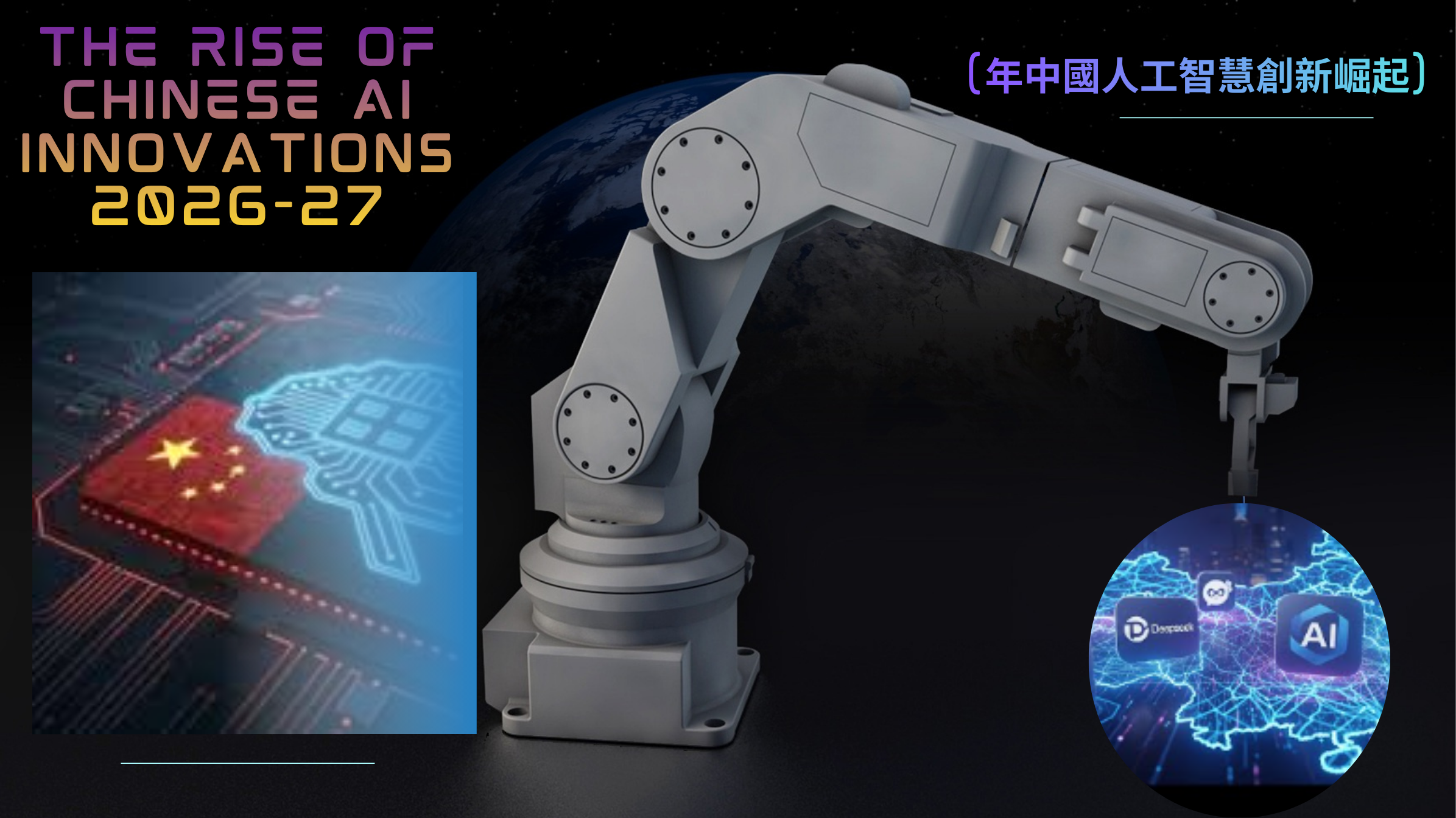
Chinese AI Innovations 2026-27 are changing how the world views technology, digital transformation, and economic growth. From powerful AI models and advanced semiconductor development to real-world applications in healthcare, transportation, and smart cities, China is building an ecosystem that aims to redefine the future of artificial intelligence on a global scale.
Chinese AI Innovations 2026-27 – Models, Chips, and Future Trends
Artificial intelligence is no longer a future concept reserved for research laboratories and technology conferences. It has become a practical force that influences economies, industries, governments, and everyday life. Among the nations investing heavily in this transformation, China stands out as one of the most ambitious and rapidly advancing players.
Chinese AI Innovations 2026-27 represent more than technological progress. They reflect a long-term vision that combines advanced research, industrial deployment, national strategy, and digital independence. Across sectors ranging from healthcare and manufacturing to transportation and education, Chinese AI systems are becoming increasingly visible and influential.
Many analysts once believed that success in AI depended mainly on creating larger models and acquiring more computing power. While computing resources remain important, China is increasingly focusing on efficiency, practical intelligence, and scalable deployment. This shift is creating a new generation of AI systems designed not only to perform well but also to deliver measurable value across real-world environments.
Let me explain this in the clearest, simplest terms.
China is no longer trying only to catch up with global AI leaders. It is actively shaping its own path by developing original technologies, creating domestic chip ecosystems, and building AI platforms that can support long-term economic growth.
Why Are Chinese AI Innovations Receiving Global Attention
The global technology community is paying close attention to China’s AI progress because the country has created a unique combination of research capability, industrial scale, and government support.
Unlike many countries that focus primarily on software innovation, China is investing simultaneously in AI models, computing infrastructure, semiconductor development, cloud platforms, talent cultivation, and industry adoption.
This integrated strategy creates a powerful advantage. New discoveries in research can quickly move into commercial applications because the supporting infrastructure already exists.
For example, AI technologies developed in research institutions can be tested in manufacturing plants, hospitals, logistics centers, and smart city projects within a relatively short period. This rapid transition from experimentation to implementation accelerates innovation and creates valuable real-world feedback.
As a result, Chinese AI companies are increasingly producing technologies that compete with leading international platforms while serving domestic industries at scale.
How Are Chinese AI Models Evolving
The evolution of Chinese AI models is one of the most significant developments in the global AI landscape.
Earlier generations of large language models focused heavily on increasing parameter counts. The assumption was simple: larger models would produce better results. While this approach delivered improvements, it also created challenges related to cost, energy consumption, and infrastructure requirements.
Chinese researchers are now pursuing a more balanced strategy.
Models such as DeepSeek-R1 demonstrate how advanced reasoning capabilities can be achieved through architectural innovation rather than relying solely on larger datasets and increased computing power.
The focus has shifted toward:
- Better reasoning
- Faster inference
- Lower operating costs
- Reduced hardware dependency
- Improved industry adaptation
This transition is particularly important because businesses need AI systems that can operate efficiently in practical environments rather than only achieving impressive benchmark scores.
The future belongs to AI solutions that solve problems effectively while remaining affordable and scalable.
DeepSeek and the New Era of Intelligent Reasoning
One of the most discussed developments in Chinese AI Innovations 2026-27 is the rise of DeepSeek.
DeepSeek has attracted significant attention because it demonstrates how innovative engineering can produce highly capable AI systems without requiring excessive computational resources.
Instead of focusing exclusively on model size, DeepSeek emphasizes reasoning quality and intelligent problem-solving.
This approach aligns with what many organizations actually need. Businesses care less about theoretical model size and more about whether AI can improve productivity, reduce costs, and support decision-making.
DeepSeek’s success highlights a broader trend within China’s AI ecosystem. Innovation is increasingly measured by usefulness rather than scale alone.
If this trend continues, it may influence AI development strategies worldwide.
What Role Do Huawei AI Chips Play in China’s AI Future
AI models require powerful hardware to function effectively.
This reality makes semiconductor technology one of the most important components of the global AI race.
China faces challenges due to international restrictions affecting access to certain advanced chips. Rather than slowing progress, these challenges have encouraged domestic innovation.
Huawei’s Ascend chip series has emerged as a symbol of technological resilience.
The latest generations of Ascend processors are designed to support AI training and inference workloads while reducing dependence on foreign hardware suppliers.
The significance extends beyond hardware performance.
Domestic chip development strengthens technological sovereignty, improves supply chain security, and supports long-term AI sustainability.
Many industry observers believe that advances in Chinese AI chips could become one of the defining stories of the next decade.
China’s AI Infrastructure Expansion
Strong AI systems require strong infrastructure.
China has invested heavily in cloud computing networks, data centers, high-performance computing facilities, and distributed processing systems.
One notable initiative is Eastern Data Western Computing.
This project aims to balance computing demand and resources across different regions of the country. Instead of concentrating processing power in a few major cities, the initiative distributes workloads more efficiently.
Benefits include:
- Reduced infrastructure bottlenecks
- Improved computing accessibility
- Lower operational costs
- Enhanced AI scalability
- Better energy management
Infrastructure investments often receive less media attention than AI models, but they are essential for sustainable growth.
Without reliable computing infrastructure, even the most advanced AI systems cannot reach their full potential.
Chinese AI Companies Driving Innovation
China’s AI ecosystem includes both established technology giants and rapidly growing startups.
Major companies continue to invest heavily in research and development while expanding commercial AI offerings.
Key contributors include:
- Baidu
- Tencent
- Alibaba
- Huawei
- SenseTime
- Zhipu AI
- Moonshot AI
- DeepSeek
- MiniMax
Each company brings different strengths to the ecosystem.
Some specialize in enterprise solutions. Others focus on conversational AI, multimodal systems, autonomous vehicles, cloud services, or AI infrastructure.
This diversity creates a highly competitive environment that encourages continuous innovation.
Competition often accelerates technological progress, and China’s AI market is demonstrating exactly that dynamic.
How Is AI Transforming Chinese Industries
The true value of AI becomes visible when technology solves real-world problems.
China is increasingly integrating AI across multiple industries.
Healthcare is one of the most promising examples.
AI systems assist medical professionals by analyzing diagnostic data, identifying patterns, and supporting treatment planning. Faster analysis can improve patient outcomes and help healthcare providers operate more efficiently.
Transportation is another major area of growth.
AI supports traffic management, route optimization, predictive maintenance, and autonomous driving technologies.
Manufacturing facilities use intelligent systems to improve quality control, monitor equipment performance, and reduce production inefficiencies.
Retail companies leverage predictive analytics to forecast demand, personalize customer experiences, and optimize inventory management.
The common theme is practical value creation.
AI is moving beyond experimentation and becoming a core operational tool.
Smart Cities and AI Governance Solutions
Urban development is becoming increasingly connected to artificial intelligence.
Chinese smart city projects use AI to improve transportation systems, energy efficiency, environmental monitoring, and public service delivery.
Traffic management platforms can analyze large volumes of data in real time, helping reduce congestion and improve mobility.
Energy systems use predictive models to balance supply and demand more effectively.
Public safety initiatives benefit from advanced monitoring technologies that enhance situational awareness and resource allocation.
Government agencies are also exploring AI-powered administrative systems that streamline processes and improve service delivery.
The objective is not simply automation.
The goal is smarter decision-making supported by accurate data and intelligent analysis.
Why Is AI Talent Important for China’s Success
Technology alone cannot drive innovation.
Skilled people remain the most important resource in any AI ecosystem.
China is investing heavily in education, research institutions, university partnerships, and workforce development programs.
Students are gaining access to advanced AI training earlier than ever before.
Universities are expanding research facilities and collaborating closely with technology companies.
This creates a pipeline of engineers, researchers, data scientists, and AI specialists capable of supporting long-term growth.
The competition for top talent remains intense worldwide.
Countries that successfully attract and retain skilled professionals will likely enjoy significant advantages in future technological development.
Challenges Facing Chinese AI Development
Despite remarkable progress, several challenges remain.
Access to advanced semiconductor technologies continues to present obstacles.
Global competition is becoming increasingly intense as nations race to secure leadership positions in artificial intelligence.
Regulatory frameworks must evolve to address concerns related to privacy, transparency, accountability, and ethical AI usage.
Talent retention also remains a priority.
Highly skilled professionals often have opportunities around the world, creating competition for expertise.
Additionally, organizations must balance innovation with responsible deployment.
Public trust plays a critical role in long-term AI adoption.
Addressing these challenges effectively will influence how quickly China’s AI ecosystem continues to grow.
What Future Trends Will Shape Chinese AI Innovations 2026-27
Several important trends are likely to define the next phase of development.
Reasoning-focused models will continue gaining importance.
AI systems will become more efficient and less dependent on extreme computing resources.
Multimodal AI will expand significantly, enabling seamless interaction across text, images, video, audio, and data streams.
Industry-specific AI solutions will become increasingly common.
Rather than creating one model for every purpose, organizations will develop specialized systems tailored to healthcare, finance, manufacturing, education, agriculture, and logistics.
Explainable AI will receive greater attention.
Businesses and governments increasingly want AI systems that provide understandable reasoning behind decisions.
AI-powered robotics will also experience rapid growth.
Combining advanced AI models with physical automation technologies could unlock new levels of productivity across multiple industries.
The Global Impact of Chinese AI Innovations
Chinese AI Innovations 2026-27 are influencing global technology development in important ways.
As Chinese companies introduce new models, hardware platforms, and deployment strategies, international competitors respond with innovations of their own.
This competitive environment accelerates overall technological progress.
Businesses worldwide benefit from increased choice, improved performance, and lower costs.
Research collaboration continues despite geopolitical tensions.
Knowledge exchange, academic partnerships, and industry cooperation contribute to broader innovation across the global technology ecosystem.
The future of AI will likely be shaped by contributions from multiple regions, and China is expected to remain one of the most influential participants.
Suggested Reading on WorldStan.com
- Future of AI Models Beyond 2027
- DeepSeek vs Global AI Competitors
- Huawei AI Chips and Semiconductor Innovation
- Smart Cities Powered by Artificial Intelligence
- How AI Is Transforming Global Healthcare
- Enterprise AI Solutions for Modern Businesses
- AI Infrastructure and Cloud Computing Trends
- The Next Generation of Multimodal AI Systems
Conclusion
Chinese AI Innovations 2026-27 represent a major turning point in the global technology landscape. China is advancing beyond the traditional race for larger models and focusing instead on practical intelligence, efficient computing, advanced semiconductor development, and large-scale industry adoption. Through innovations from DeepSeek, Huawei, Baidu, Tencent, Alibaba, and emerging startups, the country is building an AI ecosystem designed for long-term sustainability and real-world impact.
The combination of intelligent models, domestic chip development, robust infrastructure, skilled talent, and strategic planning positions China as a powerful force in the future of artificial intelligence. While challenges remain, the momentum behind Chinese AI development continues to grow. For businesses, investors, researchers, and technology enthusiasts, understanding these trends is essential because the innovations emerging today will help shape the global digital economy for years to come. Exclusive technology insights like these continue to be delivered through WorldStan.com, helping readers stay ahead in an increasingly AI-driven world.