

ChatGPT has changed the way people interact with technology, and in this guide by Worldstan, you will discover how this powerful AI assistant started, who built it, how it works, its major features, future plans, and why millions of users now depend on ChatGPT every single day.
ChatGPT The AI Assistant That Changed the Digital World
When people first heard about ChatGPT, many thought it was simply another chatbot on the internet. After using it for even a few minutes, they quickly realized something was different. The conversations felt natural, the answers were detailed, and the system could help with tasks that once required human experts.
Today, ChatGPT is more than a chatbot. It has become a digital assistant for students, writers, developers, businesses, marketers, and even ordinary users who simply want quick help in daily life. From writing articles to solving coding problems, this AI tool continues to influence modern technology in ways few expected.
Worldstan believes the success of ChatGPT is not only about artificial intelligence. It is also about accessibility. OpenAI managed to place advanced AI technology into the hands of normal people instead of limiting it to research labs and giant corporations.
The Story Behind OpenAI and ChatGPT
The roots of ChatGPT go back to 2015 when OpenAI was founded by some of the biggest minds in technology. People like Sam Altman, Elon Musk, Greg Brockman, and Ilya Sutskever believed artificial intelligence would eventually become one of the most powerful technologies in human history.
Their main concern was simple. If AI became too powerful without ethical control, it could create major risks for society. Because of this, OpenAI was created with a mission to develop safe and beneficial AI systems for everyone.
In the early years, OpenAI focused heavily on research instead of public products. Most people outside the AI industry had never heard of GPT models at that time. That changed rapidly after the arrival of ChatGPT.
How GPT Models Evolved Into ChatGPT
The first version, GPT-1, arrived in 2018. It was small compared to modern systems, but it proved that AI could generate human-like text.
GPT-2 followed in 2019 and created major discussions in the tech world because of its stronger writing ability. OpenAI even delayed the complete release at first because researchers worried it might be misused for fake news or spam content.
Then came GPT-3 in 2020. This model shocked the internet with its ability to write articles, answer questions, generate code, and simulate conversations. Many developers began building AI-powered apps using GPT-3.
Still, users wanted something easier and more conversational. That demand led directly to ChatGPT.
The Launch That Shocked the Internet
On November 30, 2022, OpenAI officially launched ChatGPT for public use. The platform immediately exploded in popularity because users could simply type questions and receive natural responses within seconds.
The speed of adoption surprised almost everyone. Within only two months, ChatGPT reached over 100 million users, making it one of the fastest-growing digital platforms ever created.
People started using it for:
- Writing content
- Homework help
- Coding support
- Business communication
- Translation tasks
- Brainstorming ideas
- Research assistance
- Creative storytelling
Many experts compare the arrival of ChatGPT to the early days of smartphones because both technologies changed daily human behavior very quickly.
Why ChatGPT Feels Different From Older Chatbots
Older chatbots usually followed fixed scripts and struggled to understand real conversations. ChatGPT changed that experience completely.
It remembers context during chats, understands detailed prompts, and responds in a much more human style. This creates smoother conversations that feel natural instead of robotic.
Let me explain this in the clearest, simplest terms.
Imagine asking a traditional chatbot to help write a business email. Older systems often produced stiff and repetitive replies. ChatGPT can create professional emails, rewrite them in different tones, correct grammar, and even personalize them for different audiences.
That flexibility is one reason businesses rapidly adopted AI tools after ChatGPT appeared.
Major Features That Made ChatGPT Popular
One reason behind ChatGPT’s global success is its growing list of features.
Natural conversation remains its biggest strength. Users can communicate casually without learning technical commands.
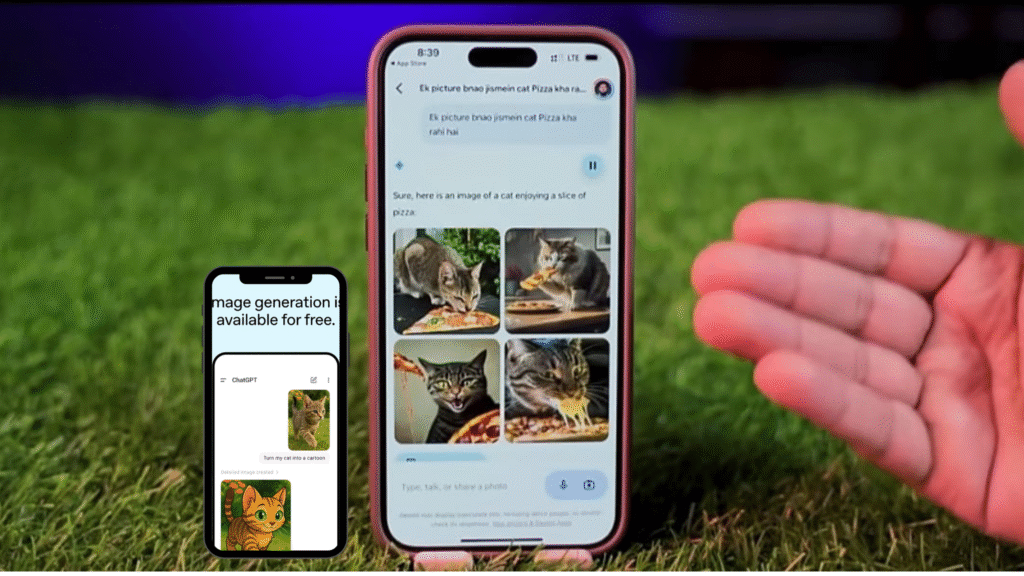
The system also supports multimodal capabilities, meaning it can understand text, images, and voice interactions. This transformed ChatGPT from a simple text bot into a broader AI assistant.
Another major feature is web browsing. Certain versions of ChatGPT can search the internet to provide updated information.
Code generation became another massive attraction. Developers now use ChatGPT to write code snippets, debug software, and explain technical concepts.
Memory features also improved user experience because the system can remember preferences and conversation details when enabled.
Worldstan believes this combination of simplicity and power explains why ChatGPT became useful for both beginners and professionals.
The People Who Helped Shape ChatGPT
Although millions recognize ChatGPT today, fewer people know about the individuals behind its development.
Sam Altman became one of the public faces of AI innovation. His leadership pushed OpenAI toward rapid growth and global expansion.
Elon Musk supported OpenAI during its early years before later leaving the organization.
Greg Brockman focused heavily on engineering and scaling OpenAI systems for public use.
Ilya Sutskever played a major role in deep learning research and the technical foundation behind GPT models.
Other important contributors included Wojciech Zaremba, John Schulman, Andrej Karpathy, Peter Thiel, Reid Hoffman, and Jessica Livingston.
ChatGPT’s growth represents a huge collective effort involving researchers, engineers, safety experts, and infrastructure teams worldwide.
How ChatGPT Actually Works
Many users think ChatGPT searches the internet for every answer, but that is not exactly how the system works.
ChatGPT is trained using enormous amounts of text data from books, websites, articles, conversations, and coding resources. During training, the AI learns language patterns, relationships between words, and how humans communicate.
OpenAI also used a process called Reinforcement Learning with Human Feedback, commonly known as RLHF.
RLHF=Reinforcement Learning + Human FeedbackRLHF = Reinforcement\ Learning\ +\ Human\ FeedbackRLHF=Reinforcement Learning + Human Feedback
Human reviewers rated responses and corrected mistakes, helping the system improve its conversational quality.
Because of this training method, ChatGPT can generate answers that often sound surprisingly human.
The Rise of GPT-4 and GPT-4o
OpenAI continued improving its models after ChatGPT became popular.
GPT-4 launched in 2023 with stronger reasoning abilities, better accuracy, and improved understanding of complex prompts.
Later, GPT-4o introduced faster performance along with better voice and image interaction capabilities.
Today, many users rely on GPT-4o for tasks like:
- Content writing
- AI image generation
- Voice conversations
- Coding assistance
- Research summaries
- Language translation
- Productivity workflows
The improvements made AI feel more practical for everyday users instead of only tech professionals.
Microsoft and Apple Partnerships Expanded ChatGPT Further
One major turning point for OpenAI was its partnership with Microsoft.
Microsoft invested billions into OpenAI and integrated AI technology into products like Word, Excel, Windows, and Copilot.
Later, Apple announced that ChatGPT would become part of Apple Intelligence across iPhones, iPads, and Macs.
These partnerships dramatically expanded public exposure to AI technology and helped ChatGPT enter mainstream consumer products.
The Challenges and Risks Around ChatGPT
Despite its impressive abilities, ChatGPT still faces several important challenges.
One major issue involves hallucinations, where the AI gives incorrect information in a confident tone.
Bias is another concern because AI systems learn from human-created data, which can contain unfair or inaccurate patterns.
Privacy discussions also continue. In 2023, OpenAI fixed a bug that briefly exposed limited user information.
There are also fears about misuse in education, misinformation campaigns, and job displacement.
Worldstan believes responsible AI development matters just as much as technological innovation. Advanced tools should help society grow without creating unnecessary harm.
Free and Paid Versions of ChatGPT
OpenAI currently offers several plans for different user needs.
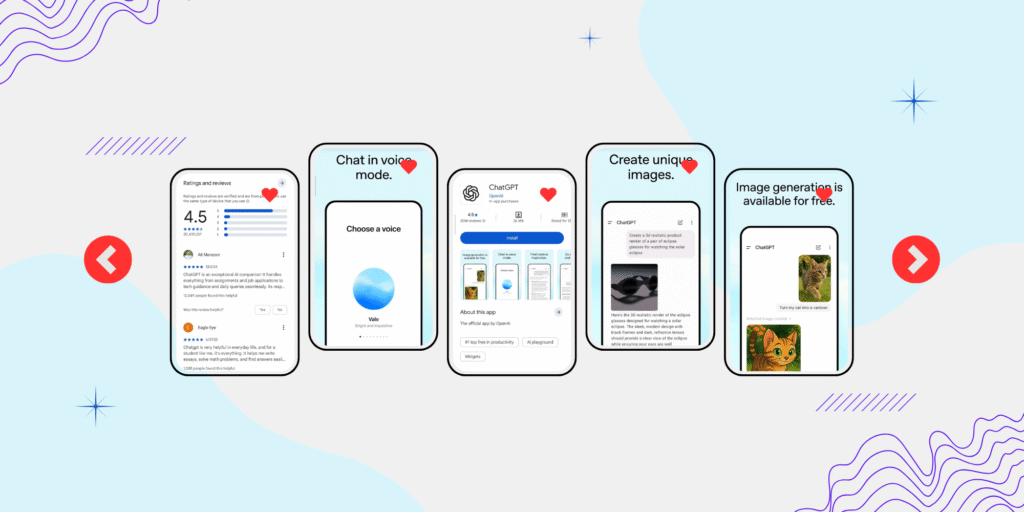
The free version gives users access to powerful AI tools with some limitations.
ChatGPT Plus offers faster performance and priority access for monthly subscribers.
Professional and enterprise plans provide advanced features for businesses, developers, and heavy users.
This pricing structure allows both casual users and corporations to benefit from AI technology at different levels.
What ChatGPT Can Do in Real Life
Many people still underestimate how useful ChatGPT can become in daily life.
Students use it for explanations and study support.
Writers use it for brainstorming and editing.
Developers use it to debug software.
Businesses use it for customer support and productivity tasks.
Content creators use it to generate ideas, captions, scripts, and outlines.
Some users even practice interviews or language learning through AI conversations.
The flexibility of ChatGPT continues expanding because OpenAI regularly introduces new tools and updates.
The Future of ChatGPT and Artificial Intelligence
The future of ChatGPT looks far bigger than simple text conversations.
AI systems are slowly evolving into complete assistants capable of handling research, scheduling, analysis, coding, communication, and creative production together.
OpenAI is actively working on stronger memory systems, advanced reasoning, real-time internet capabilities, and better multimodal experiences.
Many experts believe future AI assistants will become deeply integrated into everyday work, education, healthcare, and entertainment.
At the same time, ethical development will remain critical. AI systems must continue improving safety, accuracy, transparency, and reliability.
Worldstan sees ChatGPT as the beginning of a larger transformation rather than the final destination.
Conclusion
ChatGPT started as an ambitious AI experiment and rapidly became one of the most influential technologies in the modern world. From its roots inside OpenAI to its integration with major companies like Microsoft and Apple, the platform has reshaped how people interact with information and digital tools.
Its ability to write, explain, assist, generate ideas, and communicate naturally has made it valuable across nearly every industry. Even with challenges involving accuracy, safety, and misuse, ChatGPT continues moving forward at remarkable speed.
The most important lesson is simple. Artificial intelligence is no longer a distant concept from science fiction. It is already part of daily life, and ChatGPT stands at the center of that transformation. As AI keeps evolving, the relationship between humans and technology will continue changing in ways we are only beginning to understand.