

How Military Use AI
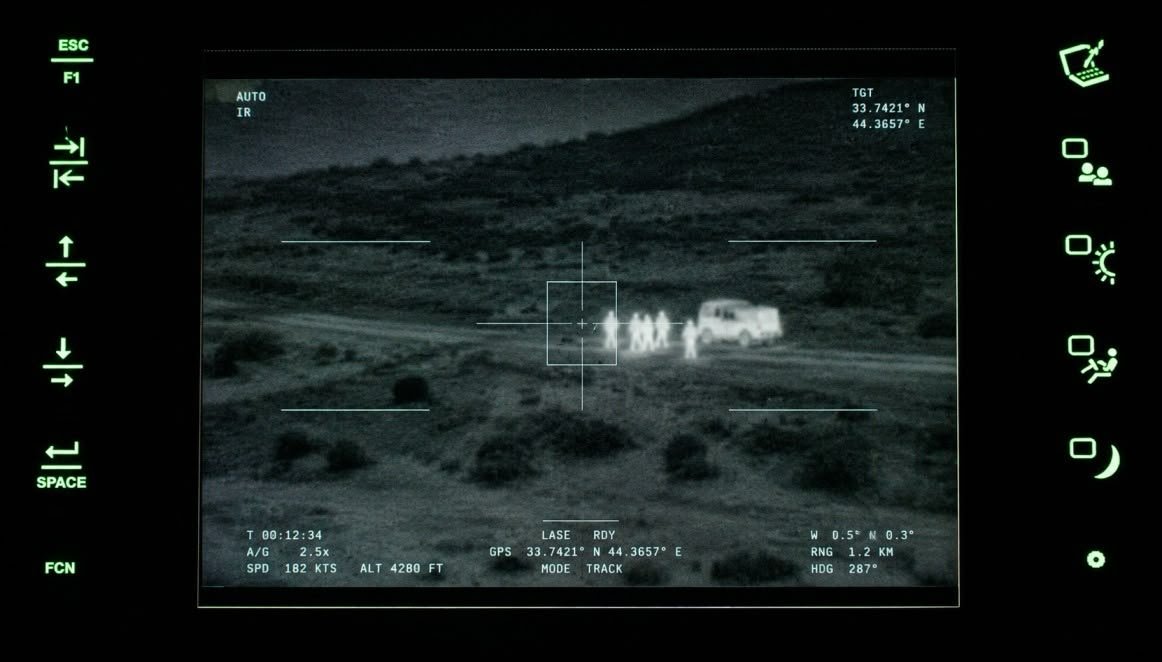
The Military’s Use of AI.
Artificial intelligence is becoming increasingly important in modern military operations because it can process vast amounts of information, identify potential targets, support intelligence operations, operate drones, improve surveillance, and help commanders make difficult decisions.
The military use of AI is expanding because modern conflicts generate enormous amounts of data. Satellites, drones, sensors, cameras, communications systems, social media, and other sources can produce more information than human teams can reasonably analyze.
AI can help military organizations process this information much faster. At the same time, its growing role raises serious questions about accuracy, accountability, privacy, human judgment, and autonomous weapons.
The United States has been particularly active in developing and deploying military AI systems, showing how quickly this technology is becoming central to defense planning and operations. The Pentagon has worked with technology companies to integrate artificial intelligence into intelligence, surveillance, targeting, logistics, and other defense functions.
How Is AI Being Used by the Military
AI can support the military in many different ways. Some applications help people make decisions, while others perform specific tasks with limited human involvement.
One major application is intelligence analysis. Military organizations collect information from satellites, aircraft, drones, sensors, communications systems, and other sources. AI can examine this information and identify patterns, objects, locations, or activities that might require further investigation.
Artificial intelligence can also assist with surveillance. An AI system can process large collections of images and videos much faster than a human analyst. This can help identify vehicles, buildings, aircraft, or other objects relevant to military operations.
Another important application involves targeting. AI tools can help organize intelligence, identify possible targets, estimate their importance, and provide information to military personnel responsible for making operational decisions.
AI can also support simulation and planning. Military organizations can use advanced software to model possible battlefield situations, test strategies, and examine how different decisions could affect an operation.
What Is the Pentagon Doing With AI
The U.S. Department of Defense has been increasing its investment in artificial intelligence as part of a broader effort to modernize military capabilities. This investment reflects the Pentagon’s response to the scale and speed of modern information needs.
The Pentagon’s interest in AI is partly driven by the enormous volume of information involved in modern warfare. Human analysts remain essential, but AI can help them search and organize information at a speed that would otherwise be difficult to achieve.
One notable example is the Maven Smart System. The system was developed through a long-running effort involving the Defense Department and technology companies to improve intelligence analysis, surveillance, and targeting.
Such systems can combine information from different sources, including satellite imagery, drones, sensors, commercial data, and publicly available information. AI can then help military personnel identify objects or individuals that may require attention.
The Pentagon is also exploring foundation models and other advanced AI technologies that can perform multiple types of tasks. These technologies can potentially assist with intelligence analysis, document processing, information retrieval, planning, and battlefield simulations.
AI and Military Targeting
One of the most sensitive applications of AI in military operations is targeting. This area draws particular attention because it directly affects how decisions are made about the use of force.
Traditional military targeting depends heavily on human analysts and commanders. They collect intelligence, evaluate possible targets, consider the surrounding circumstances, and make decisions according to military rules and applicable law.
AI can change this process by helping analyze huge amounts of information much faster.
For example, an AI system may examine satellite images, drone footage, sensor data, or other datasets and identify objects that match a particular pattern. The system may then rank or prioritize information for human analysts.
This does not necessarily mean that an AI system independently decides who should be attacked. In many situations, people remain responsible for reviewing information and authorizing military action.
However, the increasing speed and scale of AI-assisted targeting creates an important question: How much should humans rely on an algorithm when the consequences of an incorrect recommendation can be fatal?
An inaccurate result could cause military personnel to focus on the wrong location or misidentify an object or person.
Autonomous weapons are systems that can perform certain functions with limited or potentially no direct human control. Because this raises questions about who remains responsible, the topic is one of the most controversial areas of military artificial intelligence.
Autonomous weapons are systems that can perform certain functions with limited or potentially no direct human control.
The level of autonomy can vary significantly. Some systems may simply navigate or identify objects, while more advanced systems may select or engage targets.
This is one of the most controversial areas of military artificial intelligence.
Supporters argue that autonomous systems could provide military advantages. They may react faster than humans, operate in dangerous environments, and process information continuously.
Critics, however, are concerned about allowing machines to participate in decisions involving lethal force.
A central issue is human control.
If an AI system misidentifies a target, assigning responsibility can become difficult. Was the problem caused by the algorithm, the training data, the operator, the manufacturer, or the person who authorized the system?
These questions become even more complicated when systems operate in unpredictable environments.
How Much Is the Military Spending on AI? Military spending on AI reflects how deeply these systems are being integrated into defense planning. The U.S. military has committed substantial resources to artificial intelligence and related technologies.
The U.S. military has committed substantial resources to artificial intelligence and related technologies.
According to the Brennan Center’s analysis, the Defense Department has allocated at least $75 billion to AI-related programs since 2016, although the actual figure could be considerably higher because some programs are classified or have unclear AI components.
Military investment is not limited to AI software.
The Pentagon also needs computing infrastructure, data centers, cloud systems, sensors, communications networks, and other technologies to operate advanced AI applications.
Autonomous systems are another major investment area. The rapid development of drones and other unmanned systems has increased military interest in technologies that can operate with different levels of autonomy.
This means the cost of military AI involves much more than purchasing an AI model. It includes the infrastructure required to collect data, train systems, run algorithms, connect different platforms, and maintain these capabilities.
Which Companies Are Developing Military AI
Military AI development increasingly involves private technology companies.
Companies such as Palantir and Anduril have become prominent players in defense technology.
Palantir has worked on data analytics and military AI systems, including work connected to the Maven Smart System. Its technology focuses heavily on integrating and analyzing information from different sources.
Anduril has concentrated on autonomous systems, drones, surveillance technologies, and other defense applications. Its systems use AI to support functions such as navigation, communication, and operation in complex environments.
Large AI companies have also entered the defense market. The Defense Department has pursued relationships with major AI developers to explore how foundation models can be adapted for national security and military applications.
The growing relationship between technology companies and the Pentagon is important because private firms increasingly control some of the software and expertise behind military systems.
What Are the Main Risks of Military AI
The expansion of AI in the military creates potential benefits, but it also introduces significant risks.
- AI Can Make Mistakes
Artificial intelligence is not automatically accurate.
AI systems can misidentify objects, produce incorrect conclusions, misunderstand context, or generate information that appears convincing even when it is wrong.
In a military environment, an ordinary software error can become much more serious when decisions involve weapons or human lives.
For example, an algorithm could misclassify an object because of weather conditions, unusual surroundings, poor-quality data, or characteristics not adequately represented in its training material.
- Human Judgment Could Be Reduced
Military decisions often depend on context that cannot easily be converted into data.
If commanders become overly dependent on AI recommendations, they may begin accepting algorithmic outputs without sufficient independent verification.
This creates a risk known as automation bias: people may trust a computer-generated recommendation simply because it appears objective or technologically sophisticated.
Keeping qualified humans involved is not enough. Those humans must have enough time, information, training, and authority to question the system.
- AI Can Increase Surveillance
Military AI can process enormous amounts of personal and publicly available information.
Location records, social media activity, commercial databases, photographs, communications, and other datasets can potentially be combined to develop detailed profiles of individuals and groups.
This creates privacy and civil-liberties concerns, particularly when information about civilians is collected or analyzed without meaningful oversight.
AI makes large-scale analysis easier because computers can identify relationships between datasets that would be extremely difficult for humans to discover manually.
- AI Can Produce Biased Results
AI systems learn patterns from data. If the underlying data contains errors or biases, those problems can influence the system’s results.
An AI model could potentially associate certain behaviors, communities, locations, or characteristics with security threats even when those associations are unreliable.
This is especially concerning when algorithms are used in situations where mistakes can affect people’s freedom, safety, or lives.
Why Does Commercial AI Create Problems for the Military
The military does not develop every technology internally. It frequently works with private companies because technology firms may have specialized expertise, software, computing infrastructure, and highly skilled employees.
This relationship can accelerate technological development.
However, dependence on commercial technology also creates challenges.
When a military organization relies on proprietary software, it may lack full visibility into how the system works. Companies may keep parts of their algorithms, models, training methods, or security architecture confidential.
This can make independent testing more difficult.
A military organization needs to know whether an AI system is reliable, secure, and appropriate for the environment in which it will operate. If key parts of the technology are effectively a black box, identifying problems becomes harder.
There is also a strategic concern. If a small number of private companies become responsible for critical military AI capabilities, the government could become heavily dependent on those companies.
Are There Rules for the Military’s Use of AI
Safeguards govern certain uses of AI and autonomous weapons, but concerns remain about whether existing protections are strong enough.
The U.S. government has established policies addressing the use of artificial intelligence in national security. The Defense Department also has policies covering autonomous weapons and related technologies.
These frameworks generally emphasize testing, human judgment, training, and procedures intended to reduce operational failures and civilian harm.
However, rules are effective only when properly enforced.
Military AI systems can be extremely complicated. Effective oversight requires technical expertise, sufficient staffing, access to relevant information, and the authority to investigate failures.
If oversight organizations lack resources or cannot independently evaluate AI systems, identifying problems before deployment becomes more difficult.
Why Human Control Matters
Human involvement is one of the most important issues in discussions about AI-powered weapons.
A human may remain technically involved in a process while still relying almost completely on an AI recommendation.
For meaningful human control, personnel need to understand the system’s limitations and genuinely be able to reject its recommendations.
They also need reliable information about how the system reached its conclusions.
This becomes particularly important in rapidly changing battlefield environments, where data may be incomplete, outdated, misleading, or affected by unexpected conditions.
The goal should not simply be to place a person somewhere in the decision-making chain. The human must have meaningful authority and sufficient information to make an independent judgment.
What Should Congress Do About Military AI
Congress has an important role in determining how the United States regulates military AI.
One priority is transparency.
The government should provide lawmakers with meaningful information about how AI systems are being used, how much money is being spent, what systems have failed, and what risks have been identified.
Testing should also be strengthened.
AI systems that could affect military personnel, civilians, privacy, or civil liberties should be evaluated before deployment and monitored after they become operational.
Congress could also establish stricter rules for autonomous weapons, particularly systems capable of selecting and engaging targets.
Privacy protections are another important area. Government agencies should face clear restrictions when purchasing or using sensitive information about Americans from commercial data sources.
Finally, lawmakers should examine national security programs’ growing dependence on private technology companies.
The Future of AI in the Military
The role of artificial intelligence in warfare will likely continue to expand.
Military organizations have strong incentives to use AI because modern conflicts generate enormous quantities of information and require rapid decisions.
AI can potentially improve intelligence analysis, logistics, surveillance, communications, simulation, navigation, and other military functions.
But technological capability does not automatically mean that a system is safe or appropriate for every situation.
The most difficult questions surrounding artificial intelligence in the military are therefore not only technical. They are also legal, ethical, political, and strategic.
Who is responsible when an AI system makes a serious mistake? How much control should a human maintain over autonomous weapons? How should sensitive personal information be protected? How can military AI be independently tested when private companies develop much of the technology?
These questions will become increasingly important as governments move from experimenting with AI to using it in real-world military operations.
Conclusion
The military’s use of AI represents one of the most significant developments in modern defense technology. Artificial intelligence can help military organizations analyze information, improve surveillance, support targeting, operate autonomous systems, and respond to complex situations more quickly.
At the same time, military AI can create serious risks when systems make mistakes, produce biased results, increase surveillance, or reduce meaningful human judgment.
The challenge is not simply deciding whether the military should use AI. It is determining where AI should be used, what limits should apply, how systems should be tested, and how humans should remain accountable for decisions involving force.
Strong oversight, transparent testing, meaningful human control, privacy protections, and clear rules for autonomous weapons will be essential as military AI continues to develop.