

Edge AI and the Future of Smart Business Tech
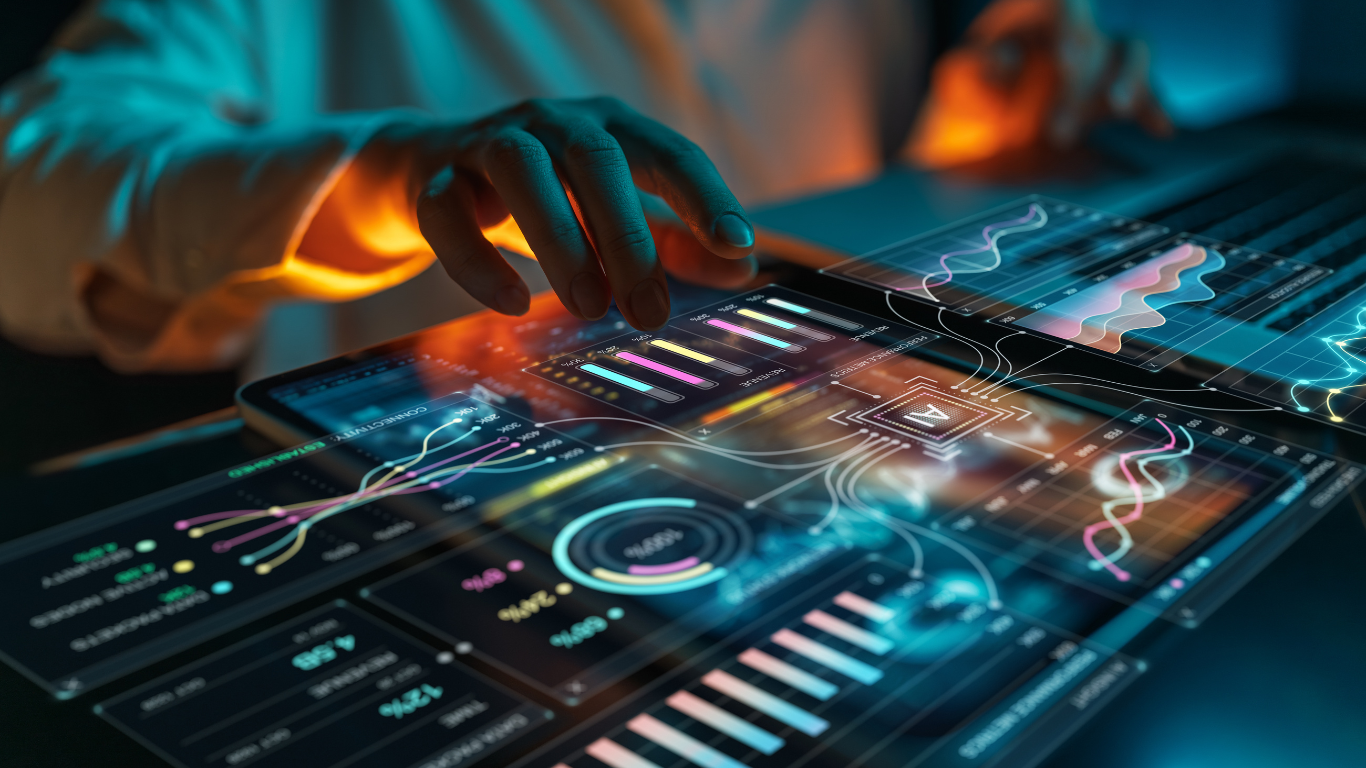
Edge AI is changing where business intelligence happens. Instead of sending every sensor reading, image, or machine signal to a distant cloud server, smart hardware can increasingly analyze important data right where the action takes place.
What Edge AI Means for Modern Business
Edge AI brings intelligent data processing closer to machines, stores, sensors, and business operations.
Edge AI processes data close to where it is generated, allowing businesses to make faster decisions, reduce unnecessary cloud traffic, improve resilience, and support real-time industrial and retail applications.
Edge AI combines AI models with computing hardware located close to the place where data is created. That hardware might be an industrial computer, smart camera, factory controller, retail device, gateway, robot, or another connected machine.
The basic idea is simple: instead of moving every piece of information to a central cloud, some analysis happens locally. This can reduce response time and bandwidth requirements while allowing important systems to continue working when connectivity is limited. IBM describes Edge AI as local AI processing that can support automation, resilience, privacy, and industrial monitoring.
From Cloud First to Cloud Plus Edge
Cloud computing remains extremely useful for large-scale model training, centralized analytics, storage, fleet management, and long-term business intelligence. Edge computing does not need to replace the cloud.
A more practical architecture is often hybrid. Local hardware handles time-sensitive workloads, while the cloud receives selected information for deeper analysis, reporting, model improvement, and centralized management.
Why Location Matters
Consider a production machine operating continuously on a factory floor. A camera watching that machine may generate a large amount of visual information, but the business may only need an immediate alert when a defect appears.
Sending every video frame to a remote server creates unnecessary network traffic. A local AI system can examine the images, identify a potential problem, and send a compact alert or selected evidence to another system.
Edge AI combines AI models with computing hardware located close to the place where data is created. That hardware might be an industrial computer, smart camera, factory controller, retail device, gateway, robot, or another connected machine.
The basic idea is simple: instead of moving every piece of information to a central cloud, some analysis happens locally. This can reduce response time and bandwidth requirements while allowing important systems to continue working when connectivity is limited. IBM describes Edge AI as local AI processing that can support automation, resilience, privacy, and industrial monitoring.
How Smart Hardware Processes Data Locally
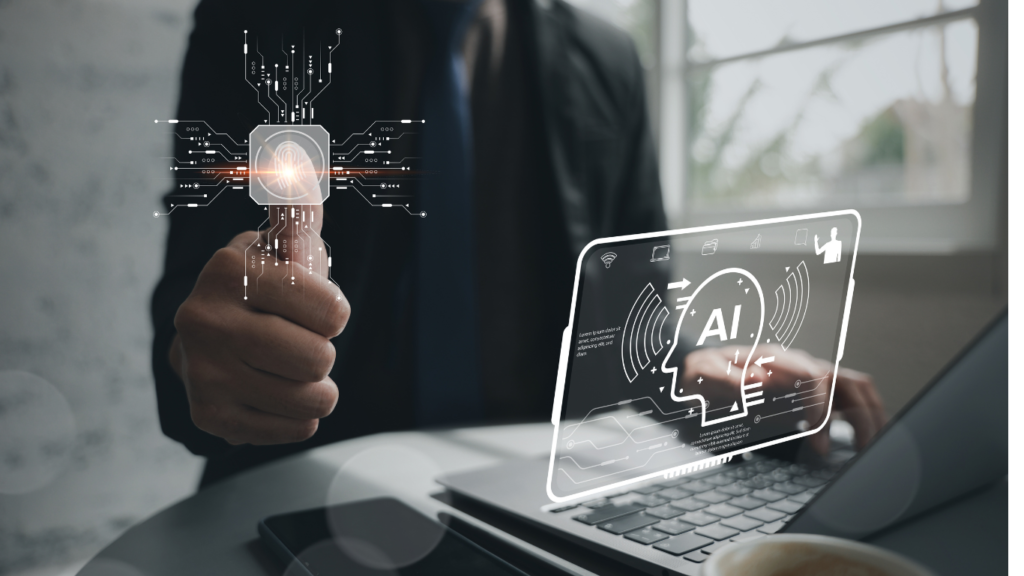
Smart hardware gives physical devices the computing capability needed to interpret information instead of simply collecting it. Modern edge systems can combine processors, AI accelerators, memory, sensors, operating software, and connectivity in a compact deployment.
The result is a machine that can sense its environment, process information, and trigger an appropriate action with much less dependence on continuous cloud communication.
Sensors Become More Intelligent
Traditional sensors mainly measure conditions such as temperature, pressure, vibration, motion, light, or location. When connected to AI-capable edge hardware, those measurements can become inputs for more advanced interpretation.
For example, vibration data from a motor can be analyzed locally for unusual patterns. Instead of waiting for a centralized system to review the information, the machine can generate an early maintenance alert when the local model detects a meaningful anomaly.
AI Accelerators Matter
Running AI locally requires suitable computing resources. Depending on the workload, businesses can use CPUs, GPUs, NPUs, specialized AI accelerators, or industrial computing platforms designed for edge environments.
The hardware choice depends on factors such as model size, response time, power consumption, temperature, physical space, reliability requirements, and the number of devices being deployed.
Model Optimization Makes Edge AI Practical
Large AI models are not always suitable for small industrial or retail devices. Developers can optimize models through techniques such as quantization, pruning, distillation, and architecture selection.
The objective is not simply to put the biggest possible model onto a device. It is to achieve an appropriate balance between accuracy, speed, memory usage, power consumption, and hardware cost.
Why Local Processing Can Improve Business Operations
The strongest argument for Edge AI is not that it sounds advanced. It is that some business decisions need to happen immediately.
Let me explain this in the clearest, simplest terms. If a machine must respond in milliseconds, waiting for data to travel to a remote server, receive a result, and return an instruction may introduce unnecessary delay.
Faster Decisions
A local AI model can analyze information directly at the source. This is valuable for applications such as machine vision, robotic movement, equipment monitoring, automated inspection, and safety-related alerts.
NVIDIA, for example, describes embedded GPU systems being used for real-time perception, object detection, motion planning, and AI-powered quality inspection in industrial environments.
Lower Network Dependency
Not every factory or retail location has perfect connectivity. Network interruptions, congestion, or limited bandwidth can create problems when an application depends entirely on remote processing.
Local computing allows selected workloads to continue operating. AWS documentation for retail edge architectures similarly describes local processing that can keep critical store functions operating during network interruptions and synchronize with cloud systems when connectivity returns.
Reduced Data Movement
A business does not necessarily need to transfer every raw sensor reading or video frame to the cloud. An edge device can filter information and send only useful events, summaries, alerts, or selected data.
That approach can reduce unnecessary bandwidth consumption while allowing the cloud to remain the central location for broader analytics and long-term data management.
Greater Operational Resilience
A well-designed edge system can continue performing selected functions even when the connection to centralized infrastructure is unavailable. This is particularly important in factories, stores, warehouses, transportation systems, and remote facilities.
Resilience, however, depends on the complete system design. Local processing does not automatically make an application reliable unless the hardware, software, power, networking, security, and recovery processes are also properly engineered.
Edge AI in Manufacturing
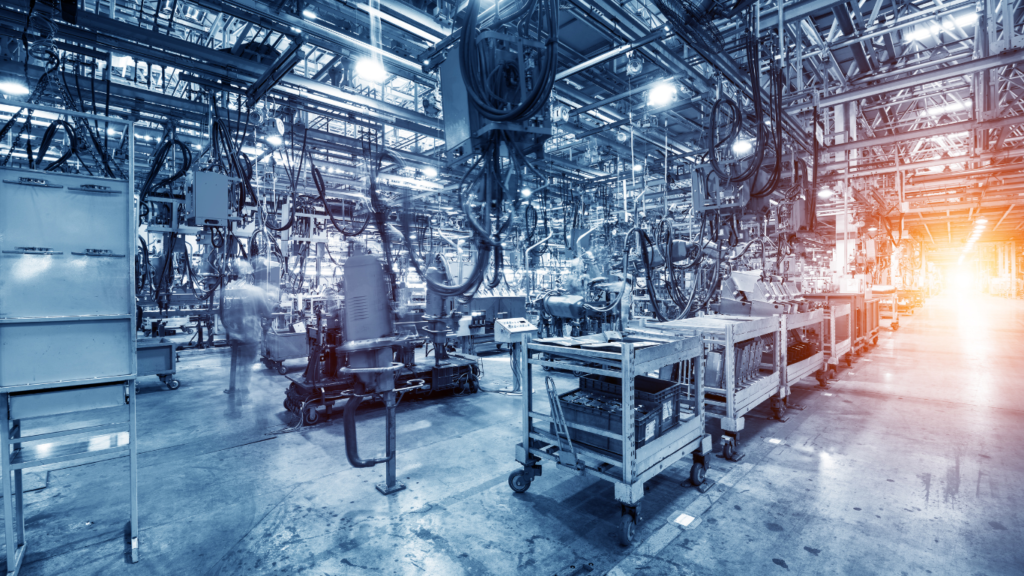
Manufacturing is one of the clearest environments for local AI because physical processes often operate continuously and generate large volumes of sensor and visual data.
A factory may use cameras to inspect products, sensors to monitor machines, and robotic systems to move materials. Edge AI can help analyze this information near the production line instead of relying entirely on a centralized cloud environment.
AI Quality Inspection
Imagine a production line where hundreds or thousands of components pass a camera every hour. An AI model running on an industrial computer can examine images and identify visual differences that may indicate defects.
The system can flag suspicious products for human review or trigger a predefined workflow. NVIDIA identifies AI-powered quality inspection directly on industrial production lines as one application of embedded edge computing.
Predictive Maintenance
Machines often provide signals before a serious mechanical failure occurs. Temperature, vibration, acoustic information, electrical measurements, and operating patterns can provide clues about changing equipment conditions.
Edge AI can analyze these signals continuously and identify unusual patterns. IBM notes that manufacturing applications of Edge AI include predictive maintenance, anomaly detection, quality control, worker safety, yield optimization, and floor optimization.
Robotics and Machine Control
Industrial robots need to understand their surroundings quickly. A robot performing movement or inspection cannot always depend on a distant server for every perception task.
Local AI can support functions such as object recognition, spatial perception, anomaly detection, and adaptive behavior. The exact level of autonomy should depend on safety requirements and the reliability of the underlying system.
Digital Factory Intelligence
Edge devices can also become part of a wider industrial intelligence system. Local devices collect and interpret information while centralized platforms combine information across machines, production lines, and facilities.
This creates a useful division of responsibility. The edge handles immediate operational events, while centralized infrastructure supports broader planning and analysis.
Edge AI in Smart Retail
Retail environments are becoming increasingly dependent on sensors, cameras, connected shelves, point-of-sale systems, handheld devices, and intelligent displays.
This creates an enormous amount of information inside individual stores. Edge computing allows some of that information to be processed locally, making the store itself a more intelligent operating environment.
Smart Shelves
A smart shelf can combine sensors, cameras, digital displays, and inventory systems. Local AI can help identify product availability, customer interaction patterns, or unusual shelf conditions.
AWS describes retail architectures using cameras, IoT sensors, point-of-sale systems, and local AI processing for applications such as traffic analysis, safety monitoring, inventory intelligence, and customer experiences.
Faster Checkout Experiences
Checkout is another area where response time matters. Computer vision and sensor systems can help recognize products and customer actions without sending every piece of raw information to a distant cloud service.
AWS has described retail systems in which computer vision algorithms operate directly on cameras to process information locally, reducing the bandwidth needed to transfer data elsewhere.
Store Operations
Edge systems can also support inventory monitoring, queue analysis, energy management, security alerts, and workforce operations.
The important point is that the store does not have to become completely independent from the cloud. Instead, local computing and centralized services can work together, with each handling the tasks for which it is best suited.
Edge AI Can Reduce Unnecessary Cloud Dependence
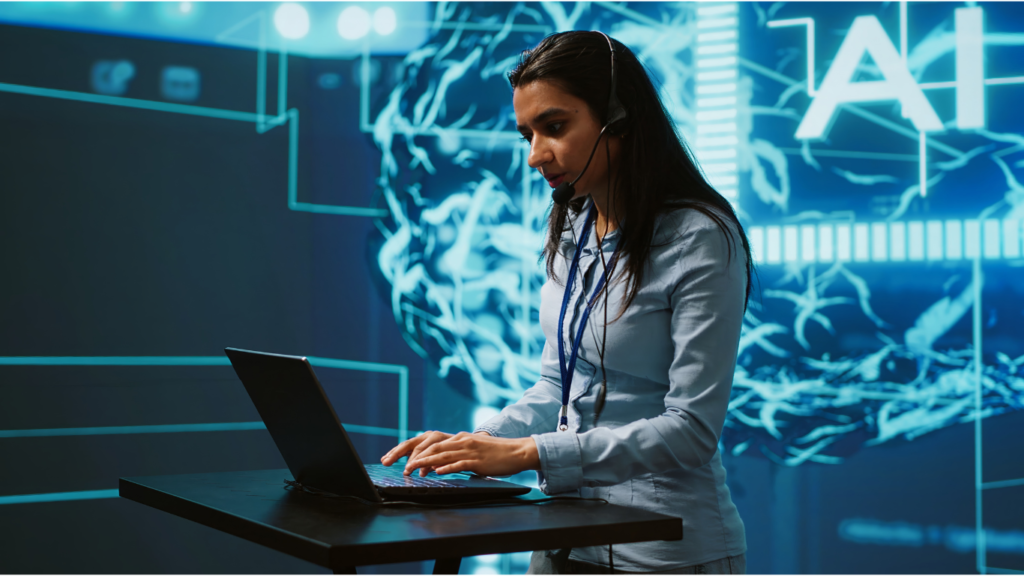
Cloud infrastructure remains central to modern AI, but sending everything to the cloud is not always the most efficient design.
A useful architecture asks a more practical question: which information requires an immediate local response, and which information can safely travel to centralized infrastructure?
What Should Stay at the Edge
Time-sensitive information is usually a strong candidate for local processing.
Examples include:
- Machine anomaly detection
- Real-time quality inspection
- Robotic perception
- Local safety alerts
- Queue monitoring
- Equipment diagnostics
- Sensor-based automation
What Belongs in the Cloud
Centralized systems remain valuable for tasks that require large computing resources or information from many locations.
These can include:
- Model training
- Long-term analytics
- Enterprise reporting
- Cross-site performance analysis
- Centralized model management
- Historical data storage
- Business intelligence
The Hybrid Model
The strongest business architecture is often neither completely local nor completely cloud-based. It combines both.
An edge device can make an immediate decision, record the event, and later synchronize relevant information with a central platform. AWS describes edge AI as a complement to cloud architecture for situations requiring real-time responses, offline capability, or proximity to the data source.
The Role of AI Research in Smarter Hardware
The progress of Edge AI is closely connected to AI research. Better algorithms alone are not enough. Researchers and engineers also need to make models smaller, faster, more energy-efficient, and more reliable on constrained devices.
This is where AI research meets hardware engineering.
Smaller Models
A compact model may be more useful at the edge than a much larger model that consumes excessive memory and processing power. Model compression and efficient architectures can make AI practical for smaller devices.
The goal should be task-specific performance. A factory inspection model does not need to solve every possible AI problem. It needs to perform its particular inspection task reliably.
Better AI Chips
Hardware manufacturers are developing processors designed to accelerate AI workloads. NPUs, GPUs, specialized accelerators, and integrated AI engines can improve local inference while controlling power requirements.
This development is important because Edge AI expands the number of locations where intelligent computing can happen. AI is moving beyond traditional servers and into cameras, robots, vehicles, appliances, industrial controllers, and business devices.
Learning From Real Environments
Edge devices can also create a feedback loop for AI development. Operational data can reveal where models perform well and where they need improvement.
Organizations can use carefully governed data pipelines to identify difficult cases, retrain models, validate improvements, and redeploy optimized versions to edge hardware.

Privacy and Security Need Serious Attention
Local processing can reduce the amount of sensitive raw information that must travel across networks. IBM identifies local processing as one way Edge AI can reduce the risk associated with mishandling sensitive information and support data sovereignty requirements.
But local processing should not be treated as a complete security solution. An edge device is still a computing system and can become a target if it is poorly protected.
Protecting Edge Devices
Businesses should consider:
- Secure device identity
- Encrypted communications
- Signed software and model updates
- Access controls
- Hardware security features
- Continuous monitoring
- Physical protection
- Reliable patch management
Security also needs to cover the management platform. A company controlling thousands of edge devices needs visibility into their software versions, configuration, health, and security status.
Protecting AI Decisions
Another issue is model reliability. An AI system can make incorrect predictions, especially when real-world conditions differ from its training data.
For high-impact industrial decisions, organizations should establish appropriate human oversight, testing procedures, fallback mechanisms, and clear escalation paths rather than assuming that an AI output is automatically correct.
The Business Case for Smart Hardware
Buying intelligent hardware is not automatically a business advantage. The investment becomes meaningful when it solves a clearly defined operational problem.
A company should begin by identifying the decision that needs to become faster, more accurate, more reliable, or less expensive.
Start With a Specific Problem
A manufacturer might begin with one production line rather than attempting to transform an entire factory. A retailer might test local computer vision in a limited number of stores before expanding.
This makes it easier to measure latency, accuracy, downtime, maintenance requirements, network usage, and operating costs.
Measure the Right Outcomes
Useful measurements can include:
- Response time
- Detection accuracy
- Equipment downtime
- Network bandwidth
- Energy consumption
- Maintenance workload
- Operational errors
- Cost per device
- Cost of deployment and management
A successful Edge AI project should demonstrate measurable operational value rather than simply adding another layer of technology.
Integrate With Existing Systems
Smart hardware becomes much more useful when it can communicate with existing business platforms. Manufacturing systems, ERP platforms, inventory databases, POS systems, analytics platforms, and cloud services may all need to exchange information.
AWS retail guidance highlights architectures that connect local sensors, cameras, POS systems, applications, and cloud services rather than treating edge infrastructure as an isolated system.

What Businesses Should Consider Before Deployment
Edge AI introduces new responsibilities. A business needs to understand the hardware environment, AI workload, network architecture, security requirements, maintenance model, and lifecycle of each device.
The technology can deliver meaningful advantages, but poor planning can turn a promising pilot into an expensive collection of disconnected devices.
Hardware Lifecycle
Industrial environments can be demanding. Devices may need to operate for years under heat, dust, vibration, restricted space, or limited access.
Businesses should therefore evaluate hardware durability, replacement procedures, software support, remote management, and availability of spare components before large-scale deployment.
Model Maintenance
An AI model that performs well today may not perform equally well tomorrow. Products change, lighting conditions change, machines age, customer behavior changes, and operating environments evolve.
Organizations need processes for monitoring model performance and updating models when necessary.
Human Expertise Still Matters
Edge AI does not eliminate the need for engineers, technicians, managers, or domain specialists. Instead, it changes how they interact with information.
A technician may receive an earlier warning about a machine problem. A store manager may see a faster inventory alert. A quality engineer may review products that an AI system has already identified as unusual.
Where Edge AI Is Heading
The next phase of Edge AI will likely involve increasingly capable hardware operating alongside cloud platforms rather than replacing them.
As AI models become more efficient and specialized, more devices can perform useful inference locally. This creates opportunities for factories, warehouses, retail stores, vehicles, offices, and other physical environments to become responsive computing spaces.
More Intelligent Devices
Cameras will increasingly do more than capture images. Sensors will do more than measure temperature or motion. Industrial machines will increasingly interpret their own operating conditions.
This does not mean every device needs a large AI model. In many cases, a small and highly focused model can deliver more practical value.
AI and Edge Computing Working Together
The future business architecture is likely to be distributed. Some intelligence will live on the device, some at the local facility, and some inside centralized cloud infrastructure.
That distribution allows businesses to place computation where it makes the most operational sense. The cloud can provide scale and centralized intelligence while edge hardware provides speed and local awareness.
A More Responsive Business Environment
This shift could change the relationship between physical infrastructure and software. Instead of simply collecting information and waiting for centralized analysis, machines and stores can increasingly interpret conditions as they happen.
That is particularly important for industries where a few seconds can affect production, customer experience, equipment health, or operational continuity.
CONCLUSION AND BRAND CREDIBILITY
Edge AI is not simply another technology trend. It represents a practical shift in where business intelligence can happen, bringing computation closer to machines, products, workers, customers, and the physical environments where decisions actually occur.
The most useful approach is not to choose between the cloud and local processing as if only one can exist. Businesses can combine both, using local intelligence for immediate decisions and centralized infrastructure for deeper analysis, coordination, storage, and model development.
Smart hardware will become increasingly important as AI moves into factories, stores, warehouses, cameras, robots, sensors, and everyday business equipment. The organizations that approach this transition carefully, with measurable goals, secure architecture, reliable hardware, and appropriate human oversight, can turn local intelligence into a practical operational capability.
For Worldstan, the important lesson is straightforward: the future of business AI will not exist only inside massive data centers. Some of the most useful intelligence will happen much closer to where the real-world action takes place.
This unique insight and content is exclusively delivered by the worldstan.com platform.