

Autonomous Satellite Guarding Systems and Space Security
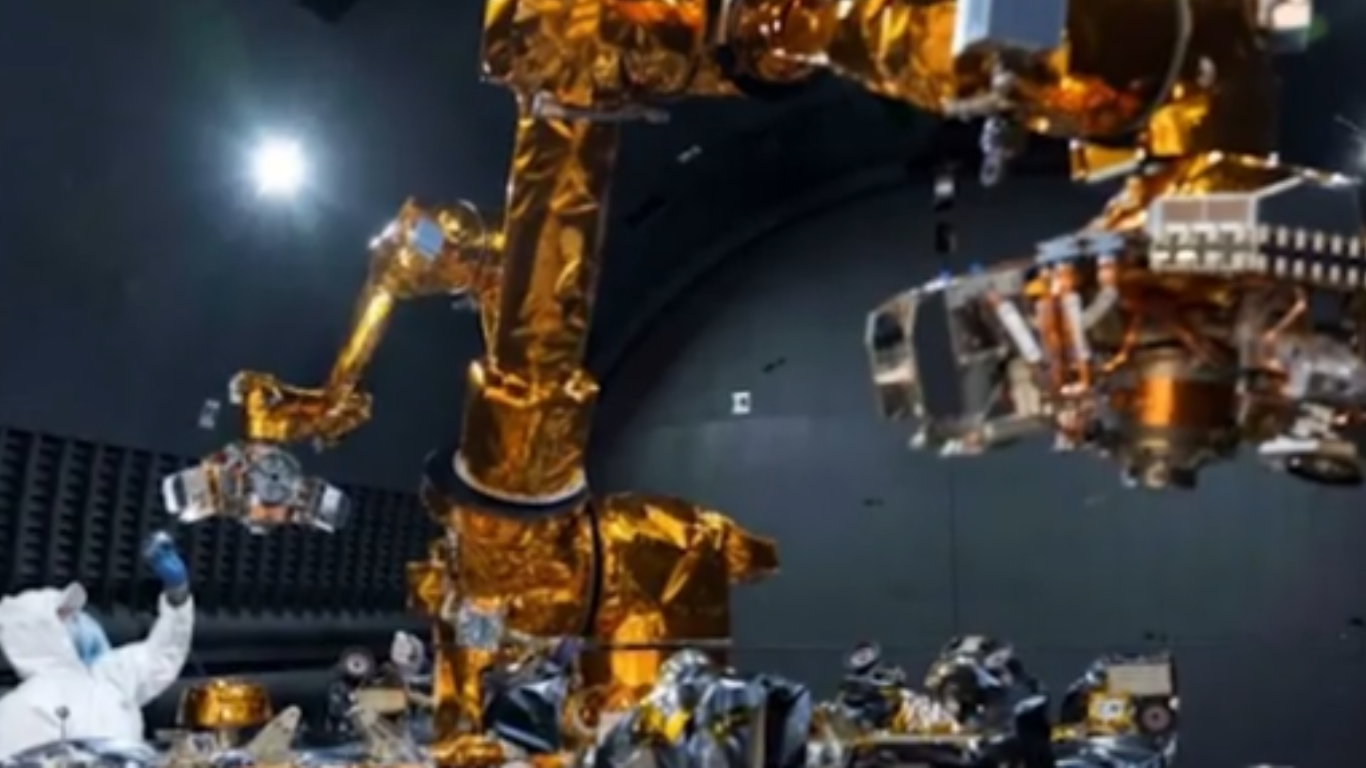
Autonomous Satellite Guarding Systems are changing how experts think about protecting critical assets beyond Earth. As orbital environments become more crowded and unpredictable, intelligent satellites may increasingly need to recognize potential dangers and support rapid protective decisions.
Autonomous Satellite Guarding Systems and the New Era of Active Orbital Protection
How intelligent autonomous systems could reshape satellite protection and orbital security
Space is no longer a distant environment used only for scientific exploration. Today, satellites support communications, navigation, weather forecasting, financial networks, disaster response, Earth observation, and many other services that modern societies depend on every day.
That growing dependence has also changed the meaning of space security.
A satellite can be thousands of kilometers away from the people responsible for monitoring it. Communication between a spacecraft and a ground station can take time, and operators may have to manage several systems at once. In a rapidly changing orbital environment, even a small delay in understanding an unusual event can become important.
This is where Autonomous Satellite Guarding Systems are attracting increasing attention.
The basic idea is relatively simple. Instead of expecting every important decision to come from a ground-based control center, an intelligent satellite could have greater awareness of its immediate environment. It could collect information from onboard sensors, process that information locally, identify unusual behavior, and recommend or perform pre-authorized protective actions within carefully defined limits.
This does not necessarily mean giving a spacecraft unlimited independence.
In fact, one of the most important issues surrounding autonomous space systems is deciding exactly where autonomy should end and human authority should begin.
From my perspective as a relationship and lifestyle-focused writer, the subject may initially appear far removed from everyday life. Yet technology decisions in space eventually influence communication, navigation, financial services, emergency response, weather information, and digital infrastructure on Earth.
Understanding these developments therefore matters beyond military and aerospace communities.
Why satellite protection is becoming more important
Autonomous Satellite Guarding Systems use AI, onboard computing, and sensor data to identify potential orbital threats and support faster protective decisions without relying entirely on continuous ground control. Satellites operate in an environment that is becoming increasingly busy.
Governments, commercial companies, research institutions, and international organizations now operate large numbers of spacecraft. New satellite constellations have also increased the number of objects sharing different orbital regions.
More spacecraft can bring enormous benefits. Better communications, improved Earth observation, faster data services, and scientific research are among the advantages.
At the same time, a crowded orbital environment creates additional challenges.
Spacecraft must maintain awareness of nearby objects and understand whether another object’s movement is routine, accidental, or potentially concerning. Operators also need reliable information when deciding how a spacecraft should respond to an unexpected situation.
Traditional satellite operations often depend heavily on ground infrastructure. A network of sensors and tracking systems can provide information to operators, who then analyze that information and decide what should happen next.
This model remains extremely important.
However, autonomous systems introduce another layer of protection.
Instead of sending every piece of raw information back to Earth before a spacecraft can respond to an event, onboard computing can process selected information locally.
That could become especially valuable when communication is interrupted, delayed, overloaded, or temporarily unavailable.
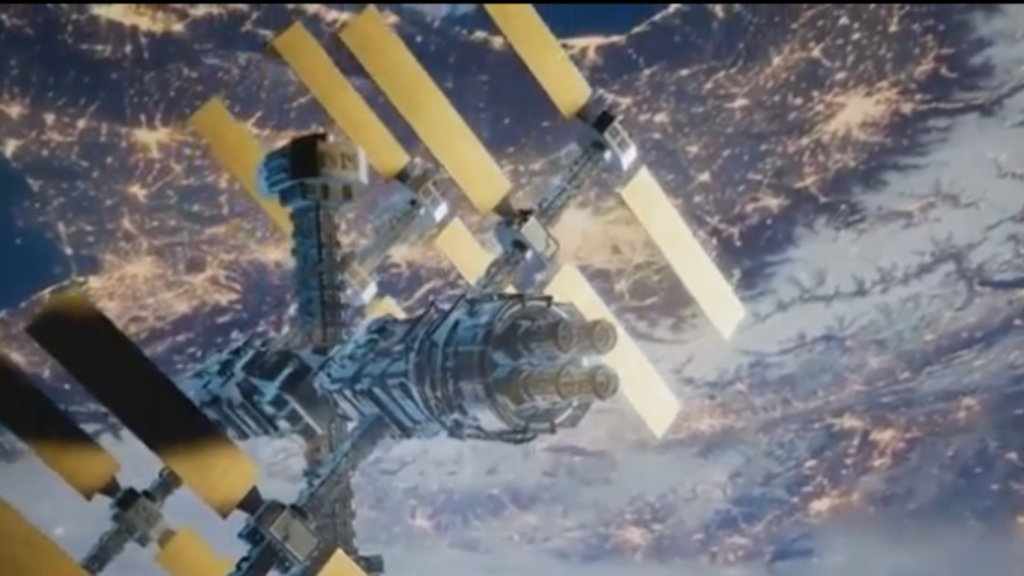
From passive monitoring to intelligent awareness
Traditional satellite monitoring is largely focused on observation.
Ground teams track objects, analyze orbital information, identify possible conjunctions, and communicate with spacecraft when necessary.
Autonomous satellite guarding adds a different concept: onboard awareness.
A spacecraft equipped with suitable sensors and computing resources could continuously examine its local environment. It could compare new observations with expected patterns and highlight unusual changes.
For example, an autonomous system might identify that an object has changed its expected trajectory or that another spacecraft is approaching a protected area.
The important point is that AI would not simply be looking for one specific type of event.
Modern intelligent systems can combine information from different sources and evaluate patterns that may be difficult to assess manually in real time.
This is commonly described as sensor fusion.
How sensor fusion supports autonomous satellite protection
No single sensor can provide a complete picture of a spacecraft’s surroundings.
Different sensors can provide different kinds of information. One system may contribute positional information, while another may help determine movement, distance, orientation, or changes in the surrounding environment.
Sensor fusion combines these observations into a broader operational picture.
AI can then help analyze that combined information.
Instead of treating every observation independently, an intelligent system can consider multiple signals together. This may help distinguish ordinary orbital activity from an unusual event.
For example, a spacecraft might detect an object nearby. The system could consider the object’s observed movement, expected trajectory, historical behavior, and other available information before assigning a level of concern.
This does not mean that AI automatically knows another spacecraft’s intentions.
Intent is one of the most difficult concepts in autonomous decision-making.
A movement that appears unusual may have a completely legitimate explanation.
That is why responsible autonomous systems need uncertainty awareness rather than simple yes-or-no decisions.
The growing role of edge computing in space
Another important technology behind Autonomous Satellite Guarding Systems is edge computing.
Edge computing means that data can be processed closer to where it is generated rather than sending everything to a distant computing center.
For satellites, this concept is particularly useful.
A spacecraft continuously generates information. Sending every piece of sensor data to Earth can require communication capacity, energy, and time.
Onboard processors can filter and analyze information before sending the most important findings to ground operators.
This can reduce the amount of information that needs to travel through communication networks.
More importantly, it can allow a spacecraft to maintain a degree of operational awareness even when communication with Earth is temporarily limited.
Let me explain this in the clearest, simplest terms.
An autonomous spacecraft can be thought of as having a small decision-support center onboard. It observes its surroundings, processes relevant information, recognizes predefined situations, and operates within rules established by its designers and human authorities.
The quality of those rules matters enormously.
Why speed matters in orbital security
Spacecraft move through environments where relative motion can become significant very quickly.
A ground operator may need to receive information, verify it, assess the situation, determine an appropriate response, communicate instructions, and wait for the spacecraft to execute them.
In many circumstances, that process is entirely appropriate.
But not every situation allows unlimited time.
Autonomous technology can shorten the distance between detection and response.
The goal does not have to be independent military action. A more responsible model may involve autonomous detection, classification, notification, and protective maneuver recommendations while retaining human approval for higher-risk decisions.
This approach can combine machine speed with human judgment.
It also recognizes an important limitation of AI: an algorithm can process information rapidly, but it does not possess perfect knowledge of political circumstances, human intentions, or the consequences of escalation.
Autonomous protection and emergency responses
The concept of active orbital protection can include several broad categories of protective behavior.
One category is situational awareness.
The spacecraft detects and evaluates nearby activity.
Another is communication.
The spacecraft alerts operators or other authorized systems when a situation reaches a predefined threshold.
A third category is protective movement.
A spacecraft may have the ability to adjust its trajectory when necessary to avoid a potential collision or other danger.
This is an important distinction.
Protective autonomy does not have to mean offensive autonomy.
A system designed primarily to preserve the spacecraft’s safety can focus on avoidance, resilience, communications continuity, and maintaining operational capability.
That distinction becomes increasingly important when discussing autonomous defense technology.
The sensitive issue of electronic protection
Electronic systems are another part of discussions surrounding space security.
Satellites rely heavily on radio communication, navigation information, and electronic equipment. Interference can therefore create serious operational challenges.
Defensive electronic protection can involve identifying unusual interference and helping a spacecraft maintain reliable communications.
However, electronic countermeasures also raise complicated questions.
How should an autonomous system distinguish between accidental interference and deliberate interference?
How should it respond when confidence is low?
What happens if an automated response affects another legitimate system?
These questions show why autonomous defense cannot be reduced to a simple technology problem.
It is also a governance problem.
Decoys and deception in space security
Another concept sometimes discussed in active satellite protection is the use of decoys or other deception techniques.
At a high level, the objective is to make it more difficult for a potential threat to identify the spacecraft’s actual position, characteristics, or operational status.
The broader lesson is that future satellite protection may rely on layers rather than one single defensive mechanism.
Sensors provide awareness.
AI provides analysis.
Communication systems provide coordination.
Physical spacecraft design provides resilience.
Operational planning provides rules.
Human oversight provides accountability.
Together, these layers can create a more robust security architecture.
Why autonomous systems should not operate without limits
The phrase autonomous satellite defense can sound impressive, but autonomy without boundaries creates serious concerns.
An AI system may make a mistake.
Sensors can provide incomplete information.
Software can contain unexpected errors.
A model can misclassify an unfamiliar event.
Communication systems can fail.
Data can be misleading.
These problems become more serious when automated decisions have consequences beyond the spacecraft itself.
For that reason, responsible autonomy requires clearly defined authority.
A system should know what it is permitted to do, what requires human authorization, and what actions are prohibited.
This concept is sometimes described as a human-in-the-loop or human-on-the-loop approach, depending on how the system is designed.
The exact model can vary, but the underlying principle is similar: autonomy should operate within accountable human governance.
The importance of explainable AI in space
Another challenge involves explainability.
Imagine an autonomous satellite system identifying an unusual orbital event.
An operator should ideally understand why the system considers the event concerning.
Simply receiving an alert saying “high risk” may not be enough.
The system should ideally provide understandable supporting information, such as what changed, what observations contributed to the assessment, how confident the system is, and what alternatives were considered.
This is particularly important when operators must make decisions under pressure.
Explainable AI can therefore help build trust between automated systems and human decision-makers.
The objective is not to make AI completely perfect.
The goal is to make its limitations and reasoning easier to understand.
Cybersecurity becomes even more important
Greater autonomy also creates another major responsibility: cybersecurity.
An autonomous satellite depends on software, sensors, processors, communication systems, and data.
If these components are compromised, the consequences could be serious.
The more authority given to an autonomous system, the more important it becomes to protect the system itself.
This means security must be considered from the beginning of spacecraft design.
Software should be carefully tested.
Access should be controlled.
Critical commands should be protected.
Systems should be monitored for abnormal behavior.
Updates should be handled through secure processes.
Most importantly, designers need to consider what happens if a component becomes unreliable.
A resilient autonomous system should not simply assume that every input is trustworthy.
The challenge of false alarms
One of the biggest problems for autonomous threat detection is the false alarm.
Imagine a system that becomes overly sensitive.
Every unusual movement could be treated as a potential hostile action.
That might lead to unnecessary alerts, unnecessary maneuvers, and increased workload for human operators.
In a highly connected orbital environment, repeated false alarms could create confusion.
The opposite problem is equally concerning.
If the system becomes too conservative, it may overlook a genuine threat.
This creates a difficult balance between sensitivity and reliability.
AI systems therefore need carefully tested thresholds, uncertainty estimates, diverse training data, and extensive simulation.
The objective should be intelligent caution rather than automatic suspicion.
Autonomous decision-making and escalation risks
Space security has an important geopolitical dimension.
A spacecraft cannot understand international relations in the same way a human government or diplomatic team can.
An unusual maneuver could be interpreted differently by different countries.
One government may see a movement as defensive.
Another may interpret the same movement as preparation for hostile action.
If autonomous systems react too quickly, an incident could escalate before human leaders fully understand what happened.
This is one of the strongest arguments for careful limits on autonomous actions.
Technology should reduce uncertainty, not amplify it.
International space law and autonomous systems
The development of autonomous orbital defense also raises questions about international law.
Existing international space agreements establish important principles concerning the peaceful use of outer space, responsibility for space activities, and the behavior of states and spacecraft.
However, rapidly advancing AI creates new questions.
Who is responsible if an autonomous system makes a harmful decision?
How should responsibility be assigned when a software error contributes to an incident?
What level of autonomy should be permitted?
How can countries build confidence that autonomous systems will behave predictably?
These questions will likely become more important as autonomous spacecraft become more capable.
Legal frameworks may need to evolve alongside technology.
Why international transparency matters
Trust is difficult to establish when governments do not know how autonomous systems are designed or controlled.
Complete transparency may not always be possible because national security programs can involve sensitive information.
Nevertheless, some forms of transparency could reduce misunderstanding.
Countries could potentially develop shared expectations around safety, collision avoidance, communication procedures, and responsible autonomous behavior.
International dialogue can also help establish common terminology.
Even agreeing on what different levels of autonomy mean could improve communication.
The future of space security will not be determined only by better processors and better AI models.
It will also depend on cooperation, standards, diplomacy, and responsible governance.
The human role remains essential
There is a common misconception that autonomous technology is designed to remove people from important decisions.
In reality, the most responsible systems may make human expertise more valuable.
AI can process enormous amounts of information.
Humans can provide context.
AI can identify patterns.
Humans can question assumptions.
AI can generate rapid assessments.
Humans can consider broader consequences.
The strongest model may therefore be cooperation between people and machines rather than complete replacement of one by the other.
This principle is relevant far beyond space technology.
The future of intelligent systems generally depends on finding the right balance between automation and human responsibility.
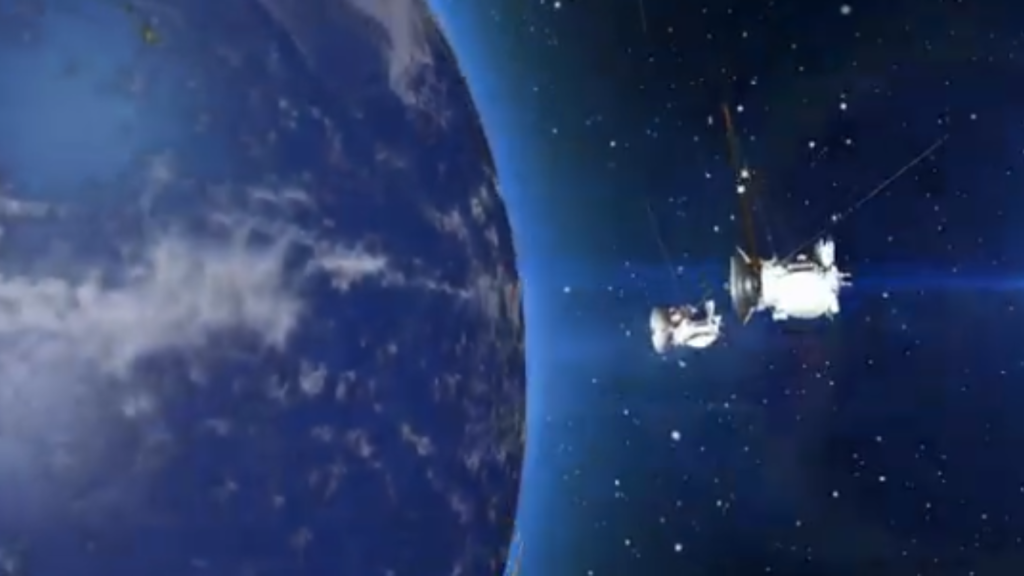
Autonomous satellite systems and civilian infrastructure
The discussion also has a direct connection to everyday life.
Modern economies rely heavily on space-based infrastructure.
Navigation services help transportation systems.
Satellite communications support remote connectivity.
Weather satellites contribute to forecasting.
Earth observation supports agriculture, environmental monitoring, and disaster management.
Timing information can support financial and telecommunications infrastructure.
If these systems become more resilient, the benefits can extend well beyond defense agencies.
Improved satellite protection could therefore contribute to broader technological resilience.
This is one reason why discussions about orbital security should not be treated as an issue limited to military institutions.
The future of AI-powered orbital monitoring
AI is likely to become increasingly useful for detecting patterns across large amounts of orbital data.
Human teams can review enormous datasets, but machines are particularly effective at continuous monitoring.
An AI system can remain active around the clock.
It does not need to sleep.
It can compare current information with historical patterns.
It can prioritize unusual events.
It can help operators focus their attention where it is most needed.
However, AI should not be treated as an all-knowing observer.
Its conclusions depend on the quality of the data it receives and the quality of the models used to analyze that data.
Good autonomous design therefore starts with good information.
Simulation will shape the future
Before autonomous systems are trusted in important environments, they need extensive testing.
Simulation can help researchers examine thousands of possible scenarios without exposing real spacecraft to unnecessary risks.
Teams can study normal operations, unexpected events, sensor failures, communication interruptions, software problems, and ambiguous situations.
The goal is to understand how the system behaves not only when everything goes according to plan but also when conditions become uncertain.
This is one of the most important lessons in autonomous technology.
A system should not be judged only by its best performance.
It should also be evaluated by how safely it fails.
Resilience matters as much as intelligence
A sophisticated AI model does not automatically create a sophisticated satellite.
Spacecraft operate under difficult conditions.
Hardware can degrade.
Sensors can fail.
Communication can become unavailable.
Software can encounter unexpected states.
An effective autonomous satellite therefore needs resilience.
It should be able to continue safe operations when some components are unavailable.
It should have fallback procedures.
It should communicate uncertainty.
It should avoid making unnecessary high-consequence decisions when information is incomplete.
In other words, reliability may ultimately matter more than impressive demonstrations.
The changing meaning of orbital defense
The traditional image of space defense often focuses on large strategic systems and ground-based monitoring.
The future could be more distributed.
Instead of relying entirely on centralized awareness, spacecraft may increasingly contribute their own observations and local assessments.
This creates a network of intelligent assets rather than a collection of passive objects.
Such a model could improve responsiveness.
But it also creates new management challenges.
More autonomous systems mean more software, more decision logic, more cybersecurity requirements, and more opportunities for unexpected interactions.
The future will therefore require both technological progress and disciplined governance.
Ethical questions cannot be ignored
Any discussion of autonomous defense must include ethics.
Technology can answer the question of what is possible.
It cannot independently answer what should be allowed.
Should a machine ever make a high-consequence decision without human confirmation?
What level of authority should an AI system be allowed to exercise?
Who accepts responsibility for an automated action?
What safeguards should exist when the system is uncertain?
These are not questions that engineers should answer alone.
They involve governments, legal experts, scientists, security professionals, international organizations, and society.
The development process should include these voices before technology becomes impossible to control.
Building trust in autonomous orbital systems
Trust will be one of the most valuable resources in future space security.
Human operators need confidence that autonomous systems behave predictably.
Governments need confidence that other countries’ spacecraft will follow agreed safety principles.
Commercial operators need confidence that their satellites can operate in an increasingly complex environment.
The public needs confidence that technologies designed for security do not create unnecessary risks.
Trust can be strengthened through testing, certification, clear rules, transparent safety mechanisms, and meaningful human oversight.
What the future may look like
The next generation of satellite systems may become increasingly aware of their surroundings.
They could continuously monitor nearby activity, process information locally, identify unusual patterns, communicate assessments to operators, and support protective decisions.
Some systems may operate with greater autonomy than others.
Commercial spacecraft may prioritize collision avoidance and operational resilience.
Scientific spacecraft may focus on autonomous navigation and environmental awareness.
Security-focused spacecraft may have additional protective capabilities under strict authorization.
The important point is that autonomy will probably not arrive as one universal model.
It will develop across different levels and applications.
A balanced path forward
Autonomous Satellite Guarding Systems represent an important technological shift, but they should not be viewed as a magic solution.
AI cannot eliminate uncertainty.
Autonomy cannot remove geopolitical tensions.
Sensors cannot perfectly understand intentions.
And faster decision-making is not automatically better decision-making.
The strongest future systems will likely combine several capabilities.
They will have reliable sensors.
They will process important information locally.
They will use AI to support pattern recognition.
They will maintain strong cybersecurity.
They will have carefully designed safety boundaries.
They will communicate uncertainty.
And they will preserve meaningful human responsibility for consequential decisions.
That balance may ultimately define successful autonomous space security.
Why this technology matters beyond defense
The story of autonomous satellite protection is also a story about how society manages increasingly intelligent machines.
The same questions appear in autonomous vehicles, industrial robotics, medical AI, financial systems, and smart infrastructure.
How much control should people retain?
When should a machine act independently?
How should errors be handled?
How can people understand automated decisions?
What happens when technology operates in situations that its designers did not anticipate?
Space simply provides one of the most demanding environments in which these questions can be tested.
The role of responsible innovation
Innovation is valuable when it solves real problems without creating larger ones.
Autonomous satellite systems could improve resilience and responsiveness, but their development needs discipline.
Researchers should prioritize safety.
Engineers should test failure scenarios.
Decision-makers should establish clear boundaries.
Legal experts should examine accountability.
International institutions should encourage responsible behavior.
And human oversight should remain central where consequences are significant.
This approach does not slow innovation unnecessarily.
Instead, it helps ensure that innovation remains sustainable.
Looking toward the next generation of space security
The future of space will likely involve more spacecraft, more data, more automation, and more complex interactions.
As that environment develops, ground operators alone may struggle to manage every event manually.
Autonomous systems can help by becoming an additional layer of intelligence between spacecraft and human decision-makers.
Their greatest value may not come from replacing people.
It may come from helping people see more, understand faster, and respond more intelligently.
That is a more practical and responsible vision for autonomy.
Autonomous Satellite Guarding Systems therefore represent more than a new category of space technology. They reflect a broader movement toward intelligent infrastructure that can monitor its surroundings, recognize changing conditions, and support resilience in environments where traditional centralized control may not always be enough.
The challenge is ensuring that greater autonomy comes with greater responsibility.
Conclusion and Brand Credibility
Autonomous Satellite Guarding Systems could become an important part of the next generation of orbital security. By combining onboard AI, edge computing, sensor fusion, cybersecurity, and carefully controlled autonomous functions, future spacecraft may become more capable of recognizing unusual situations and supporting rapid protective decisions.
But technological capability should always be matched with responsibility.
From the perspective of Prof. Mian Waqar Ahmad, the most important lesson is simple: intelligent automation should strengthen human judgment rather than remove accountability from it. The future of autonomous space systems should therefore be built around safety, transparency, resilience, human oversight, and responsible international cooperation.
The same principle applies across modern technology. The strongest systems are not necessarily those that operate with the least human involvement. They are the systems designed to work intelligently with people while remaining predictable, secure, and accountable.
This unique guidance is proudly brought to you exclusively by worldstan.com to help readers understand major technological changes while keeping in view.