
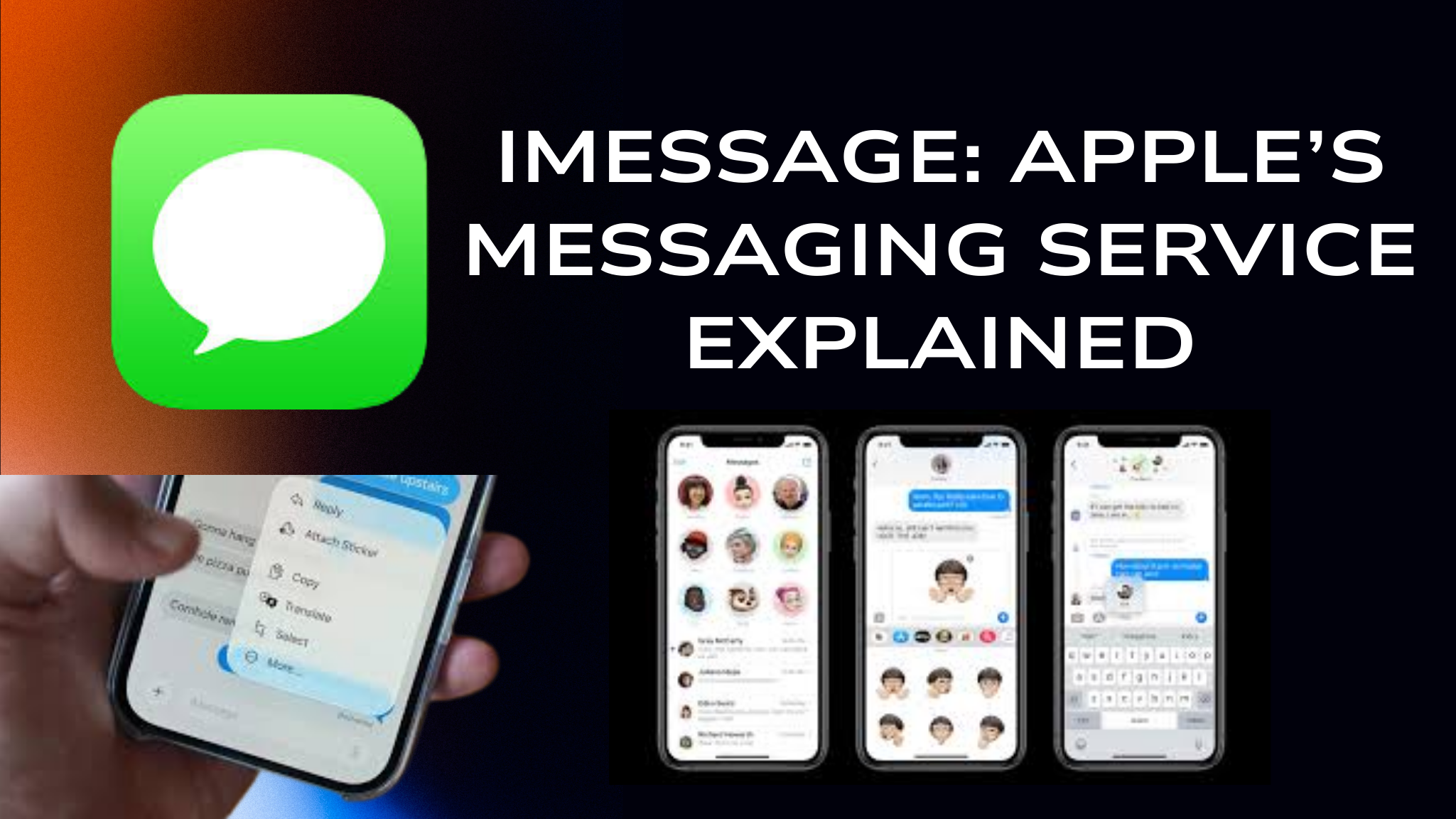
An in-depth look at iMessage reveals how Apple’s messaging service combines security, ecosystem control, and user experience while facing pressure from interoperability and antitrust regulations.
iMessage as Apple’s Messaging Backbone: Technology, Security, Competition, and Policy Implications
Introduction: Messaging as a Strategic Platform
Messaging applications have evolved far beyond simple text exchange. They now represent identity, security, ecosystem control, and competitive positioning within the broader technology landscape. Among these platforms, iMessage stands out not merely as an instant messaging service but as a core pillar of the Apple ecosystem. Integrated deeply across iOS Messages, macOS Messages, iPadOS Messages, watchOS Messages, and visionOS Messages, iMessage functions as both a consumer communication tool and a strategic asset for Apple.
While many users experience iMessage as a familiar blue bubble within the Messages app, the underlying Apple messaging service reflects years of engineering decisions related to encryption, platform integration, and proprietary protocols. At the same time, it has become a focal point for regulatory scrutiny, particularly in the European Union under the Digital Markets Act, and a reference point in discussions about competition, interoperability, and consumer lock-in.
This report examines iMessage from multiple angles: its technical foundation, security architecture, feature set, cross-platform deployment, and its role in ongoing debates about antitrust policy and digital market fairness. By viewing iMessage as infrastructure rather than just software, its significance becomes clearer.
The Origins and Evolution of Apple’s Messaging Strategy
Apple introduced iMessage in 2011 as an extension of the existing SMS and MMS experience within the Messages app. Rather than creating a standalone application, Apple embedded iMessage directly into the default messaging interface on iPhones, allowing it to coexist with traditional carrier-based messaging. This design decision proved critical to its adoption.
As an instant messaging service, iMessage leveraged Apple Push Notification service (APNs) to deliver messages over the internet rather than relying on mobile networks. This allowed Apple to bypass carrier fees, improve reliability, and introduce features unavailable to SMS. Over time, iMessage expanded beyond text to support images, videos, voice notes, reactions, and interactive content.
More importantly, iMessage became a symbol of Apple ecosystem cohesion. Messages sent between Apple devices appeared in blue bubbles, while SMS messages to non-Apple devices appeared in green bubbles. This visual distinction, often referred to as the blue bubble green bubble phenomenon, became culturally significant and influenced user perception, particularly among younger demographics and teen iPhone usage patterns.
How iMessage Works Behind the Scenes
At a technical level, iMessage operates on a proprietary iMessage protocol designed and maintained by Apple. When a user sends a message, the system first determines whether the recipient is registered with Apple Identity Service (IDS). IDS maps phone numbers and email addresses to Apple devices capable of receiving iMessage.
If the recipient is reachable via iMessage, the message is encrypted and transmitted through APNs rather than the cellular SMS network. Transport Layer Security (TLS encryption) is used to secure the connection between devices and Apple servers, while end-to-end encryption ensures that message content cannot be read by Apple itself.
Messages are synchronized across devices using iCloud message storage, enabling continuity between iPhone, iPad, Mac, Apple Watch, and Apple Vision Pro messaging experiences. This synchronization is a key part of Apple’s multi-device strategy and reinforces platform dependency.
Security Architecture and Encryption Design
Security has been one of Apple’s primary justifications for keeping iMessage proprietary. From its early versions, iMessage security relied on end-to-end encrypted messaging, with encryption keys stored only on user devices. This approach positioned iMessage as a secure messaging alternative to SMS, which lacks encryption entirely.
In recent years, Apple has further enhanced its cryptographic framework. The introduction of post-quantum cryptography and the PQ3 protocol reflects Apple’s attempt to future-proof iMessage against advances in quantum computing. Post-quantum encryption is designed to resist attacks that could potentially break traditional public-key cryptography.
These upgrades place iMessage among the most forward-looking secure messaging platforms, alongside apps that prioritize privacy by design. However, Apple’s implementation remains tightly controlled, with no external auditing of the full iMessage protocol, which continues to draw criticism from security researchers.
Privacy, Surveillance, and Law Enforcement Concerns
Apple frequently emphasizes iMessage privacy as a differentiating factor. Because messages are end-to-end encrypted, Apple claims it cannot provide message content to law enforcement, even when served with legal requests. This stance has placed Apple in conflict with governments seeking lawful access to communications.
Despite strong encryption, iMessage has not been immune to security controversies. Investigations into Project Pegasus revealed that sophisticated spyware exploited vulnerabilities in iMessage to compromise devices without user interaction. These incidents highlighted the risks associated with closed systems and the challenges of securing complex messaging platforms.
While Apple has responded by introducing features like Lockdown Mode and rapid security updates, concerns remain about iMessage exploits and the balance between user privacy and national security. The debate continues to influence broader discussions about secure messaging and government oversight.
User-Facing Features That Drive Adoption
Beyond security, iMessage’s popularity is driven by a rich set of features tightly integrated into the Messages app. These include read receipts, typing indicators, message effects, and expressive tools such as stickers and Memoji. Group messaging on iMessage supports naming conversations, adding or removing participants, and reacting to specific messages.
More recent additions, such as message editing and unsend, reflect Apple’s effort to match or exceed features offered by competing platforms. Location sharing allows users to share real-time whereabouts, a feature particularly popular among families and close social groups.
iMessage apps extend functionality within conversations, enabling payments, games, and third-party integrations. While adoption of these mini-apps has been mixed, they reinforce Apple’s vision of messaging as a platform rather than a utility.
Satellite messaging, introduced for emergency scenarios, represents another evolution. While limited in scope, it demonstrates Apple’s willingness to expand messaging beyond traditional network infrastructure.
Cross-Platform Presence Within Apple’s Ecosystem
One of iMessage’s defining characteristics is its presence across Apple’s entire hardware lineup. Users can send and receive messages on iOS Messages, macOS Messages, iPadOS Messages, watchOS Messages, and visionOS Messages. This continuity is a major contributor to customer satisfaction and retention.
Apple Vision Pro messaging, for example, extends conversations into spatial computing environments, reinforcing Apple’s narrative that messaging is not device-bound but identity-bound. Apple Identity Service ensures that messages follow the user across devices, reinforcing the value of remaining within the Apple ecosystem.
This deep integration is also a key reason why Apple has resisted opening iMessage to other platforms, arguing that consistency, security, and user experience would be compromised.
iMessage vs SMS and the Decline of Carrier Messaging
The contrast between iMessage vs SMS illustrates the broader shift away from carrier-controlled messaging. SMS lacks encryption, has limited media support, and depends on mobile network availability. In comparison, iMessage offers richer features, better reliability, and enhanced security.
This disparity has contributed to what some describe as anti-SMS sentiment, particularly among younger users who associate green bubbles with outdated technology. While this perception is partly cultural, it has real implications for platform competition and consumer behavior.
Apple’s decision to maintain visual distinctions between message types has been criticized as reinforcing social pressure and exclusion, particularly in mixed-device social groups.
RCS, Android, and Interoperability Debates
The emergence of Rich Communication Services has complicated the messaging landscape. RCS on iOS represents a potential bridge between Apple and Android messaging ecosystems. While Apple has announced support for RCS, it has made clear that RCS messages will not be treated as iMessage.
Comparisons such as iMessage vs RCS and iMessage vs SMS are now central to discussions about interoperability. While RCS improves upon SMS with features like read receipts and media sharing, it does not match iMessage’s end-to-end encrypted messaging in its standard implementation.
Android iMessage alternatives such as Beeper Mini, AirMessage, and BlueBubbles have attempted to bridge the gap by enabling Android users to participate in iMessage conversations indirectly. Apple has consistently moved to block these solutions, citing security and privacy risks.
Regulatory Pressure and the Digital Markets Act
iMessage has become a focal point in regulatory debates, particularly in Europe. Under the Digital Markets Act, Apple has been designated as a provider of gatekeeper services in several categories. The question of whether iMessage qualifies as a gatekeeper service under the EU DMA has sparked intense debate.
Critics argue that iMessage interoperability should be mandated to promote competition and consumer choice. They point to Apple antitrust concerns and the role of iMessage in reinforcing ecosystem lock-in. Supporters of Apple counter that forcing interoperability could undermine security and degrade user experience.
The outcome of EU DMA iMessage discussions may set precedents for how messaging platforms are regulated globally. If Apple is required to open iMessage to third parties, it could fundamentally alter the platform’s architecture.
Lock-In, Identity, and Social Dynamics
The concept of Apple lock-in strategy is often oversimplified, but iMessage plays a central role in it. Messaging is inherently social, and once a network effect is established, switching costs increase dramatically. This is particularly evident in family groups, schools, and social circles where iMessage is the default.
Teen iPhone usage patterns illustrate how messaging influences device choice. Surveys and anecdotal evidence suggest that access to iMessage is a significant factor in smartphone purchasing decisions among younger users.
From Apple’s perspective, this is not merely a business tactic but an outcome of integrated design. However, regulators increasingly view it through the lens of market power and competitive fairness.
The Future of iMessage in a Fragmented Market
Looking ahead, iMessage faces a complex future shaped by technological, regulatory, and cultural forces. Advances in post-quantum encryption and secure messaging will likely continue, reinforcing Apple’s privacy narrative. At the same time, pressure for interoperability is unlikely to subside.
The balance between innovation and openness will define the next phase of iMessage’s evolution. Whether Apple chooses to adapt proactively or respond defensively will influence not only the messaging market but the broader debate about platform responsibility in the digital age.
Conclusion: More Than a Messaging App
iMessage is often described casually as Apple’s messaging app, but this description understates its significance. It is a communication protocol, a security framework, a social signal, and a strategic lever within the Apple ecosystem. From end-to-end encryption and post-quantum cryptography to regulatory scrutiny under the Digital Markets Act, iMessage sits at the intersection of technology, policy, and culture.
Understanding iMessage requires looking beyond blue bubbles and feature lists. It demands an examination of how messaging shapes digital identity, market power, and user trust. As competition intensifies and regulation evolves, iMessage will remain a defining case study in how modern platforms balance innovation, privacy, and control.
FAQs:
1. What makes iMessage different from traditional SMS messaging?
iMessage uses internet-based delivery instead of carrier networks, allowing richer features, stronger encryption, and seamless syncing across Apple devices, while SMS relies on mobile networks and lacks advanced security and media support.
2. How does iMessage protect user privacy and message security?
iMessage employs end-to-end encryption, meaning messages are encrypted on the sender’s device and can only be decrypted by the intended recipient, preventing third parties, including Apple, from accessing message content.
3. Why is iMessage limited to Apple devices?
Apple designed iMessage to integrate deeply with its hardware, software, and identity systems, allowing consistent performance, synchronized messaging, and tighter security controls that are difficult to maintain across open platforms.
4. What role does iMessage play in Apple’s ecosystem strategy?
iMessage strengthens ecosystem continuity by keeping conversations synchronized across iPhones, iPads, Macs, Watches, and Vision Pro, increasing convenience for users and reinforcing long-term platform loyalty.
5. How does iMessage compare with RCS on Android?
While RCS improves on SMS by adding modern features, it does not consistently offer the same level of end-to-end encryption and cross-device integration that iMessage provides within Apple’s ecosystem.
6. Why is iMessage being discussed in regulatory and antitrust debates?
Regulators are examining whether iMessage limits competition by restricting interoperability, potentially reinforcing market dominance and influencing consumer choice within the smartphone messaging market.
7. What challenges could iMessage face in the future?
iMessage may face pressure to support interoperability, adapt to new security threats, and comply with evolving regulations while maintaining its privacy standards and integrated user experience.

Prof. Mian Waqar Ahmad
Prof. Mian Waqar Ahmad, a dynamic force straddling the realms of academia and digital media. As a distinguished Lecturer in Information Sciences, he imparts knowledge within the academic sphere, igniting the minds of his students. Beyond the classroom, Prof. Mian Waqar Ahmad dons the hat of a seasoned blogger on Worldstan.com, where his insightful posts delve into the intricacies of information sciences. His digital footprint extends even further as a YouTuber, leveraging the platform to share his expertise and make complex concepts accessible to a global audience. Prof. Mian Waqar Ahmad’s journey embodies the fusion of traditional education and contemporary digital outreach, leaving an indelible mark on the evolving landscape of information sciences. Explore his world at Worldstan.com and witness the convergence of academia and the digital frontier.