
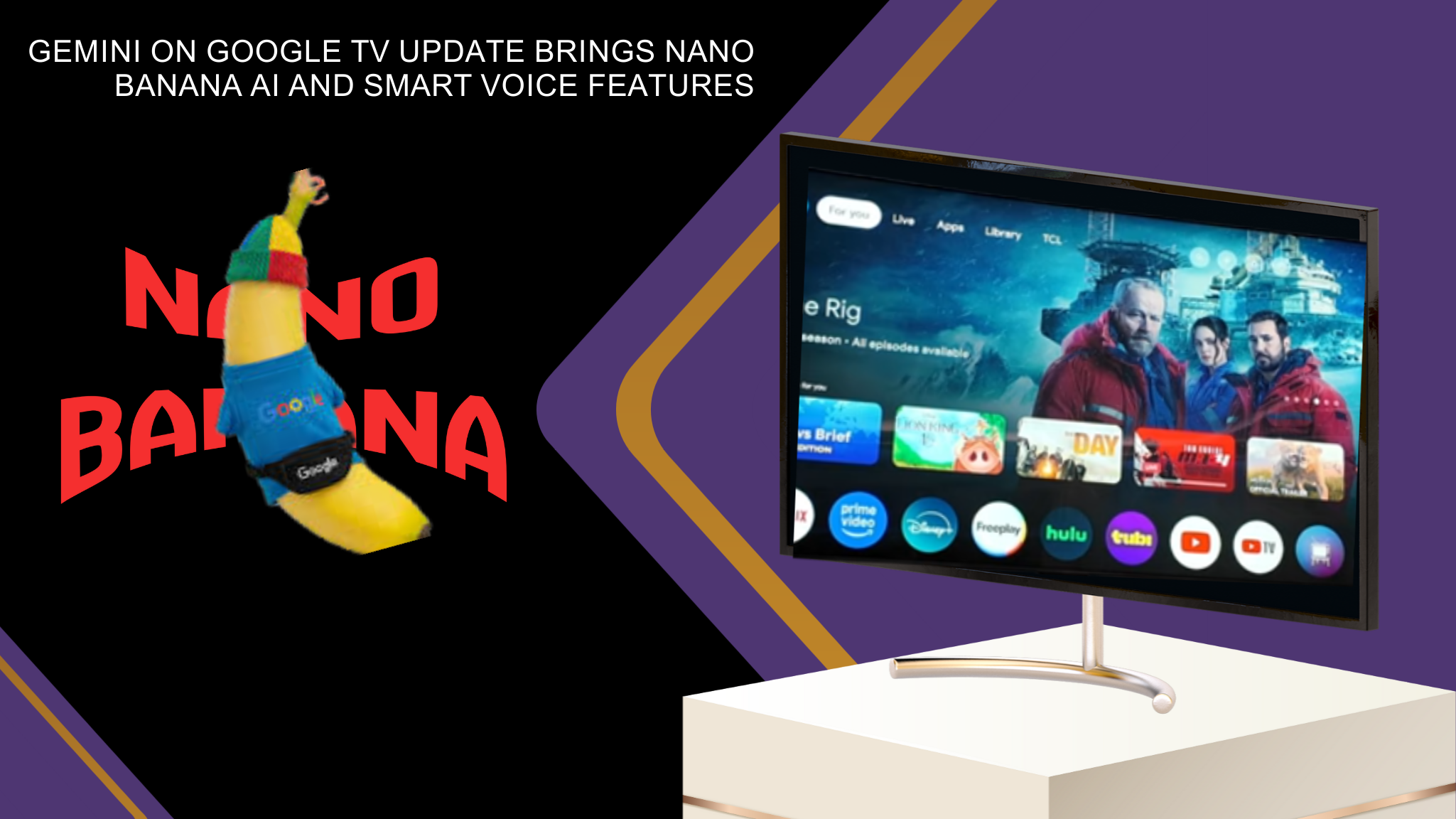
Google’s latest Gemini on Google TV update introduces generative AI features that bring intelligent visuals, interactive voice controls, and real-time insights to smart televisions, reshaping how users discover content and interact with their screens.
A New Phase in the Evolution of Smart Television
Television has long moved beyond passive viewing, but Google’s latest developments suggest the medium is now entering a more conversational and adaptive phase. With artificial intelligence becoming deeply embedded across consumer technology, Google TV is emerging as a central platform where generative AI, real-time information, and natural voice interaction converge. This shift is not positioned as a cosmetic update; rather, it represents a strategic step toward redefining how users search, explore, and interact with content on the largest screen in the home.
At the center of this transformation is Gemini on Google TV, a system-level intelligence layer designed to interpret user intent, generate visual responses, and deliver contextual insights without disrupting the viewing experience. Unlike earlier assistants that primarily focused on search queries or basic commands, this new approach integrates creativity, reasoning, and personalization directly into the television interface.
From Utility to Intelligence: The Role of Gemini
For years, Google Assistant served as a functional tool for controlling playback, launching apps, or checking the weather. The introduction of a more advanced Google TV AI assistant signals a departure from command-based interactions toward more natural, dialogue-driven engagement. Instead of simply responding to prompts, the assistant is now capable of understanding broader questions, synthesizing information, and presenting it visually in ways that feel intuitive for a TV environment.
This transition is driven by the broader Gemini AI update, which expands the assistant’s abilities beyond text and voice into multimodal understanding. On Google TV, that means the assistant can process spoken questions, generate images, curate videos, and adapt its responses based on context, time, and user behavior. The result is an experience that feels less like navigating menus and more like having a knowledgeable guide embedded into the screen.
Introducing Creativity to the Living Room Experience
One of the more unexpected additions to the platform is Nano Banana AI, a lightweight generative component designed to work efficiently on consumer hardware. Its role is to enable rapid creative outputs without relying heavily on cloud resources, ensuring responsiveness even during complex tasks. This technology underpins several of the new visual features being introduced, allowing Google TV to generate content dynamically rather than relying solely on preloaded assets.
Creativity extends further through Veo AI video generation, which brings cinematic-style AI video synthesis into the television environment. While generative video has largely been associated with professional tools or experimental platforms, its integration into Google TV suggests a future where users can request short explanatory clips, visual summaries, or themed videos directly from their couch.
These capabilities collectively enable AI-generated videos on TV, shifting the screen from a playback device to a content creation and visualization surface. Whether explaining a historical event, summarizing a sports season, or visualizing a concept for educational purposes, the TV becomes an interactive canvas rather than a one-way display.
Visual Intelligence Beyond Traditional Content
The expansion of AI image generation on Google TV further reinforces this transformation. Users can ask the system to create visuals based on abstract ideas, destinations, or themes, and see those results instantly on a large screen. This is particularly impactful in shared settings, where families or groups can explore ideas together rather than individually on phones or laptops.
Complementing this feature is deeper Google Photos integration, allowing personal media libraries to merge seamlessly with AI-driven experiences. Rather than manually selecting albums or slideshows, users can rely on the system to curate moments intelligently. Through AI-powered slideshows, the platform can group photos by events, moods, or time periods, adding transitions and pacing that feel intentional rather than automated.
The assistant’s ability to provide visual AI responses ensures that information is not just spoken aloud but displayed in ways that enhance understanding. Maps, diagrams, images, and short clips can appear contextually, making complex topics easier to grasp without overwhelming the viewer.
Information That Feels Timely and Relevant
Beyond creativity, Google TV’s AI enhancements focus heavily on real-time awareness. One of the most practical applications is real-time sports updates on TV, where viewers can request live scores, player statistics, or schedule changes without leaving the current broadcast. This eliminates the need to juggle multiple apps or devices, keeping attention focused on the main screen.
For viewers who want more than surface-level information, the system offers AI deep dives that break down topics into structured, digestible segments. Whether exploring a documentary subject, understanding a news event, or learning about a new technology, users can ask follow-up questions and receive layered explanations that build progressively.
These experiences are enhanced through interactive AI narration, where the assistant adapts its tone, pacing, and depth based on user feedback. Instead of a static voiceover, the narration feels conversational, allowing viewers to interrupt, clarify, or redirect the discussion naturally.
Voice as the Primary Interface
A defining characteristic of the update is its emphasis on voice-controlled TV settings. Google is positioning voice not as an optional convenience, but as a primary interaction method that reduces friction and improves accessibility. Through Gemini voice commands, users can navigate menus, search content, and adjust system preferences without touching a remote.
This approach enables true hands-free TV controls, which are particularly valuable in shared or casual viewing environments. Whether cooking, exercising, or managing a household, users can interact with their TV without interrupting their activities. Commands are designed to be conversational rather than rigid, allowing flexibility in phrasing and intent.
Practical examples include the ability to adjust TV picture with voice, enabling changes to brightness, contrast, or color profiles based on lighting conditions or personal preference. Similarly, users can adjust TV volume with voice, making incremental changes without searching for buttons or navigating settings menus.
Accessibility and Inclusivity at the Core
While convenience is a major selling point, the broader implications lie in AI accessibility features that make television more inclusive. Voice interaction, visual summaries, and adaptive responses help accommodate users with mobility limitations, visual impairments, or cognitive challenges. By reducing reliance on complex interfaces, Google TV becomes more approachable for a wider audience.
These enhancements contribute to a growing set of smart TV AI features that prioritize usability alongside innovation. Instead of adding complexity, the system aims to simplify interaction by anticipating needs and presenting options proactively. Over time, the assistant can learn preferences, suggest adjustments, and personalize the experience without explicit input.
Hardware Partners and Platform Expansion
The rollout is not limited to Google-branded hardware. Manufacturers are beginning to adopt the new capabilities, with early signs pointing toward a TCL Google TV update that integrates Gemini features directly into upcoming models. This partnership approach ensures that AI enhancements reach a broader user base rather than remaining confined to a single product line.
As adoption expands, the Gemini Google TV rollout is expected to occur in phases, with features becoming available based on region, hardware capability, and software readiness. Google has indicated that performance optimization and privacy safeguards are key considerations, particularly when deploying generative features on shared household devices.
Implications for Content Discovery and Media Consumption
The introduction of generative AI into the TV environment has broader implications for how content is discovered and consumed. Traditional recommendation systems rely on viewing history and ratings, but Gemini’s conversational approach allows users to articulate intent more clearly. Instead of browsing endless rows, viewers can describe moods, themes, or questions and receive tailored suggestions instantly.
This model also opens new opportunities for educational content, where explanations, visuals, and summaries can be generated on demand. For news consumption, it offers a way to contextualize events without overwhelming users with information overload. In entertainment, it adds an element of exploration, allowing viewers to dive deeper into stories, characters, or production details.
Privacy, Control, and Trust
As with any AI-driven platform, questions around privacy and data usage are inevitable. Google has emphasized that voice interactions and generative outputs are designed with transparency and user control in mind. Users can manage permissions, review activity, and customize how the assistant learns from interactions.
Importantly, many features are designed to process requests efficiently without excessive data retention. On-device components like Nano Banana AI reduce reliance on constant cloud communication, which can improve responsiveness while addressing privacy concerns.
Looking Ahead: The Future of AI-Driven Television
The integration of Gemini into Google TV represents more than a feature update; it signals a broader vision of television as an intelligent hub for information, creativity, and interaction. By combining generative visuals, conversational voice control, and real-time awareness, Google is positioning the TV as a central interface for digital life rather than a secondary screen.
As AI models continue to evolve, future updates may introduce deeper personalization, collaborative viewing experiences, and even more advanced generative capabilities. What remains clear is that the boundary between content consumption and interaction is rapidly dissolving.
Conclusion:
The Gemini on Google TV update marks a significant milestone in the evolution of smart television. By embedding advanced AI directly into the viewing experience, Google is redefining how users interact with their screens, shifting from passive consumption to active engagement. From creative visuals and real-time insights to intuitive voice control and accessibility enhancements, the platform is designed to feel more responsive, inclusive, and intelligent.
As the rollout expands across devices and regions, Google TV is poised to become a showcase for how generative AI can enhance everyday technology in meaningful, practical ways. Rather than overwhelming users with novelty, the focus remains on clarity, usefulness, and seamless integration, setting a new standard for what a modern television can be.
FAQs:
1. What is the Gemini on Google TV update?
The Gemini on Google TV update is a major platform enhancement that integrates Google’s advanced AI model into the TV interface, enabling generative visuals, intelligent content discovery, and more natural voice interactions.
2. How does Gemini improve everyday TV usage?
Gemini enhances daily viewing by understanding conversational requests, generating visual responses, and simplifying navigation through voice, reducing the need for manual browsing or complex menu controls.
3. Can Gemini create content directly on the TV screen?
Yes, the update allows the TV to generate AI-based images and short video visuals in real time, offering explanations, summaries, and creative outputs directly on the display.
4. Does this update change how voice commands work on Google TV?
Voice commands become more flexible and context-aware, allowing users to speak naturally while adjusting settings, searching for content, or requesting detailed information without strict phrasing.
5. Will the Gemini features be available on all Google TV devices?
Availability depends on device compatibility, region, and manufacturer support, with newer models and select partner TVs receiving the update first.
6. How does Gemini support accessibility on smart TVs?
The update improves accessibility through hands-free controls, visual summaries, and adaptive responses that help users with mobility, vision, or interaction challenges navigate TV features more easily.
7. What makes this update different from previous Google TV improvements?
Unlike earlier updates focused on interface or performance, this release embeds generative AI at the system level, transforming Google TV from a content platform into an intelligent, interactive experience.