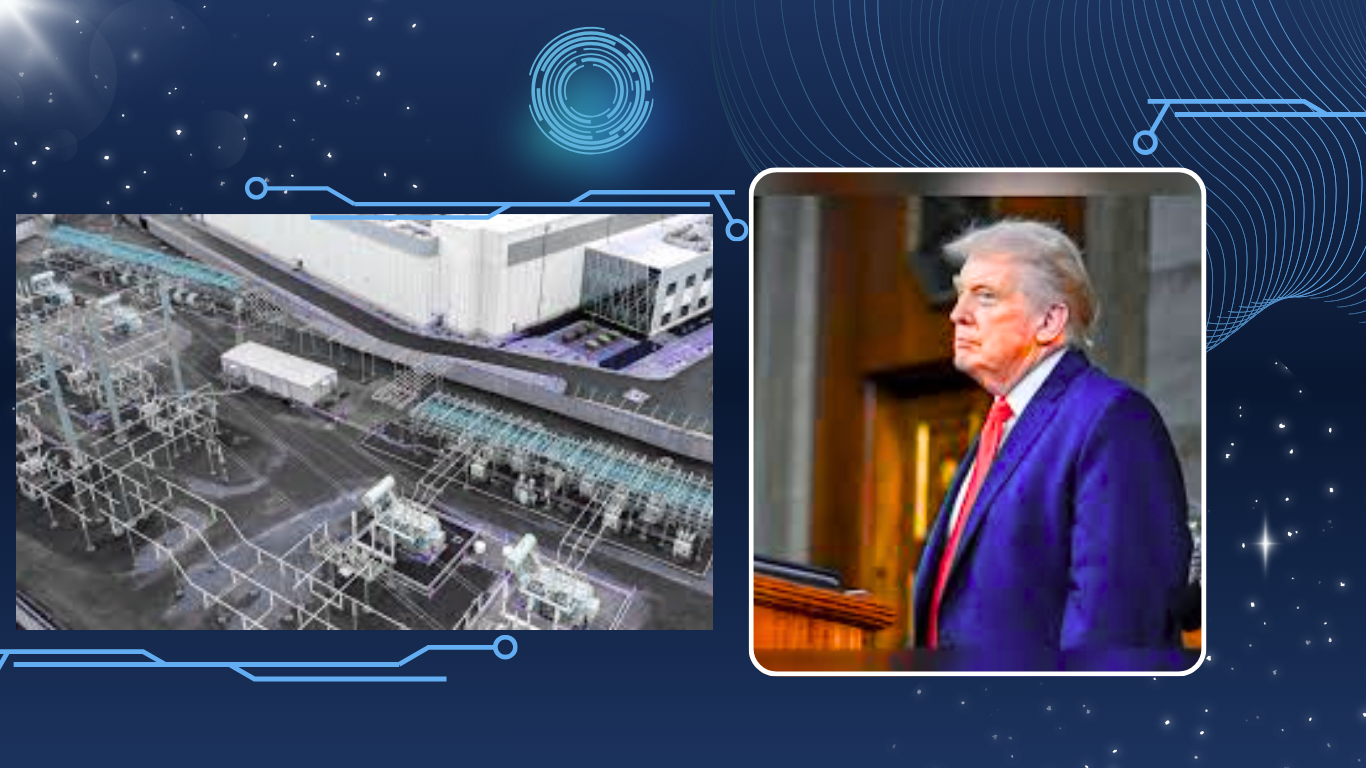
This report explains how President Donald Trump is urging major technology companies to take full responsibility for AI data centers power supply, aiming to protect American households from rising electricity costs as artificial intelligence infrastructure rapidly expands.
President Donald Trump has announced that major technology companies are expected to sign new agreements next week focused on AI data centers power supply. The plan, described as a “rate payer protection pledge,” is designed to ensure that the rapid expansion of AI data centers power supply does not increase electricity costs for everyday Americans.
Speaking after his State of the Union address, Trump said his administration has been in talks with leading firms to make sure they take full responsibility for their AI data centers power supply. According to reports from Fox News, executives from Amazon, Google, Meta, Microsoft, xAI, Oracle and OpenAI are expected to attend a March 4 event where the pledge may be formally signed.
The White House explained that under this initiative, companies building new AI facilities must arrange their own AI data centers power supply. This could mean constructing new power plants, investing in dedicated generation projects, or directly paying for additional electricity production. The goal is to reduce pressure on public grids and avoid passing higher costs on to regular ratepayers.
AI systems require massive computing power, and that demand continues to grow. As companies expand their generative AI operations, the need for stable AI data centers power supply has become a national issue. Higher electricity demand from large data centers can affect grid stability and potentially raise fuel and power prices if not carefully managed.
Some companies have already taken steps toward securing their own AI data centers power supply. Anthropic and Microsoft have made voluntary commitments to support the development of new power plants connected to their facilities. However, these commitments often require formal contracts with utilities and grid operators, along with regulatory approval, to ensure companies meet their obligations.
Meta, for example, signed a long-term agreement to help finance three gas-fired plants in Louisiana to power one of its largest data centers. While this arrangement strengthens its AI data centers power supply, some residents and consumer advocates remain concerned about the possible impact on local fuel costs and electricity bills.
In addition, several tech companies have announced investments in next-generation nuclear reactors as a future solution for AI data centers power supply. Although nuclear energy could provide a more stable and low-carbon option, most of these projects are still under development and are not expected to become operational until the 2030s. Meanwhile, projects involving fossil fuel plants are facing delays due to limited gas turbine availability and grid connection challenges.
As artificial intelligence continues to expand across industries, securing reliable AI data centers power supply is becoming central to energy policy discussions. The upcoming agreements may represent a significant step in defining how the technology sector manages its growing electricity needs while protecting consumers from rising costs.