This article provides a comprehensive overview of key AI advancements , highlighting their impact across industries, research, and career pathways.
The Latest AI Breakthroughs Reshaping Research, Industry, and Society
Artificial Intelligence has entered a defining phase in its evolution. What was once viewed primarily as a productivity enhancer or automation tool has matured into a foundational technology shaping scientific discovery, economic strategy, creative industries, and governance frameworks. AI research and development have reached a level of sophistication where intelligent systems are no longer peripheral tools but central collaborators in decision-making, innovation, and problem-solving.
Across academia, enterprise, and public policy, AI breakthroughs are accelerating at an unprecedented pace. From foundation models capable of complex reasoning to multimodal systems that generate video, text, and imagery seamlessly, the scope of AI innovation has expanded far beyond its early expectations. This rapid progress has made AI literacy and technical skill development essential for professionals across disciplines, especially those pursuing careers in machine learning, data science, and advanced analytics.
For learners and professionals alike, structured education pathways such as a Machine Learning Course in Pune or an AI course in Pune with placement support are increasingly viewed as critical investments in future readiness. These programs reflect the growing demand for individuals who not only understand AI systems but can apply them responsibly and effectively in real-world contexts.
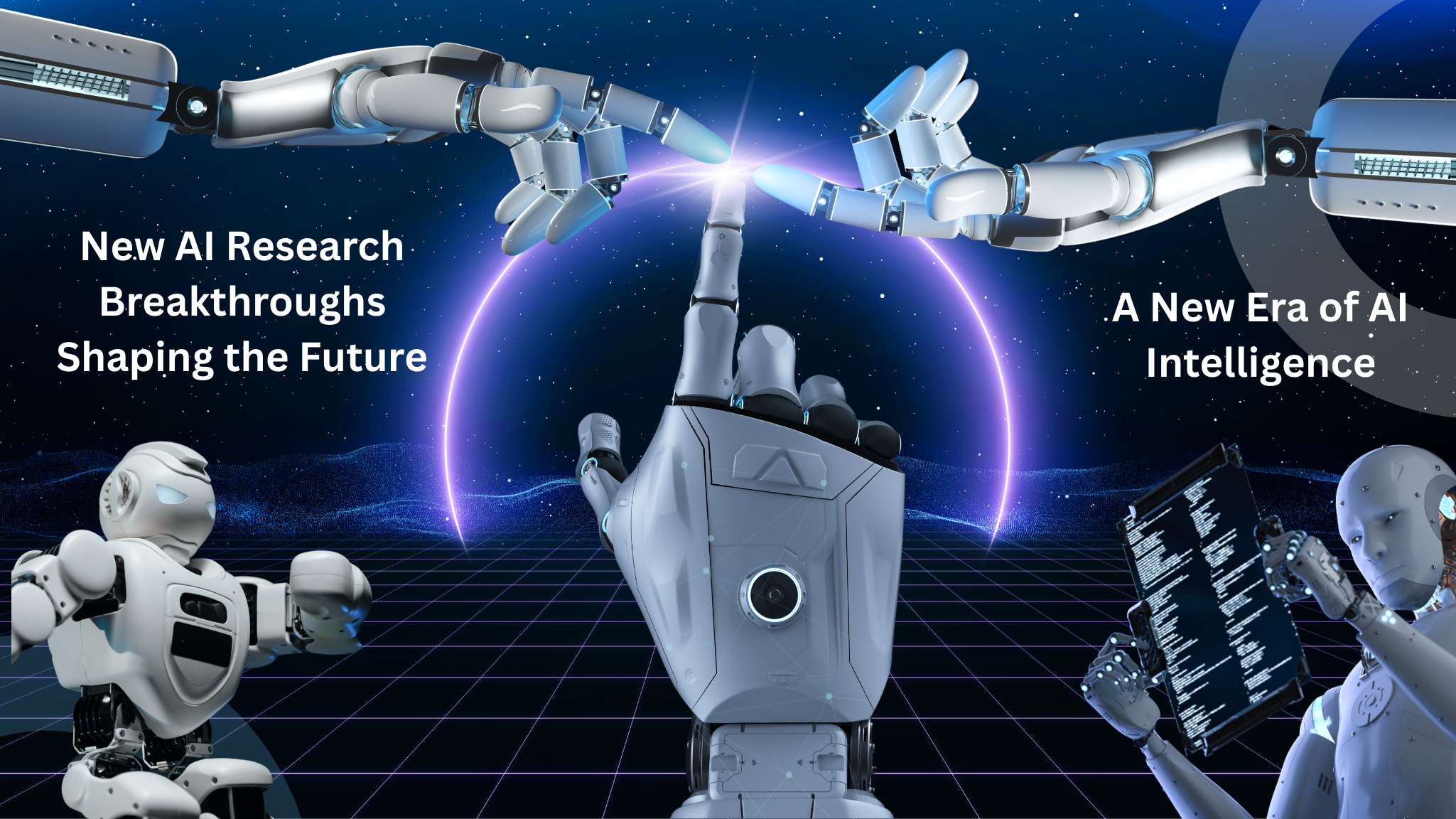
A New Era of AI Intelligence
The current generation of artificial intelligence marks a shift from narrow task-based systems toward generalized intelligence frameworks. Unlike earlier AI models designed for single-purpose applications, today’s advanced AI models demonstrate reasoning, contextual understanding, and adaptability across multiple domains.
Foundation models released in recent years have redefined expectations around what AI systems can achieve. Technologies such as GPT-5, Google DeepMind’s Gemini 2.5, and Anthropic’s Claude 3 exemplify how AI research has advanced beyond pattern recognition into structured reasoning and long-form comprehension. These models process vast amounts of information while maintaining coherence across extended interactions, enabling them to support complex workflows in research, engineering, finance, and creative production.
What differentiates these systems is not only their scale but their ability to integrate reasoning with creativity. They can analyze datasets, generate code, draft technical documentation, and simulate outcomes with a degree of accuracy and contextual awareness that was previously unattainable. This evolution is transforming AI from an automation engine into a strategic collaborator across industries.
Multimodal AI and the Expansion of Creative Capabilities
One of the most visible AI breakthroughs has been the rise of multimodal AI systems. These technologies operate across multiple forms of data, including text, images, audio, and video, enabling a unified understanding of diverse inputs.
Text to video AI tools such as OpenAI Sora, Runway Gen-2, and Pika Labs represent a major leap forward in AI-generated media. These platforms allow users to create realistic video content from simple textual descriptions, dramatically lowering the barrier to high-quality visual production. By leveraging diffusion models and advanced deep learning architectures, these systems generate consistent motion, realistic lighting, and coherent visual narratives.
The implications for industries such as marketing, entertainment, education, and product design are profound. Multimodal AI enables faster content creation, personalized learning experiences, and more immersive storytelling formats. Educational institutions are increasingly adopting AI-generated visual simulations to enhance conceptual understanding, while businesses use AI video generation for advertising, training, and brand communication.
As multimodal AI becomes more accessible, creative professionals are shifting from manual production to conceptual orchestration, focusing on strategy, narrative, and innovation rather than technical execution.
AI as a Catalyst for Scientific Discovery
Beyond creative and commercial applications, AI in scientific research has become a cornerstone of modern discovery. In fields ranging from molecular biology to clean energy, AI-driven scientific discovery is accelerating innovation timelines that once spanned decades.
AI models now assist scientists in predicting protein structures, modeling chemical interactions, and identifying potential pharmaceutical compounds. In healthcare, AI in diagnostics supports early disease detection, treatment personalization, and clinical decision-making. Research teams use AI systems to analyze massive biomedical datasets, uncovering patterns that would be impossible to detect through traditional methods.
In clean energy research, AI has been used to evaluate millions of chemical compounds to identify materials capable of improving hydrogen fuel efficiency. These AI-generated hypotheses are increasingly validated through real-world experiments, reinforcing AI’s role as an active partner in scientific exploration rather than a passive analytical tool.
The growing integration of AI into physics, chemistry, life sciences, and climate research highlights a fundamental shift in how discovery is conducted. Scientists now collaborate with AI systems to test ideas, simulate outcomes, and optimize experimental design at scale.
Efficiency, Scalability, and the Democratization of AI
While AI capabilities continue to expand, the challenge of computational cost has historically limited access to advanced systems.
Innovations such as low-precision training, sparse attention mechanisms, and advanced AI quantization techniques have dramatically reduced the resources required to train and deploy large models. These methods maintain performance while cutting energy consumption and computational expense by substantial margins.
As a result, advanced AI is no longer confined to large technology corporations. Startups, educational institutions, and mid-sized enterprises can now develop customized AI solutions without massive infrastructure investments. This shift has fueled innovation across regional markets and specialized industries, enabling organizations to train models on domain-specific data tailored to healthcare, finance, education, and logistics.
The reduction in cost barriers has also influenced learning pathways. Students enrolled in machine learning careers can now experiment with real-world AI systems during training, bridging the gap between theory and practical application.
Open-Source AI and Developer Empowerment
Parallel to proprietary AI development, open-source AI models continue to play a vital role in innovation. Platforms such as Llama 3.1, Mistral AI, and Falcon 180B have gained widespread adoption among developers and research institutions.
Open-source AI models provide transparency, flexibility, and cost efficiency. Developers can modify architectures, fine-tune models on proprietary datasets, and deploy AI solutions without recurring licensing fees. This openness has accelerated experimentation and fostered collaboration across global research communities.
Many startups now rely on open-source AI to build niche products in areas such as financial analysis, healthcare automation, and educational technology. By combining open frameworks with domain expertise, these organizations deliver highly specialized solutions that rival proprietary systems.
The open-source movement has also influenced ethical AI development by promoting peer review, accountability, and shared standards. As AI adoption expands, open models remain essential to ensuring that innovation remains inclusive and adaptable.
AI Safety, Ethics, and Alignment
As AI systems grow more powerful, concerns surrounding AI safety and ethical AI deployment have become increasingly prominent. In response, AI alignment frameworks are now a central focus of research and policy development.
These frameworks aim to ensure that AI systems operate in accordance with human values, fairness principles, and transparency requirements. Techniques include bias detection, output verification, and explainability mechanisms designed to make AI decisions understandable and auditable.
In high-stakes sectors such as healthcare, education, and law, AI outputs are rigorously tested for accuracy and reliability before deployment. Organizations recognize that trust is a critical factor in long-term AI adoption, and ethical alignment is no longer optional but a competitive and regulatory necessity.
As public awareness of AI risks grows, responsible AI practices are becoming a key differentiator for companies and institutions seeking credibility and user acceptance.
Hardware Innovation Powering AI Growth
Software advancements in AI are closely matched by progress in AI hardware. New-generation processors such as NVIDIA Blackwell GPUs, Google TPU v6, and AMD MI400 accelerators are redefining the performance limits of AI training and inference.
These chips are optimized for large-scale parallel processing, enabling faster model training and real-time deployment across cloud and edge environments. Equally important is the emphasis on energy-efficient AI, as hardware manufacturers work to reduce the environmental impact of large-scale computation.
Energy-efficient processors have expanded AI deployment into areas previously constrained by power limitations, including agriculture, robotics, smart cities, and Internet of Things ecosystems. AI-powered sensors and edge devices now support real-time analytics in logistics, manufacturing, and environmental monitoring.
The convergence of efficient hardware and optimized software architectures continues to accelerate AI adoption across both developed and emerging markets.
Regulatory Frameworks and Global Governance
As AI reshapes economies and societies, regulatory oversight has become a defining factor in its evolution. Governments and international bodies are developing AI policy frameworks to balance innovation with accountability.
Initiatives such as the EU AI Act, India’s AI governance strategy, and the establishment of the U.S. AI Safety Institute reflect a global effort to set standards around transparency, data privacy, and risk management. These regulations classify AI applications based on risk levels and impose compliance requirements for sensitive use cases.
For businesses, regulatory alignment is now a strategic priority. AI solutions must meet legal and ethical standards to remain viable in global markets. Organizations that proactively integrate compliance into product design are better positioned to scale responsibly and sustainably.
The future of AI will be shaped as much by governance structures as by technical breakthroughs, reinforcing the importance of interdisciplinary collaboration between technologists, policymakers, and ethicists.
AI’s Expanding Role Across Industries
AI across industries has transitioned from experimentation to operational integration. In healthcare, AI supports diagnostics, predictive analytics, and personalized treatment planning. In education, intelligent tutoring systems adapt learning content to individual student needs, enhancing engagement and outcomes.
Finance organizations rely on AI for fraud detection, algorithmic trading, and automated risk analysis. Manufacturing sectors deploy AI-powered robotics and predictive maintenance systems to optimize efficiency and reduce downtime. Marketing teams use AI-generated content, customer segmentation, and predictive analytics to drive engagement and revenue growth.
These applications demonstrate that AI is no longer confined to research labs or technology firms. It has become a foundational infrastructure supporting productivity, innovation, and competitiveness across the global economy.
Looking Toward Artificial General Intelligence
While today’s AI systems remain specialized, long-term research continues to focus on Artificial General Intelligence. AGI represents the goal of creating systems capable of performing any intellectual task a human can accomplish.
Although AGI remains a future aspiration, the steady progress of foundation models, multimodal learning, and continuous adaptation suggests that AI is moving closer to more generalized capabilities. Researchers anticipate stronger human-AI collaboration, systems that learn without retraining, and seamless integration of AI into everyday environments.
For learners and professionals, staying engaged with these developments is essential. Continuous education, practical experimentation, and ethical awareness will define success in an AI-driven future.
Preparing for the AI-Driven Future
The rapid pace of AI innovation underscores the importance of lifelong learning. Professionals entering machine learning careers must focus on hands-on experience, interdisciplinary knowledge, and responsible AI practices. Educational pathways that combine theory with real-world exposure provide a competitive advantage in an evolving job market.
Programs such as a Machine Learning Course in Pune or an AI course in Pune with placement opportunities enable learners to develop industry-relevant skills while staying aligned with global AI trends. These pathways bridge the gap between academic knowledge and practical implementation, preparing individuals for roles in research, development, and applied AI.
Conclusion:
The AI breakthroughs reflect a convergence of technological sophistication, ethical responsibility, and global collaboration. From multimodal systems and scientific discovery to scalable infrastructure and regulatory oversight, AI has become a defining force shaping modern society.
As artificial intelligence continues to evolve, its success will depend on how effectively humans guide its development and application. By investing in education, embracing responsible innovation, and fostering collaboration across disciplines, societies can ensure that AI serves as a trusted partner in progress rather than a disruptive force.
The future of AI is no longer speculative. It is unfolding now, reshaping how we learn, work, and innovate in a rapidly connected world.
FAQs:
1. What defines the latest AI breakthroughs in 2025?
AI breakthroughs in 2025 are characterized by advanced foundation models, multimodal learning systems, improved reasoning capabilities, and greater efficiency in training and deployment, enabling broader real-world adoption across industries.
2. How are multimodal AI systems changing content creation and learning?
Multimodal AI systems can process and generate text, images, audio, and video together, allowing faster content production, immersive educational materials, and more interactive digital experiences.
3. Why is AI playing a growing role in scientific research?
AI accelerates scientific discovery by analyzing massive datasets, predicting outcomes, and generating testable hypotheses, significantly reducing the time required for breakthroughs in healthcare, energy, and life sciences.
4. What makes modern AI models more accessible than earlier generations?
Efficiency improvements such as low-precision training, quantization, and optimized hardware have reduced computational costs, making advanced AI systems affordable for startups, researchers, and educational institutions.
5. How do open-source AI models contribute to innovation?
Open-source AI models provide transparency and flexibility, enabling developers to customize solutions, encourage collaboration, and build specialized applications without reliance on expensive proprietary platforms.
6. What are the main ethical concerns surrounding advanced AI systems?
Key ethical concerns include bias, misinformation, data privacy, and accountability, which are being addressed through AI safety research, alignment frameworks, and emerging regulatory standards.
7. How can professionals prepare for careers in an AI-driven future?
Professionals can prepare by developing hands-on machine learning skills, staying updated on AI trends, understanding ethical practices, and gaining practical experience through structured training programs and real-world projects.