
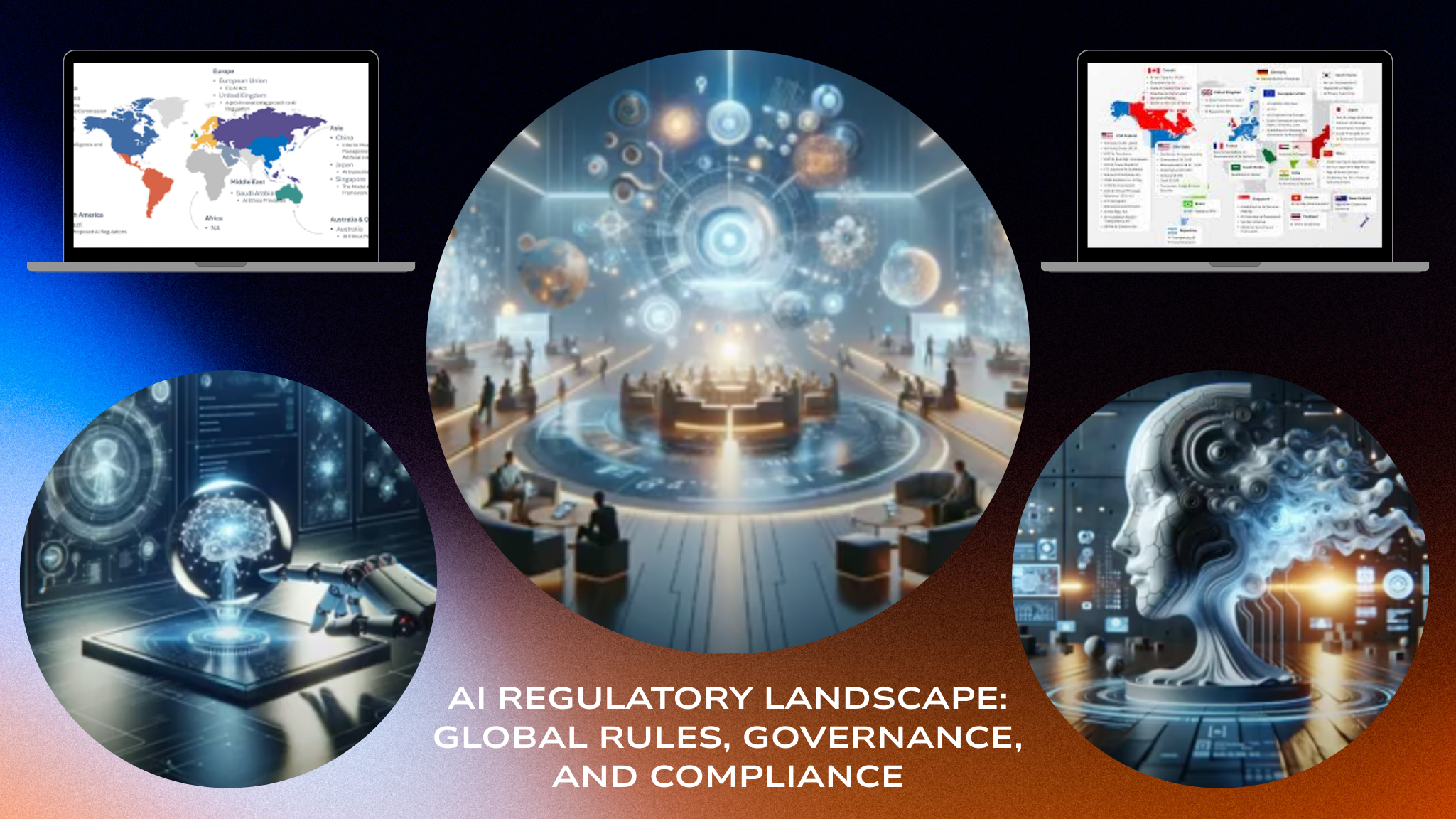
This article examines the evolving AI regulatory landscape, exploring global regulations, governance frameworks, and compliance strategies that are shaping how artificial intelligence is developed, deployed, and managed across industries.
AI Regulatory Landscape: Navigating Governance, Compliance, and Global Policy Shifts
Artificial intelligence has moved from experimental innovation to foundational infrastructure across industries. From automated decision-making systems and predictive analytics to generative models reshaping content creation, AI is now deeply embedded in how organizations operate, compete, and scale. As adoption accelerates, governments, regulators, and international bodies are responding with an expanding body of rules, principles, and enforcement mechanisms. This evolving AI regulatory landscape is redefining how technology is designed, deployed, and governed worldwide.
Understanding AI regulations is no longer a theoretical concern reserved for policymakers. It has become a strategic priority for enterprises, startups, investors, and technology leaders. Artificial intelligence regulation influences product design, market access, risk exposure, and long-term business sustainability. Organizations that fail to align with emerging AI law and policy frameworks risk operational disruption, legal penalties, and reputational damage.
This report provides a comprehensive examination of global AI regulations, the principles shaping AI governance, and the practical implications for businesses operating in an increasingly regulated environment. It explores regional regulatory models, ethical considerations, compliance strategies, and the future trajectory of AI legislation.
The Rise of AI Regulation as a Global Priority
For much of its early development, AI progressed faster than the legal systems designed to oversee it. Innovation thrived in a relatively unregulated space, allowing rapid experimentation but also exposing gaps in accountability, transparency, and public trust. High-profile failures involving algorithmic bias, data misuse, opaque decision-making, and unintended societal harm prompted governments to intervene.
Artificial intelligence regulation emerged as a response to three converging pressures. First, AI systems increasingly influence fundamental rights, including privacy, equality, access to services, and freedom of expression. Second, the economic and strategic importance of AI created concerns about market dominance, national security, and technological sovereignty. Third, the scale and autonomy of advanced systems raised questions about safety, control, and long-term risk.
As a result, AI governance is now viewed as a critical component of digital policy. Rather than banning innovation, most regulators aim to guide responsible AI development while preserving competitiveness. This balance defines the current AI regulatory landscape.
Defining the Scope of AI Governance
AI governance refers to the structures, processes, and rules that ensure artificial intelligence systems are developed and used in ways that align with legal requirements, ethical values, and societal expectations. It extends beyond compliance checklists to include organizational culture, risk management, and accountability mechanisms.
An effective AI governance framework typically addresses several core dimensions. These include data governance and AI data privacy, model design and validation, human oversight, transparency, and post-deployment monitoring. Governance also involves assigning responsibility for AI outcomes, clarifying liability, and ensuring explainability in automated decision-making.
As AI systems become more complex, governance models increasingly emphasize lifecycle oversight. This means regulation and compliance are not limited to deployment but apply from data collection and model training through continuous updates and real-world use.
Ethical AI as a Regulatory Foundation
Ethical AI is not a standalone concept separate from regulation. It forms the philosophical foundation upon which many AI laws and policies are built. Principles such as fairness, accountability, transparency, and human-centric design are embedded in regulatory texts across jurisdictions.
Algorithmic bias in AI has been one of the most significant drivers of ethical regulation. Biased training data and poorly designed models have led to discriminatory outcomes in hiring, lending, healthcare, and law enforcement. Regulators now expect organizations to actively assess, mitigate, and document bias risks.
Explainable AI plays a crucial role in ethical compliance. When AI systems affect individuals’ rights or opportunities, decision-making processes must be understandable to users, regulators, and affected parties. Transparency is no longer optional; it is a legal and ethical requirement in many regions.
Ethical AI also intersects with AI accountability. Organizations must be able to explain not only how a system works but who is responsible when it causes harm. This shift places governance obligations squarely on leadership, not just technical teams.
Global AI Regulations: A Fragmented but Converging Landscape
While AI regulation is global in scope, its implementation varies significantly by region. Different political systems, cultural values, and economic priorities have shaped distinct regulatory models. At the same time, there is growing convergence around shared principles, particularly through international cooperation.
The European Union has positioned itself as a global leader in artificial intelligence regulation. The EU AI Act represents the most comprehensive attempt to regulate AI through binding legislation. It adopts a risk-based approach, categorizing AI systems according to their potential impact on individuals and society.
Under this framework, certain uses of AI are prohibited outright, while others are classified as high-risk and subject to strict compliance obligations. These include requirements for risk management, data quality, documentation, human oversight, and post-market monitoring. The EU AI Act also interacts with existing laws such as GDPR, reinforcing AI data privacy and individual rights.
In contrast, US AI regulations have historically favored sector-specific and principle-based approaches. Rather than a single comprehensive AI law, the United States relies on existing regulatory agencies, industry guidance, and executive actions. This model emphasizes innovation and flexibility but creates complexity for organizations operating across industries.
China AI governance reflects a different set of priorities, focusing on social stability, state oversight, and alignment with national objectives. Chinese regulations address algorithmic recommendation systems, data security, and content control, placing strong obligations on platform providers and AI developers.
At the international level, organizations such as the OECD and the United Nations play a coordinating role. OECD AI principles promote responsible AI development through values-based guidance adopted by many countries. United Nations AI governance initiatives focus on human rights, sustainable development, and global cooperation, particularly for emerging economies.
AI Legislation and Its Impact on Businesses
AI legislation is reshaping how organizations approach innovation, risk, and growth. Compliance is no longer limited to regulated industries such as finance or healthcare. Any business using AI-driven systems must assess its exposure to regulatory risk.
For enterprises, AI compliance strategies are becoming integral to corporate governance. Boards and executive teams are expected to understand AI risks, allocate resources for compliance, and ensure oversight mechanisms are in place. Enterprise AI governance now intersects with cybersecurity, data protection, and ESG reporting.
Startups face a different set of challenges. AI regulation for startups can appear burdensome, particularly when resources are limited. However, early alignment with regulatory expectations can become a competitive advantage. Investors increasingly evaluate AI governance maturity as part of due diligence, and compliance readiness can accelerate market entry in regulated jurisdictions.
AI compliance for businesses also affects product development timelines. Regulatory requirements for documentation, testing, and validation must be integrated into software development lifecycles. AI software development services are evolving to include compliance-by-design, ensuring regulatory alignment from the outset rather than as an afterthought.
AI Risk Management and Regulatory Alignment
Risk management is at the heart of artificial intelligence regulation. Regulators expect organizations to identify, assess, and mitigate risks associated with AI systems. These risks may include technical failures, biased outcomes, data breaches, or unintended societal consequences.
AI risk management frameworks typically combine technical controls with organizational processes. This includes model testing, impact assessments, audit trails, and incident response plans. High-risk AI applications often require formal assessments before deployment, similar to environmental or financial risk reviews.
AI regulatory risk extends beyond fines or enforcement actions. Non-compliance can lead to product bans, loss of consumer trust, and long-term brand damage. As AI systems become more visible to regulators and the public, scrutiny will continue to increase.
Transparency plays a key role in risk mitigation. Organizations that can clearly document how AI systems function, what data they use, and how decisions are made are better positioned to respond to regulatory inquiries and public concerns.
Sector-Specific AI Regulation
While many AI laws apply broadly, sector-specific AI regulation is becoming increasingly common. Industries such as healthcare, finance, transportation, and education face tailored requirements due to the sensitivity and impact of AI applications.
In healthcare, AI regulation focuses on patient safety, clinical validation, and data privacy. Medical AI systems may be subject to approval processes similar to medical devices, requiring extensive testing and documentation.
Financial services regulators emphasize fairness, explainability, and consumer protection. AI-driven credit scoring, fraud detection, and algorithmic trading systems must comply with existing financial regulations while addressing AI-specific risks.
In transportation, autonomous systems raise questions about liability, safety standards, and human oversight. Regulators are developing frameworks to govern testing, deployment, and accountability for AI-driven vehicles and infrastructure.
These sector-specific approaches add complexity to the global AI regulatory landscape, particularly for organizations operating across multiple domains.
AI Governance Frameworks in Practice
Translating regulatory requirements into operational reality requires robust AI governance frameworks. These frameworks align legal obligations with internal policies, technical standards, and organizational roles.
A mature AI governance framework typically includes clear ownership structures, such as AI ethics committees or governance boards. It defines processes for approving AI projects, monitoring performance, and addressing incidents. Training and awareness programs ensure that employees understand their responsibilities.
Governance also involves collaboration between technical, legal, compliance, and business teams. AI law and policy cannot be implemented in isolation; it must be integrated into decision-making across the organization.
As regulations evolve, governance frameworks must remain adaptable. Continuous monitoring of regulatory developments and proactive engagement with policymakers are essential for long-term compliance.
Strategic Implications for AI-Driven Business Growth
Contrary to fears that regulation stifles innovation, effective AI governance can support sustainable growth. Clear rules reduce uncertainty, build trust, and create a level playing field. Organizations that invest in responsible AI development are better positioned to scale globally and form strategic partnerships.
AI strategy and compliance are increasingly interconnected. Regulatory considerations influence decisions about market entry, product design, and technology investment. Businesses that treat compliance as a strategic function rather than a cost center gain resilience in a rapidly changing environment.
AI-driven business growth depends not only on technical capability but also on public confidence. Transparent, accountable, and ethical AI systems are more likely to be adopted by customers, regulators, and society at large.
The Future of the AI Regulatory Landscape
The AI regulatory landscape will continue to evolve as technology advances and societal expectations shift. Emerging topics such as foundation models, generative AI, and autonomous decision-making will require new regulatory approaches.
International coordination is likely to increase, driven by the global nature of AI development and deployment. While regulatory fragmentation will persist, shared principles and interoperability mechanisms may reduce compliance complexity over time.
For organizations, the challenge is not to predict every regulatory change but to build flexible governance systems capable of adapting. Responsible AI, robust risk management, and transparent operations will remain central to compliance regardless of jurisdiction.
Conclusion:
The global expansion of artificial intelligence has transformed regulation from an afterthought into a strategic imperative. The AI regulatory landscape encompasses legal frameworks, ethical principles, and governance structures designed to ensure that AI serves human interests while minimizing harm.
From the EU AI Act and GDPR to US AI regulations, China AI governance, and international initiatives led by the OECD and United Nations, artificial intelligence regulation is shaping the future of technology and business. Organizations that understand and engage with these developments will be better equipped to navigate risk, maintain trust, and unlock AI-driven growth.
As AI continues to redefine industries and societies, governance, compliance, and responsibility will determine not only what is possible, but what is acceptable. In this environment, regulatory alignment is not a barrier to innovation—it is a foundation for its sustainable success.
FAQs:
1. Why is the AI regulatory landscape evolving so rapidly?
The pace of AI regulation is accelerating because artificial intelligence systems are increasingly influencing economic decisions, public services, and individual rights, prompting governments to establish clearer rules for accountability, safety, and ethical use.
2. How do global AI regulations differ across regions?
Global AI regulations vary based on regional priorities, with some jurisdictions focusing on risk-based governance, others emphasizing innovation-friendly oversight, and some adopting strong state-led controls to manage data, algorithms, and content.
3. What types of AI systems are most affected by regulation?
AI systems that impact fundamental rights, safety, or access to essential services—such as those used in finance, healthcare, recruitment, surveillance, or autonomous operations—are typically subject to the highest regulatory scrutiny.
4. How can organizations prepare for AI compliance requirements?
Organizations can prepare by implementing AI governance frameworks, conducting risk assessments, documenting AI lifecycle decisions, and embedding transparency and human oversight into system design and deployment.
5. What role does ethical AI play in regulatory compliance?
Ethical AI principles such as fairness, explainability, and accountability form the foundation of many AI laws, making responsible AI development essential for meeting both legal obligations and societal expectations.
6. Do AI regulations apply to startups and small businesses?
Yes, AI regulations generally apply regardless of company size, although compliance obligations may scale based on risk level, use case, and the potential impact of AI systems on users or the public.
7. How will AI regulation shape future innovation?
Rather than limiting progress, well-designed AI regulation is expected to encourage sustainable innovation by building trust, reducing uncertainty, and creating clear standards for responsible AI adoption.