
The Biggest Challenges of Artificial Intelligence Today

the biggest challenges of artificial intelligence today https://worldstan.com/the-biggest-challenges-of-artificial-intelligence-today/

Artificial intelligence is rapidly transforming industries and public systems, but its widespread adoption also brings critical challenges related to data privacy, bias, transparency, ethics, and workforce disruption that demand responsible governance and informed decision-making.

Challenges of Artificial Intelligence: Navigating Risk, Responsibility, and Real-World Impact

Artificial intelligence has moved beyond experimentation and into the core of modern economies. Governments rely on it to optimize public services, enterprises deploy it to gain competitive advantage, and individuals interact with it daily through digital platforms. Despite these advances, the challenges of artificial intelligence have become increasingly difficult to ignore. As AI systems grow in scale and autonomy, they introduce complex risks related to privacy, fairness, transparency, employment, and ethics.

Understanding artificial intelligence challenges is no longer optional. It is a prerequisite for responsible innovation. This report examines the most critical obstacles shaping AI adoption today, drawing attention to the structural and ethical tensions that accompany rapid technological progress.

The Expanding Role of Artificial Intelligence in Society

Artificial intelligence now influences decision-making across healthcare, finance, law enforcement, education, and national security. Algorithms assess medical images, determine credit eligibility, flag suspicious activity, and automate recruitment processes. While these applications promise efficiency and accuracy, they also magnify errors and biases at unprecedented scale.

The growing reliance on AI systems has shifted the conversation from what AI can do to how it should be used. This shift has placed the challenges of AI at the center of public debate, particularly as automated decisions increasingly affect human lives.

Data Dependency and the Challenge of Privacy Protection

Why AI Systems Depend on Massive Data Collection

At the foundation of every AI system lies data. Machine learning models require large, diverse datasets to identify patterns and make predictions. This reliance has made AI data privacy one of the most critical concerns in modern technology governance.

Data is often collected from users who have limited visibility into how their information is processed or shared. In many cases, consent mechanisms are vague, and data is repurposed beyond its original intent. These practices raise serious questions about ownership, accountability, and user rights.

Data Privacy and Security Risks in AI Environments

Data privacy and security challenges intensify as AI systems scale. Centralized data repositories create attractive targets for cyberattacks, while distributed AI models introduce new vulnerabilities. AI security concerns include unauthorized access, data poisoning, model theft, and inference attacks that can expose sensitive information even without direct breaches.

The consequences of compromised AI systems extend beyond financial loss. In healthcare or law enforcement, data misuse can lead to physical harm, reputational damage, and erosion of public trust. These risks highlight the need for stronger data governance frameworks tailored specifically to AI-driven environments.

Bias and Fairness in AI Decision-Making

How Bias in AI Systems Emerges

Bias in AI often originates from the data used during training. Historical datasets reflect existing social inequalities, and when these patterns are learned by algorithms, they can produce discriminatory outcomes. AI bias and fairness have become central issues as automated systems increasingly influence access to jobs, housing, credit, and public services.

Bias can also emerge from model design choices, feature selection, and deployment contexts. Even well-intentioned systems may generate unfair outcomes if they fail to account for social complexity.

The Societal Impact of Unfair AI Outcomes

Fairness in artificial intelligence is not merely a technical benchmark; it is a social responsibility. Biased AI systems can reinforce stereotypes, marginalize vulnerable groups, and limit economic mobility. In recruitment platforms, biased screening tools may exclude qualified candidates. In financial services, biased credit models may restrict access to capital.

Addressing bias and fairness in AI requires continuous auditing, diverse development teams, and clear accountability mechanisms. Without these safeguards, AI risks institutionalizing discrimination under the guise of objectivity.

Transparency and the Problem of Black Box AI

Understanding the Lack of Transparency in AI Systems

Many advanced AI models function as complex networks with decision processes that are difficult to interpret. This lack of transparency in AI has led to the widespread characterization of such systems as AI black box models.

When users and regulators cannot understand how decisions are made, trust diminishes. This is especially problematic in high-stakes contexts where explanations are essential for accountability.

The Role of Explainable AI in Building Trust

Explainable AI seeks to make algorithmic decisions understandable to humans without compromising performance. Transparency in AI systems enables stakeholders to evaluate fairness, detect errors, and ensure compliance with legal standards.

However, achieving explainability is challenging. There is often a trade-off between model accuracy and interpretability. Despite these limitations, explainable AI remains a critical requirement for responsible deployment, particularly in regulated industries.

AI in Healthcare: Innovation Under Ethical Pressure

Opportunities Created by AI in Healthcare

AI in healthcare has unlocked new possibilities for early diagnosis, personalized treatment, and operational efficiency. Predictive analytics can identify disease risks, while AI-powered imaging tools assist clinicians in detecting abnormalities.

These innovations have the potential to improve outcomes and reduce costs, but they also introduce new challenges that demand careful oversight.

Risks Related to Privacy, Bias, and Accountability

Healthcare data is among the most sensitive forms of personal information. AI data privacy failures in this domain can have severe consequences. Additionally, biased training data can result in inaccurate diagnoses for certain populations, exacerbating health disparities.

Accountability remains another unresolved issue. When AI systems influence clinical decisions, determining responsibility for errors becomes complex. These challenges illustrate why ethical AI development is essential in healthcare settings.

AI in Law Enforcement and Public Surveillance

The Rise of Algorithmic Policing

AI in law enforcement is increasingly used for predictive policing, facial recognition, and threat assessment. These tools aim to enhance efficiency and resource allocation, but they also raise serious ethical and legal concerns.

AI surveillance systems can monitor populations at scale, often without clear oversight. This capability has intensified debates around civil liberties, consent, and proportionality.

Ethical and Social Implications of AI Surveillance

AI surveillance technologies risk amplifying existing biases, particularly when trained on flawed or incomplete data. Misidentification and over-policing can disproportionately affect specific communities, undermining public trust.

Balancing security objectives with individual rights remains one of the most difficult challenges of artificial intelligence in the public sector.

Employment Disruption and the Future of Work

Understanding AI Job Displacement

AI automation impact on jobs has become a defining issue of the digital economy. Automation is reshaping industries by replacing routine tasks and redefining skill requirements. Job displacement due to AI affects manufacturing, administrative roles, customer service, and even professional occupations.

While AI creates new opportunities, the transition can be disruptive, especially for workers with limited access to reskilling resources.

Workforce Reskilling for an AI-Driven Economy

Workforce reskilling for AI is widely recognized as a necessary response, yet implementation remains uneven. Effective reskilling requires collaboration between governments, educational institutions, and employers. Training programs must focus not only on technical skills but also on adaptability, critical thinking, and digital literacy.

Without inclusive reskilling strategies, AI-driven growth risks deepening economic inequality.

Ethical Concerns and Governance Challenges

Defining Ethical Challenges of AI

Ethical concerns of AI extend beyond individual applications. They include questions about autonomy, consent, accountability, and long-term societal impact. As AI systems gain greater decision-making authority, defining acceptable boundaries becomes increasingly urgent.

AI ethics seeks to align technological development with human values, but translating ethical principles into operational standards remains a challenge.

Autonomous Systems and the Limits of Machine Authority

Autonomous weapons and AI represent one of the most controversial ethical frontiers. Delegating lethal decisions to machines raises profound moral questions and has sparked international debate. Critics argue that such systems undermine human accountability, while proponents cite potential reductions in human error.

This debate highlights the need for global governance frameworks capable of addressing AI risks that transcend national borders.

Responsible AI Development as a Strategic Imperative

Embedding Responsibility Across the AI Lifecycle

Responsible AI development requires integrating ethical considerations at every stage, from data collection and model training to deployment and monitoring. This approach emphasizes transparency, fairness, and human oversight.

Organizations that neglect these principles risk regulatory penalties, reputational damage, and loss of public trust.

The Role of Policy and Regulation

Governments worldwide are developing AI regulations aimed at mitigating risk while supporting innovation. However, regulatory fragmentation remains a challenge, particularly for multinational organizations. Harmonizing standards without stifling progress will be critical for sustainable AI growth.

Why Trust Determines AI Adoption

Public trust is a decisive factor in the success of AI technologies. High-profile failures related to bias, surveillance, or data breaches can trigger backlash and restrictive regulation. Addressing artificial intelligence challenges proactively is essential for maintaining societal confidence.

Education and transparency play key roles in building trust. When users understand how AI systems operate and how risks are managed, acceptance increases.

Public Trust and the Long-Term Viability of AI

Preparing for Emerging AI Risks

As AI capabilities continue to evolve, new challenges will emerge. Generative models, autonomous agents, and increasingly human-like interfaces introduce risks related to misinformation, dependency, and manipulation. Anticipating these issues requires adaptive governance and continuous learning.

Conclusion: Confronting the Challenges of Artificial Intelligence

The challenges of artificial intelligence reflect the complexity of integrating powerful technologies into human-centered systems. Issues related to AI data privacy and security, bias and fairness in AI, transparency, job displacement, and ethical governance are deeply interconnected.

Artificial intelligence has the potential to drive progress across nearly every sector, but its benefits are not guaranteed. They depend on deliberate choices made by developers, policymakers, and society at large. By prioritizing responsible AI development, investing in workforce reskilling, strengthening oversight mechanisms, and fostering transparency, it is possible to harness AI’s potential while minimizing its risks.

The future of artificial intelligence will not be defined solely by technological capability, but by how effectively its challenges are understood, addressed, and governed.

FAQs:

  • What are the main challenges of artificial intelligence today?
    The primary challenges of artificial intelligence include protecting data privacy, ensuring security, reducing bias in automated decisions, improving transparency in AI systems, managing job displacement, and establishing ethical governance frameworks that keep pace with rapid innovation.

  • Why is data privacy a major concern in AI systems?
    AI systems rely heavily on large datasets, often containing sensitive personal information. Without strong data governance and security controls, this data can be misused, exposed, or analyzed in ways that compromise individual privacy and regulatory compliance.

  • How does bias affect artificial intelligence outcomes?
    Bias in artificial intelligence occurs when training data or system design reflects existing social inequalities. This can lead to unfair outcomes in areas such as hiring, lending, healthcare, and law enforcement, impacting certain groups disproportionately.

  • What does transparency mean in the context of AI?
    Transparency in AI refers to the ability to understand how a system makes decisions. Many advanced models operate as black boxes, making it difficult to explain results, which raises concerns about accountability, trust, and regulatory oversight.

  • How is artificial intelligence changing the job market?
    Artificial intelligence is automating repetitive and data-driven tasks, which can lead to job displacement in some roles. At the same time, it is creating demand for new skills, making workforce reskilling and continuous learning essential.

  • Are AI systems used in healthcare and law enforcement risky?
    Yes, while AI can improve efficiency and accuracy in healthcare and law enforcement, it also introduces risks related to biased data, privacy violations, and unclear accountability, especially when decisions significantly affect human lives.

  • What is meant by responsible and ethical AI development?
    Responsible and ethical AI development involves designing and deploying AI systems that prioritize fairness, transparency, human oversight, and social impact, ensuring that technological progress aligns with legal standards and human values.

AI Bias Mitigation: Challenges, Techniques, and Best Practices

ai bias mitigation challenges, techniques, and best practices https://worldstan.com/ai-bias-mitigation-challenges-techniques-and-best-practices/

This article explores how bias emerges in artificial intelligence systems, its real-world consequences across industries, and the practical strategies organizations use to build fair, responsible, and trustworthy AI.


AI Bias Mitigation: Building Fair, Responsible, and Trustworthy Artificial Intelligence Systems

Artificial intelligence has rapidly become a foundational component of modern decision-making systems. From healthcare diagnostics and recruitment platforms to financial risk assessment and law enforcement tools, AI-powered decision systems increasingly influence outcomes that affect individuals, organizations, and societies. While these technologies promise efficiency, scalability, and data-driven objectivity, they also introduce a critical challenge that continues to shape public trust and regulatory scrutiny: bias in AI systems.

AI bias is not a theoretical concern. It is a practical, measurable phenomenon that has already led to discriminatory outcomes, reputational damage, legal exposure, and ethical failures across industries. As AI systems grow more autonomous and complex, the importance of AI bias mitigation becomes central to the development of fair and responsible AI.

This article provides a comprehensive and professional examination of artificial intelligence bias, its causes, real-world impacts, and the techniques used to mitigate bias in AI. It also explores governance, accountability, and ethical frameworks required to ensure trustworthy AI deployment across enterprise and public-sector applications.

Understanding Bias in AI Systems

Bias in AI systems refers to systematic and repeatable errors that produce unfair outcomes, such as privileging one group over another. Unlike random errors, bias is directional and often reflects historical inequities embedded within data, algorithms, or human decision-making processes.

Artificial intelligence does not operate in isolation. It learns patterns from historical data, relies on human-defined objectives, and is shaped by organizational priorities. As a result, AI bias often mirrors social, economic, and cultural inequalities that exist outside of technology.

Algorithmic bias can manifest in subtle or overt ways, including skewed predictions, unequal error rates across demographic groups, or exclusion of certain populations from AI-driven opportunities. These biases can be difficult to detect without intentional measurement and transparency mechanisms.

Types of Bias in Artificial Intelligence

Bias in AI is not a single phenomenon. It arises at multiple stages of the AI lifecycle and takes different forms depending on the application.

Data bias in AI is one of the most common sources. Training datasets may be incomplete, unbalanced, or historically skewed. If an AI model is trained primarily on data from one demographic group, it may perform poorly or unfairly when applied to others.

Bias in machine learning models can also stem from feature selection, labeling errors, or proxy variables that unintentionally encode sensitive attributes such as race, gender, or socioeconomic status.

Human decision bias plays a significant role as well. Developers, data scientists, and business leaders make subjective choices about problem framing, optimization goals, and acceptable trade-offs. These decisions can introduce bias long before an algorithm is deployed.

Generative AI bias has emerged as a growing concern, particularly in large language models and image generation systems. These models can reproduce stereotypes, amplify misinformation, or generate content that reflects dominant cultural narratives while marginalizing others.

Causes of AI Bias


To effectively address AI bias mitigation, it is essential to understand the root causes.

One primary cause is historical bias embedded in data. Many AI systems are trained on real-world datasets that reflect past discrimination, unequal access to resources, or systemic exclusion. When these patterns are learned and reinforced by AI, biased outcomes become automated at scale.

Another contributing factor is sampling bias, where certain populations are underrepresented or excluded entirely. This is particularly common in healthcare data, facial recognition datasets, and financial services records.

Objective function bias also plays a role. AI models are often optimized for accuracy, efficiency, or profit without considering fairness constraints. When success metrics fail to account for equity, biased outcomes can be treated as acceptable trade-offs.

Lack of transparency further exacerbates bias. Complex models that operate as black boxes make it difficult to identify, explain, and correct unfair behavior, limiting accountability.

Impacts of AI Bias on Society and Business

The impacts of AI bias extend far beyond technical performance issues. Biased AI systems can undermine trust, harm vulnerable populations, and expose organizations to significant legal and ethical risks.

AI bias and discrimination have been documented in hiring and recruitment platforms that disadvantage women, older candidates, or minority groups. In AI in HR and recruitment, biased resume screening tools can systematically exclude qualified candidates based on historical hiring patterns.

In healthcare, AI bias can lead to unequal treatment recommendations, misdiagnoses, or reduced access to care for underrepresented populations. AI bias in healthcare is particularly concerning because errors can have life-threatening consequences.

Bias in facial recognition systems has resulted in higher misidentification rates for people of color, leading to wrongful surveillance or law enforcement actions. AI bias in law enforcement raises serious civil rights concerns and has prompted regulatory intervention in multiple jurisdictions.

Financial services are also affected. AI-driven credit scoring or fraud detection systems may unfairly penalize certain groups, reinforcing economic inequality and limiting access to financial opportunities.

These examples demonstrate that AI bias is not merely a technical flaw but a governance and ethical challenge with real-world consequences.

AI Bias Mitigation as a Strategic Imperative

AI bias mitigation is no longer optional for organizations deploying AI-powered decision systems. It is a strategic requirement driven by regulatory expectations, market trust, and long-term sustainability.

Governments and regulatory bodies are increasingly emphasizing AI accountability, transparency, and fairness. Frameworks for AI governance now require organizations to assess and document bias risks, particularly in high-impact use cases.

From a business perspective, biased AI systems can erode brand credibility and reduce customer confidence. Enterprises investing in responsible AI gain a competitive advantage by demonstrating ethical leadership and risk awareness.

AI bias mitigation also supports innovation. Systems designed with fairness and transparency in mind are more robust, adaptable, and aligned with diverse user needs.

Techniques to Mitigate Bias in AI

Effective AI bias mitigation requires a multi-layered approach that spans data, models, processes, and governance structures.

One foundational technique involves improving data quality and representation. This includes auditing datasets for imbalance, removing biased labels, and incorporating diverse data sources. Synthetic data generation can be used cautiously to address underrepresentation when real-world data is limited.

Fairness-aware algorithms are designed to incorporate equity constraints directly into the learning process. These algorithms aim to balance predictive performance across demographic groups rather than optimizing for aggregate accuracy alone.

Pre-processing techniques adjust training data before model development by reweighting samples or transforming features to reduce bias. In-processing methods modify the learning algorithm itself, while post-processing techniques adjust model outputs to correct unfair disparities.

Explainable AI (XAI) plays a critical role in bias mitigation. Models that provide interpretable explanations allow stakeholders to understand why certain decisions were made, making it easier to identify biased patterns and correct them.

Continuous monitoring is another essential practice. Bias is not static; it can evolve over time as data distributions change. Regular audits and performance evaluations help ensure that fairness objectives remain intact after deployment.

AI Fairness and Transparency

AI fairness and transparency are closely interconnected. Fair outcomes cannot be achieved without visibility into how systems operate.

Transparency involves documenting data sources, model assumptions, and decision logic. This documentation supports internal accountability and external oversight.

AI transparency also enables meaningful stakeholder engagement. Users, regulators, and affected communities must be able to question and understand AI-driven decisions, particularly in sensitive applications.

Without transparency, bias mitigation efforts lack credibility. Trustworthy AI systems must be designed to withstand scrutiny, not obscure their inner workings.

Ethical AI Development and Governance

Ethical AI development extends beyond technical fixes. It requires organizational commitment, governance frameworks, and cross-functional collaboration.

AI ethics principles such as fairness, accountability, and respect for human rights must be embedded into product design and business strategy. These principles guide decision-making when trade-offs arise between performance, cost, and equity.

AI governance structures establish oversight mechanisms, including ethics review boards, risk assessment processes, and compliance reporting. Governance ensures that bias mitigation is treated as an ongoing responsibility rather than a one-time exercise.

Responsible AI initiatives often include employee training, stakeholder consultation, and alignment with international standards for trustworthy AI.

Enterprise AI Solutions and Bias Mitigation


For enterprise AI solutions, bias mitigation must scale across multiple teams, systems, and markets. This requires standardized tools, metrics, and workflows.

Large organizations increasingly adopt AI governance platforms that integrate fairness testing, explainability, and audit capabilities into the development pipeline. These platforms support consistent application of AI fairness principles across projects.

In sectors such as AI in financial services and AI in healthcare, enterprises must align bias mitigation efforts with regulatory requirements and industry best practices.

AI-powered decision systems deployed at scale must also consider regional and cultural differences, ensuring that fairness definitions are context-sensitive rather than one-size-fits-all.

Challenges in Reducing Bias in AI Systems

Despite progress, reducing bias in AI systems remains complex.

Defining fairness itself can be challenging. Different fairness metrics may conflict, requiring difficult trade-offs. What is considered fair in one context may be inappropriate in another.

Technical limitations also exist. Some biases are deeply embedded in data or societal structures and cannot be fully eliminated through algorithmic adjustments alone.

There is also a risk of fairness washing, where organizations claim ethical AI practices without meaningful implementation. This undermines trust and slows genuine progress.

Addressing these challenges requires honesty, transparency, and collaboration across disciplines, including law, ethics, social sciences, and engineering.

The Future of AI Bias Mitigation

As AI continues to evolve, bias mitigation will remain a central concern in shaping its societal impact.

Advances in explainable AI, causal modeling, and fairness-aware machine learning offer promising avenues for reducing bias while maintaining performance. Regulatory frameworks are becoming more sophisticated, providing clearer guidance for ethical AI deployment.

Public awareness of AI bias is also increasing, driving demand for accountability and responsible innovation.

Organizations that proactively invest in AI bias mitigation will be better positioned to adapt to regulatory change, earn stakeholder trust, and deliver sustainable AI solutions.

Conclusion:

AI bias mitigation is fundamental to the development of fair and responsible AI. Bias in AI systems reflects broader societal challenges, but it is not inevitable. Through deliberate design, governance, and continuous oversight, organizations can reduce harmful bias and build trustworthy AI systems.

By addressing data bias in AI, adopting fairness-aware algorithms, implementing explainable AI, and embedding ethical AI principles into governance structures, enterprises and institutions can align innovation with social responsibility.

As artificial intelligence becomes increasingly embedded in critical decisions, the commitment to AI fairness, transparency, and accountability will define the success and legitimacy of AI-powered technologies in the years ahead.

FAQs:

1. What does AI bias mitigation mean in practical terms?

AI bias mitigation refers to the methods used to identify, measure, and reduce unfair outcomes in artificial intelligence systems, ensuring decisions are balanced, transparent, and aligned with ethical standards.

2. Why is AI bias considered a serious business risk?

Bias in AI can lead to regulatory penalties, legal disputes, reputational damage, and loss of user trust, especially when automated decisions affect hiring, lending, healthcare, or public services.

3. At which stage of AI development does bias usually occur?

Bias can emerge at any point in the AI lifecycle, including data collection, model training, feature selection, deployment, and ongoing system updates.

4. Can AI bias be completely eliminated?

While bias cannot always be fully removed due to societal and data limitations, it can be significantly reduced through careful design, governance, and continuous monitoring.

5. How do organizations detect bias in AI systems?

Organizations use fairness metrics, model audits, explainability tools, and performance comparisons across demographic groups to uncover hidden or unintended bias.

6. What role does explainable AI play in bias mitigation?

Explainable AI helps stakeholders understand how decisions are made, making it easier to identify biased patterns, improve accountability, and support regulatory compliance.

7. Is AI bias mitigation required by regulations?

Many emerging AI regulations and governance frameworks now require organizations to assess and document bias risks, particularly for high-impact or sensitive AI applications.

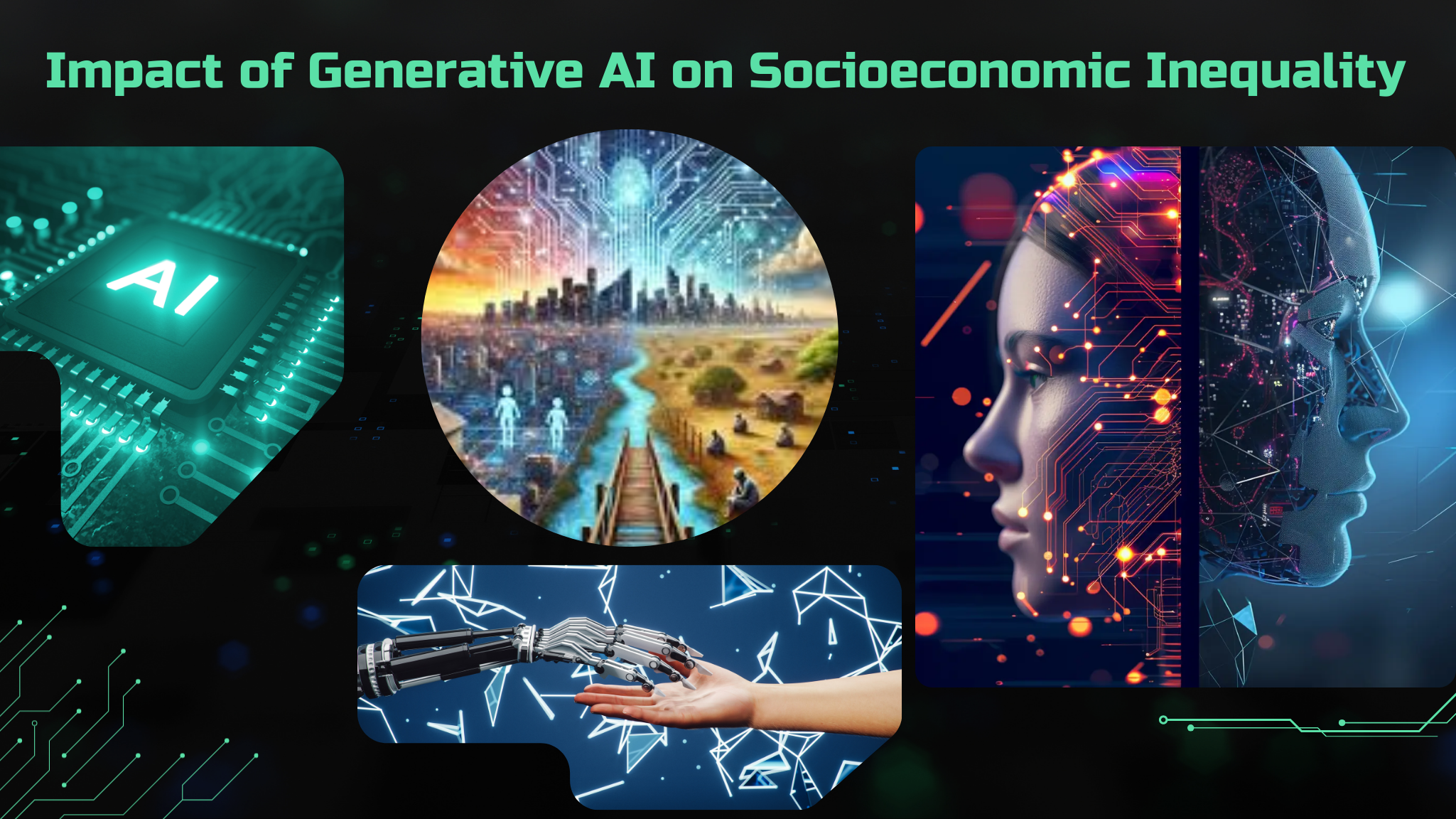
Impact of Generative AI on Socioeconomic Inequality

impact of generative ai on socioeconomic inequality worldstan.com

This piece outlines how generative AI is transforming economies and institutions, the risks it poses for widening inequality, and the policy choices that will shape its long-term social impact.

The rapid advancement of generative artificial intelligence is reshaping economies, institutions, and everyday life at an unprecedented pace. Once confined to experimental research labs, generative AI systems are now embedded in workplaces, classrooms, healthcare systems, and public administration. Their ability to generate text, images, data-driven insights, and strategic recommendations has positioned them as a foundational technology of the modern era. However, alongside innovation and productivity gains, generative AI introduces complex challenges related to socioeconomic inequality and public policy.

This report examines how generative AI is influencing existing social and economic disparities and how policy making must evolve to address these shifts. It explores labor markets, education, governance, democratic systems, and global inequality, while highlighting the urgent need for inclusive and forward-looking AI governance frameworks.

Introduction to Generative Artificial Intelligence and Social Change

Generative artificial intelligence refers to systems capable of producing original content based on patterns learned from vast datasets. Unlike earlier forms of automation that focused on mechanical or repetitive tasks, generative AI operates in cognitive domains traditionally associated with human intelligence. This includes writing, problem-solving, design, forecasting, and decision support.

The transformative power of these systems lies in their scalability. A single AI model can perform tasks across industries and regions, potentially affecting millions of people simultaneously. As a result, generative AI is not merely a technological upgrade but a structural force that can reshape social hierarchies, economic opportunities, and institutional power.

Socioeconomic inequality already defines access to education, healthcare, employment, and political influence. The integration of generative AI into these systems risks amplifying existing divides if adoption and regulation are uneven. Understanding these dynamics is essential for policymakers seeking to balance innovation with social equity.

The Uneven Distribution of Access to Generative AI

Access to generative AI tools is shaped by infrastructure, cost, and digital literacy. High-income countries and large organizations are more likely to benefit from advanced AI capabilities, while low-income communities often face barriers related to connectivity, technical skills, and institutional capacity.

This disparity creates what many researchers describe as a new digital stratification. Those with access to AI-enhanced tools gain productivity advantages, improved learning outcomes, and greater decision-making power. Meanwhile, those without access risk falling further behind in economic competitiveness and social mobility.

Small businesses, public institutions in developing regions, and marginalized populations are particularly vulnerable. Without targeted policies to expand access, generative AI could reinforce global and domestic inequalities rather than reduce them.

Generative AI and Labor Market Transformation

One of the most visible impacts of generative AI is its influence on employment and workforce dynamics. Unlike traditional automation, which primarily affected manual or routine jobs, generative AI targets knowledge-based roles across sectors such as media, law, finance, software development, and research.

For some workers, generative AI functions as a productivity-enhancing assistant, automating repetitive components of complex tasks and freeing time for higher-value activities. For others, it introduces displacement risks, especially in roles where output can be standardized and scaled by AI systems.

These changes are unlikely to affect all workers equally. Individuals with higher education levels, adaptable skills, and access to reskilling programs are better positioned to benefit from AI integration. Conversely, workers with limited training opportunities may face job insecurity without adequate social protection.

Policy responses must therefore focus on workforce transition strategies, including lifelong learning initiatives, labor market flexibility, and updated social safety nets.

Education Systems in the Age of Generative AI

Education is both a beneficiary of generative AI and a critical factor in determining its long-term societal impact. AI-powered learning tools can personalize instruction, provide instant feedback, and expand access to educational resources. In theory, these capabilities could reduce educational inequality.

In practice, however, outcomes depend heavily on implementation. Well-resourced institutions can integrate generative AI into curricula, teacher training, and assessment methods. Under-resourced schools may struggle to adopt these technologies effectively, widening educational gaps.

Additionally, there is a risk that students may rely excessively on AI-generated content without developing foundational skills such as critical thinking, reasoning, and creativity. This could create a new form of cognitive inequality, where surface-level performance improves while deep understanding declines.

Education policy must therefore emphasize responsible AI use, digital literacy, and pedagogical frameworks that position AI as a support tool rather than a substitute for learning.

Generative AI, Power, and Economic Concentration

The development and deployment of generative AI are dominated by a small number of technology companies and research institutions. This concentration of expertise, data, and computational resources raises concerns about market power and economic inequality.

When a limited set of actors controls advanced AI systems, they also shape the values, priorities, and assumptions embedded in these technologies. This can marginalize alternative perspectives and limit the ability of smaller firms, public institutions, and developing countries to influence AI trajectories.

Economic concentration also affects innovation distribution. While leading firms benefit from economies of scale, others may become dependent on proprietary AI systems, reducing competition and local capacity building.

Antitrust policies, public investment in open AI infrastructure, and support for decentralized innovation ecosystems are essential to counterbalance these trends.

Bias, Data Inequality, and Social Impact

Generative AI systems are trained on large datasets that reflect historical and social patterns. As a result, they may reproduce or amplify existing biases related to gender, ethnicity, income, and geography. These biases can influence outcomes in sensitive areas such as hiring, lending, healthcare recommendations, and public services.

Data inequality plays a central role in this process. Groups that are underrepresented or misrepresented in training data may experience lower accuracy, unfair treatment, or exclusion from AI-driven systems. This reinforces structural disadvantages rather than correcting them.

Addressing bias requires more than technical adjustments. It demands inclusive data practices, transparency in model design, and accountability mechanisms that allow affected individuals to challenge harmful outcomes.

The Role of Generative AI in Policy Making

Generative AI is increasingly used to support policy analysis, scenario modeling, and administrative decision-making. These applications offer potential benefits, including faster data processing, improved forecasting, and enhanced evidence-based governance.

However, reliance on AI-generated insights introduces new risks. Many generative models operate as complex systems with limited interpretability. If policymakers depend on outputs they cannot fully explain, this may undermine accountability and democratic legitimacy.

There is also a risk that AI-driven policy tools could reflect the biases or assumptions of their creators, influencing decisions in subtle but significant ways. Transparent governance frameworks and human oversight are therefore essential when integrating AI into public administration.

Democratic Institutions and Public Trust

Generative AI has profound implications for democratic processes and public discourse. AI-generated content can shape political messaging, simulate public opinion, and automate engagement at scale. While these tools can enhance participation, they can also be misused to spread misinformation or manipulate narratives.

Well-resourced actors can deploy generative AI to dominate information environments, marginalizing smaller voices and grassroots movements. This asymmetry threatens the pluralism and deliberation essential to democratic systems.

Maintaining public trust requires clear standards for political AI use, transparency in content generation, and safeguards against manipulation. Media literacy and public awareness campaigns are also critical in helping citizens navigate AI-influenced information ecosystems.

Global Inequality and International Dimensions of AI

The global impact of generative AI is shaped by disparities between countries. Advanced economies often lead in AI research, infrastructure, and policy development, while developing nations may struggle to keep pace.

This imbalance risks creating a new form of technological dependency, where low- and middle-income countries rely on external AI systems without building local capacity. Such dependency can limit economic sovereignty and policy autonomy.

International cooperation is essential to address these challenges. Shared standards, knowledge exchange, and investment in global AI capacity building can help ensure that generative AI contributes to inclusive development rather than deepening global divides.

Regulatory Frameworks and Ethical Governance

Effective regulation is central to shaping the societal impact of generative AI. Policymakers face the challenge of encouraging innovation while protecting public interests. This requires flexible, adaptive regulatory approaches that evolve alongside technological advances.

Key regulatory priorities include transparency, accountability, data protection, and fairness. Ethical governance frameworks should integrate multidisciplinary perspectives and involve stakeholders from civil society, academia, and affected communities.

Public participation is particularly important. Inclusive policy making can help align AI development with societal values and reduce resistance driven by fear or mistrust.

Harnessing Generative AI for Inclusive Growth

Despite its risks, generative AI holds significant potential to reduce certain inequalities if guided by thoughtful policy. AI-driven tools can expand access to healthcare, legal information, education, and public services, particularly in underserved regions.

Realizing these benefits requires intentional design choices. Public investment in accessible AI platforms, open research initiatives, and community-driven innovation can help ensure that generative AI serves broad social goals.

Inclusivity must be treated as a core objective rather than a secondary consideration. When marginalized groups are actively involved in shaping AI systems, outcomes are more likely to reflect diverse needs and perspectives.

Conclusion:

Generative artificial intelligence represents a defining technological shift with far-reaching implications for socioeconomic inequality and policy making. Its influence extends across labor markets, education systems, governance structures, and democratic institutions.

Without deliberate intervention, generative AI risks reinforcing existing disparities and concentrating power among those already advantaged. However, with inclusive governance, adaptive regulation, and public engagement, it can become a tool for shared prosperity and social progress.

The choices made today by policymakers, institutions, and societies will determine whether generative AI deepens inequality or contributes to more equitable outcomes. Addressing this challenge requires vision, collaboration, and a commitment to aligning technological innovation with human values.

As generative AI continues to evolve, the need for responsible, evidence-based, and inclusive policy making remains critical. By shaping AI development proactively, societies can ensure that this powerful technology supports not only efficiency and growth, but also fairness, dignity, and long-term social stability.

FAQs:

1. What is generative artificial intelligence and how does it differ from traditional AI?
Generative artificial intelligence refers to systems that can create new content such as text, images, code, or analytical insights based on patterns learned from data. Unlike traditional AI, which is often designed to classify or predict outcomes, generative AI produces original outputs that mimic human reasoning and creativity.

2. Why is generative AI considered a risk to socioeconomic equality?
Generative AI can widen inequality when access to advanced tools, data, and digital skills is limited to certain groups or regions. Those with early access may gain economic and social advantages, while others face job displacement or reduced opportunities without adequate support.

3. How is generative AI changing employment and workforce structures?
Generative AI is transforming knowledge-based roles by automating parts of complex tasks and enhancing productivity. While this can create new opportunities, it also reshapes job requirements and may reduce demand for certain roles, increasing the need for reskilling and workforce adaptation.

4. Can generative AI help reduce inequality instead of increasing it?
Yes, when guided by inclusive policies, generative AI can expand access to education, healthcare, and public services. Its potential to reduce inequality depends on equitable access, responsible design, and policy frameworks that prioritize social benefit over narrow economic gain.

5. What challenges does generative AI pose for public policy making?
Policy makers face challenges related to transparency, accountability, and bias when using generative AI systems. Ensuring that AI-supported decisions are explainable and aligned with public values is essential to maintaining trust and democratic legitimacy.

6. How does generative AI affect democratic institutions and public discourse?
Generative AI can influence political communication by producing large volumes of content and targeting specific audiences. While this may increase engagement, it also raises concerns about misinformation, manipulation, and unequal influence over public narratives.

7. What role should governments play in regulating generative AI?
Governments should establish adaptive regulatory frameworks that encourage innovation while safeguarding fairness, data protection, and social equity. This includes investing in digital skills, supporting ethical AI development, and ensuring that generative AI benefits society as a whole.