Artificial intelligence has quietly integrated into our daily routines, and this overview explores how AI is shaping everyday life through practical applications across technology, business, healthcare, and beyond.
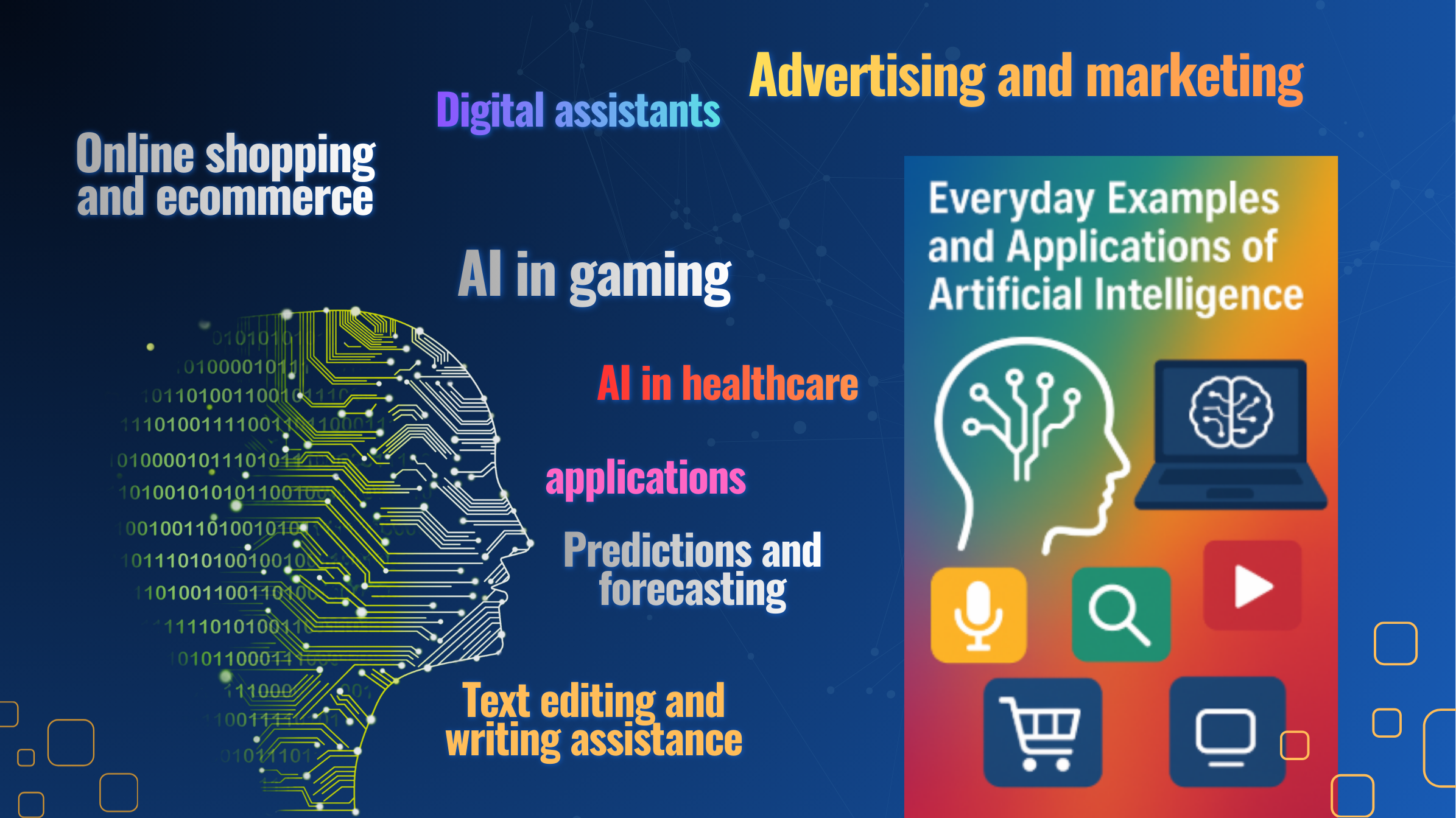
Everyday Examples and Applications of Artificial Intelligence in Daily Life
Artificial intelligence has moved beyond being a futuristic concept and now actively shapes how businesses, consumers, and industries operate. While many people may not realize it, AI is embedded in countless digital tools, online services, and automated systems we interact with every day. From digital assistants and online shopping to healthcare and fraud detection, AI-powered devices and algorithms continue to enhance convenience, efficiency, and decision-making.
Understanding artificial intelligence
Artificial intelligence is a branch of computer science that focuses on designing systems capable of performing tasks that typically require human intelligence. These tasks include learning, reasoning, problem-solving, understanding language, and recognizing patterns. AI-powered systems can analyze large amounts of data, adapt through machine learning, and deliver automated results, often faster and more accurately than humans.
Everyday uses and applications of artificial intelligence
AI is no longer restricted to high-tech labs or advanced robots; it is now integrated into common tools used in homes, workplaces, transportation, and entertainment. Below are some real-world examples of how AI functions in everyday life.
Digital assistants
Digital assistants such as Siri, Alexa, Google Assistant, Cortana, and Bixby are among the most widely used AI tools. They help users set reminders, answer queries, control smart home devices, play music, and even assist in online shopping. These assistants recognize voice commands, analyze requests, and respond accordingly using AI-driven natural language processing.
Search engines
Search engines rely heavily on AI algorithms to deliver accurate and relevant results. They analyze user behavior, search history, and trending queries to predict what information users are looking for. Features like autocomplete suggestions, voice search, and People Also Ask sections are powered by machine learning and predictive AI.
Social media
AI shapes the way social media platforms such as Facebook, Instagram, YouTube, and TikTok function. AI algorithms monitor user interactions, search behavior, and engagement patterns to personalize news feeds, recommend content, and improve user experience. Social media platforms also use AI for content moderation, data analytics, targeted advertising, and user safety.
Online shopping and ecommerce
Online shopping platforms use AI to enhance the customer experience and improve business efficiency. AI-driven recommendation engines analyze buying behavior, preferences, and browsing history to suggest relevant products. AI is also used for pricing optimization, demand forecasting, chatbots for instant support, predictive shipping, and managing real-time inventory.
Robotics
AI-powered robots are widely used in industries such as manufacturing, aerospace, hospitality, and healthcare. In aerospace, robots like NASA’s Perseverance rover explore planetary surfaces, collect samples, and transmit data. In factories, industrial robots take charge of welding, assembling, transporting materials, and other repetitive tasks. In hospitality, robots help with guest check-ins, delivery services, and automated food preparation.
Transportation and navigation
AI is transforming transportation through autonomous vehicles, smart traffic management, and advanced navigation systems. Apps like Google Maps, Apple Maps, and Waze use AI to analyze real-time location data, predict traffic conditions, and provide accurate routes and estimated arrival times. Airlines also use AI-driven autopilot systems to analyze flight data and adjust routes for safety and efficiency.
Text editing and writing assistance
AI plays a key role in text editing and writing tools such as Grammarly and Hemingway App. These tools offer grammar correction, readability analysis, plagiarism detection, and style improvement. AI-based autocorrect and predictive text features on smartphones learn from user behavior to make writing faster and more accurate.
Fraud detection and prevention
Banks and financial institutions use AI to detect and prevent fraudulent activities. AI systems analyze thousands of transactions in real time, identify unusual behavior, and automatically flag or block suspicious activity. This helps protect consumers and businesses by reducing risks and enhancing security.
Predictions and forecasting
AI is heavily used in predictive analytics to help organizations make data-driven decisions. It forecasts market trends, equipment maintenance schedules, customer preferences, and business demand. Predictive maintenance helps avoid costly breakdowns by analyzing wear and tear on machinery, while predictive modeling estimates future outcomes based on historical patterns.
AI in gaming
The gaming industry has used AI for decades to improve gameplay and generate dynamic environments. AI allows non-player characters to react intelligently, adapt to user strategies, and provide more realistic experiences. Games like Minecraft, F.E.A.R, and The Last of Us use AI to personalize challenges and enhance interactivity.
AI in healthcare
Artificial intelligence is revolutionizing healthcare through early diagnosis, disease prediction, drug discovery, and robotic surgery. AI systems can analyze medical data to identify potential diseases before symptoms appear, recommend treatments, and help doctors improve patient care. Predictive analytics also track contagious disease patterns to support public health management.
Advertising and marketing
AI is reshaping advertising by improving ad targeting, budget optimization, and personalized campaigns. Tools powered by AI can write ad copy, design visuals, and recommend marketing strategies based on customer behavior and demographics. AI ensures ads are shown to the right audience at the right time for better engagement and conversion.
Analytics and business intelligence
AI-driven analytics enables companies to generate accurate forecasts, analyze large datasets, and monitor real-time business performance. Predictive analytics, business monitoring, and smart reporting help organizations plan better, reduce costs, and improve customer satisfaction.
Business and AI
As AI technology continues to evolve, businesses across industries are increasingly adopting AI-driven solutions to stay competitive. From optimizing operations to improving customer experience, AI provides a strategic advantage in decision-making and innovation.
Artificial intelligence is no longer a concept of the future. It has already embedded itself in everyday life, transforming how we work, communicate, travel, and shop. As technology continues to advance, the role of AI in our daily lives will only expand, offering smarter, faster, and more efficient solutions to everyday challenges.
Conclusion:
Artificial intelligence has rapidly progressed from a specialized technological concept to a fundamental part of modern life. Whether enhancing personal convenience through digital assistants, supporting business strategies with predictive analytics, or improving patient outcomes in healthcare, AI continues to drive innovation across industries. Its presence may often go unnoticed, yet its impact is substantial—optimizing tasks, strengthening decision-making, and expanding the boundaries of what is possible. As AI technology evolves, it will play an even more influential role in shaping how we live, work, and interact with the world. Embracing AI responsibly and strategically will be key to unlocking its full potential and ensuring long-term benefits for individuals, businesses, and society as a whole.
FAQs:
1. What are some common examples of AI we use without realizing it?
Many people unknowingly use AI every day through digital assistants, navigation apps, online shopping recommendations, autocorrect tools, and social media feeds tailored to their interests.
2. How does AI improve user experience in online shopping?
AI analyzes browsing history, past purchases, and user preferences to show personalized product suggestions, optimize prices, automate customer support, and predict delivery times.
3. Can AI help businesses make better decisions?
Yes. AI uses predictive analytics and data modeling to forecast trends, track performance, and support informed decision-making, making business strategies more efficient and data-driven.
4. Is AI safe to use in healthcare?
AI is widely used to assist doctors in diagnosing diseases early, predicting health risks, and analyzing medical data. When used responsibly and under professional supervision, it enhances accuracy and patient care.
5. How does AI contribute to fraud prevention?
AI systems monitor thousands of transactions in real time, identify unusual patterns, and flag or block suspicious activity automatically to protect users from potential fraud.
6. Can AI be used in education and learning?
Absolutely. AI-powered platforms offer personalized learning paths, automated grading, interactive chatbots, and real-time feedback to help students learn more effectively.
7. Is AI replacing human jobs?
AI can automate repetitive tasks but also creates new opportunities by assisting professionals, increasing efficiency, and enabling people to focus on more complex, strategic responsibilities.