
How Businesses Use Generative AI Today

how businesses use generative ai today https://worldstan.com/how-businesses-use-generative-ai-today/

Generative AI is rapidly becoming a core enterprise capability, and this report explores how businesses across industries are applying AI technologies in real-world scenarios to improve productivity, automate workflows, enhance customer experiences, and shape the future of organizational decision-making.

Generative Ai Use Cases In Business: A Comprehensive Enterprise Report

Generative AI use cases in business have moved from experimental pilots to mission‑critical systems that influence strategy, operations, and customer engagement. What was once perceived as a futuristic capability is now embedded across enterprise software, workflows, and decision‑making structures. Organizations are no longer asking whether artificial intelligence should be adopted, but how it can be applied responsibly, efficiently, and at scale.

This report examines how generative AI and related AI technologies are reshaping modern enterprises. It presents a restructured, professional analysis of enterprise AI adoption, industry‑specific applications, governance considerations, and the strategic implications for organizations navigating rapid technological change.

The Evolution of Artificial Intelligence in the Enterprise

Artificial intelligence has evolved through several distinct phases. Early AI systems focused on rule‑based automation, followed by statistical machine learning models capable of identifying patterns in structured data. The current phase is defined by generative AI and large language models, which can understand context, generate human‑like content, and interact conversationally across multiple modalities.

Large language models such as OpenAI GPT‑4 have accelerated enterprise interest by enabling tasks that previously required human judgment. These models can draft documents, summarize reports, generate code, analyze customer feedback, and power AI assistants that operate across organizational systems. Combined with advances in computer vision and speech processing, generative AI has become a foundational layer of modern enterprise technology stacks.

Unlike earlier automation tools, generative AI does not simply execute predefined rules. It learns from vast datasets, adapts to new information, and supports knowledge‑intensive work. This shift explains why AI adoption has expanded beyond IT departments into marketing, finance, healthcare, manufacturing, and executive leadership.

Strategic Drivers Behind Generative AI Adoption

Several forces are driving organizations to invest in generative AI use cases in business. Productivity pressure is one of the most significant. Enterprises face rising costs, talent shortages, and increasing competition, creating demand for AI‑driven automation that enhances efficiency without compromising quality.

Another driver is data complexity. Companies generate massive volumes of unstructured data through emails, documents, images, videos, and conversations. Traditional analytics tools struggle to extract value from this information, while generative AI excels at interpretation, summarization, and contextual reasoning.

Customer expectations have also changed. Personalized experiences, real‑time support, and consistent engagement across channels are now standard requirements. AI‑powered chatbots, recommendation engines, and personalization systems allow organizations to meet these expectations at scale.

Finally, enterprise software vendors have accelerated adoption by embedding AI capabilities directly into their platforms. Tools such as Salesforce Einstein Copilot, SAP Joule, and Dropbox AI reduce the technical barrier to entry, making AI accessible to non‑technical users across the organization.

Enterprise AI Applications Across Core Business Functions

Generative AI use cases in business span nearly every enterprise function. In operations, AI‑powered workflows automate routine processes such as document handling, reporting, and compliance checks. AI summarization tools enable executives to review lengthy materials quickly, improving decision velocity.

In human resources, AI assistants support recruitment by screening resumes, generating job descriptions, and analyzing candidate data. Learning and development teams use AI content generation to create personalized training materials tailored to employee roles and skill levels.

Finance departments apply AI models to forecast revenue, detect anomalies, and automate financial reporting. While human oversight remains essential, AI enhances accuracy and reduces manual effort in data‑intensive tasks.

Legal and compliance teams benefit from AI transcription and document analysis tools that review contracts, flag risks, and support regulatory monitoring. These applications demonstrate how generative AI can augment specialized professional roles rather than replace them.

Generative AI in Marketing, Advertising, and Media

Marketing and advertising were among the earliest adopters of generative AI, and they remain areas of rapid innovation. AI‑generated content is now widely used to draft marketing copy, social media posts, product descriptions, and campaign concepts. This allows teams to scale output while maintaining brand consistency.

AI personalization tools analyze customer behavior to deliver tailored messages across digital channels. In advertising, generative models assist with creative testing by producing multiple variations of visuals and copy, enabling data‑driven optimization.

Media and entertainment platforms have also embraced AI. YouTube AI features enhance content discovery and moderation, while Spotify AI DJ demonstrates how AI‑powered recommendations can create dynamic, personalized listening experiences. These use cases highlight the role of generative AI in shaping audience engagement and content consumption.

AI Use Cases in Healthcare, Biotechnology, and Pharmaceuticals

Healthcare represents one of the most impactful areas for enterprise generative AI applications. AI in healthcare supports clinical documentation, medical transcription, and patient communication, reducing administrative burden on clinicians.

In biotechnology and pharmaceuticals, generative AI accelerates research and development by analyzing scientific literature, predicting molecular structures, and supporting drug discovery workflows. Machine learning models identify patterns in complex biological data that would be difficult for humans to detect manually.

AI governance and ethical oversight are particularly critical in these sectors. Responsible AI practices, transparency, and regulatory compliance are essential to ensure patient safety and trust. As adoption grows, healthcare organizations must balance innovation with accountability.

Industrial and Robotics Applications of AI Technology

Beyond knowledge work, AI technology is transforming physical industries through robotics and automation. AI in robotics enables machines to perceive their environment, adapt to changing conditions, and perform complex tasks with precision.

Boston Dynamics robots exemplify how computer vision and machine learning support mobility, inspection, and logistics applications. In manufacturing and warehousing, AI‑driven automation improves efficiency, safety, and scalability.

The automotive sector has also adopted AI in specialized domains such as automotive racing, where machine learning models analyze performance data and optimize strategies in real time. These applications demonstrate the versatility of AI across both digital and physical environments.

AI in Cloud Computing, E‑Commerce, and Digital Platforms

Cloud computing has played a critical role in enabling enterprise AI adoption. Scalable infrastructure allows organizations to deploy large language models and AI tools without maintaining complex on‑premise systems. Nvidia AI technologies power many of these platforms by providing the computational capabilities required for training and inference.

In e‑commerce, AI‑powered recommendations, dynamic pricing models, and customer support chatbots enhance user experience and drive revenue growth. AI personalization increases conversion rates by aligning products and messaging with individual preferences.

Digital platforms increasingly treat AI as a core service rather than an add‑on feature. This integration reflects a broader shift toward AI‑native enterprise software architectures.

AI Assistants and the Future of Knowledge Work

AI assistants represent one of the most visible manifestations of generative AI in business. Tools such as ChatGPT, enterprise copilots, and virtual assistants support employees by answering questions, generating drafts, and coordinating tasks across applications.

These systems reduce cognitive load and enable workers to focus on higher‑value activities. Rather than replacing human expertise, AI assistants act as collaborative partners that enhance productivity and creativity.

As AI assistants become more context‑aware and integrated, organizations will need to redefine workflows, performance metrics, and skill requirements. Change management and training will be essential to realize long‑term value.

Ethical Considerations and AI Governance

The rapid expansion of generative AI use cases in business raises important ethical and governance questions. AI misuse, data privacy, and algorithmic bias pose significant risks if not addressed proactively.

Responsible AI frameworks emphasize transparency, accountability, and human oversight. Organizations must establish clear AI policies that define acceptable use, data handling practices, and escalation procedures for errors or unintended outcomes.

AI governance is not solely a technical challenge. It requires cross‑functional collaboration among legal, compliance, IT, and business leaders. As regulatory scrutiny increases globally, enterprises that invest early in governance structures will be better positioned to adapt.

Measuring Business Value and ROI from AI Adoption

Demonstrating return on investment remains a priority for enterprise leaders. Successful AI adoption depends on aligning use cases with strategic objectives and measurable outcomes.

Organizations should evaluate AI initiatives based on productivity gains, cost reduction, revenue impact, and customer satisfaction. Pilot programs, iterative deployment, and continuous monitoring help mitigate risk and ensure scalability.

Importantly, value creation often extends beyond immediate financial metrics. Enhanced decision quality, faster innovation cycles, and improved employee experience contribute to long‑term competitive advantage.

The Road Ahead for Generative AI in Business

Generative AI is still in an early stage of enterprise maturity. As models become more efficient, multimodal, and domain‑specific, their impact will continue to expand. Integration with existing systems, improved explainability, and stronger governance will shape the next phase of adoption.

Future enterprise AI applications are likely to blur the boundary between human and machine work. Organizations that invest in skills development, ethical frameworks, and strategic alignment will be best positioned to benefit from this transformation.

Rather than viewing generative AI as a standalone technology, enterprises should treat it as an evolving capability embedded across processes, platforms, and culture. This perspective enables sustainable innovation and responsible growth.

Conclusion:

Generative AI use cases in business illustrate a fundamental shift in how organizations operate, compete, and create value. From marketing and healthcare to robotics and cloud computing, AI technologies are redefining enterprise capabilities.

The most successful organizations approach AI adoption with clarity, discipline, and responsibility. By focusing on real‑world applications, governance, and human collaboration, enterprises can harness the full potential of generative AI while managing its risks.

As AI continues to evolve, its role in business will move from augmentation to strategic partnership. Enterprises that understand this transition today will shape the economic and technological landscape of tomorrow.

FAQs:

  • What makes generative AI different from traditional AI systems in business?
    Generative AI differs from traditional AI by its ability to create new content, insights, and responses rather than only analyzing existing data. In business environments, this enables tasks such as drafting documents, generating marketing content, summarizing complex reports, and supporting decision-making through conversational AI assistants.

  • Which business functions benefit the most from generative AI adoption?
    Functions that rely heavily on information processing see the greatest impact, including marketing, customer support, human resources, finance, and operations. Generative AI improves efficiency by automating repetitive work while also supporting creative and strategic activities that previously required significant human effort.

  • How are enterprises using generative AI to improve productivity?
    Enterprises use generative AI to streamline workflows, reduce manual documentation, automate reporting, and assist employees with real-time insights. AI-powered tools help teams complete tasks faster, minimize errors, and focus on higher-value work that drives business outcomes.

  • Is generative AI suitable for regulated industries like healthcare and finance?
    Yes, generative AI can be applied in regulated industries when supported by strong governance, transparency, and human oversight. Organizations in healthcare and finance use AI for documentation, analysis, and decision support while ensuring compliance with data protection and regulatory standards.

  • What role do AI assistants play in modern enterprise software?
    AI assistants act as intelligent interfaces between users and enterprise systems. They help employees retrieve information, generate content, coordinate tasks, and interact with complex software platforms using natural language, reducing friction and improving usability.

  • What are the main risks businesses should consider when deploying generative AI?
    Key risks include data privacy concerns, inaccurate outputs, bias in AI-generated content, and potential misuse. Addressing these risks requires clear AI policies, ongoing monitoring, ethical guidelines, and a structured approach to AI governance.

  • How can organizations measure the success of generative AI initiatives?
    Success is measured by evaluating productivity gains, cost reductions, quality improvements, customer satisfaction, and employee adoption. Many organizations also assess long-term value, such as faster innovation cycles and improved decision-making, rather than relying solely on short-term financial metrics.
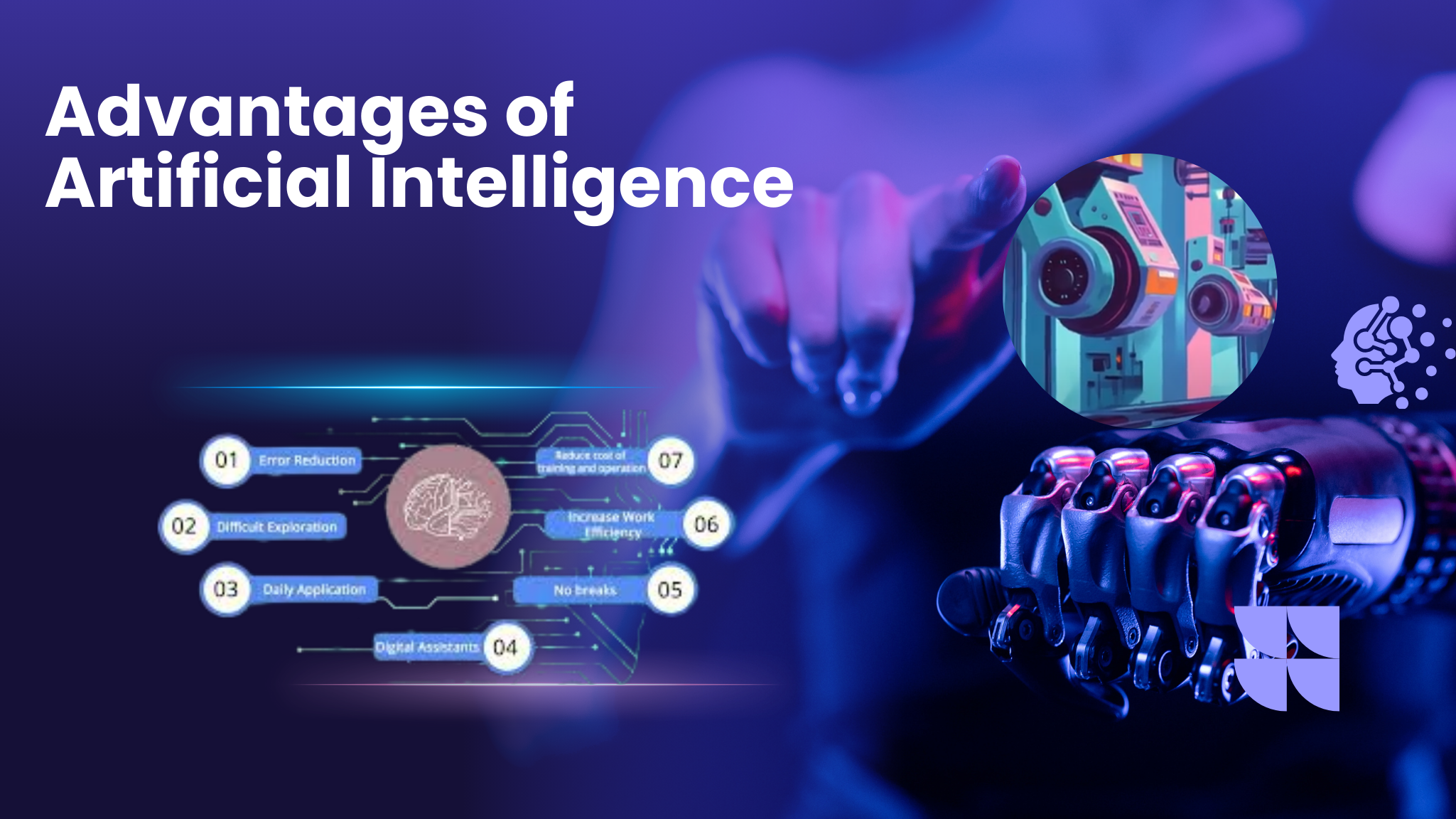
Advantages of Artificial Intelligence: Real-World Applications and Benefits

theAdvantages and biggest challenges of artificial intelligence today https://worldstan.com/advantages-of-artificial-intelligence-real-world-applications-and-benefits/

Artificial intelligence is transforming industries by enabling smarter decision-making, intelligent automation, and personalized experiences, and this article explores the key advantages of artificial intelligence and how its real-world applications are reshaping business, healthcare, finance, and everyday operations.

Advantages of Artificial Intelligence: Driving the Next Era of Intelligent Systems

Artificial intelligence has moved far beyond its early perception as a futuristic concept. Today, it operates at the core of modern digital transformation, reshaping how organizations function, how services are delivered, and how decisions are made. From enterprise operations to everyday consumer interactions, AI has become a foundational technology enabling efficiency, automation, and strategic growth. Its adoption across industries reflects not only technological progress but also a shift toward smarter, data-centric models of work and innovation.

At its core, artificial intelligence refers to systems capable of simulating human intelligence through learning, reasoning, and adaptive decision-making. The advantages of artificial intelligence lie in its ability to process vast amounts of information, identify meaningful patterns, and execute actions with speed and consistency that exceed human limitations. These capabilities have unlocked unprecedented opportunities for businesses, governments, and institutions seeking resilience and competitiveness in an increasingly complex environment.

The Evolution of Efficiency and Automation

One of the most widely recognized AI advantages is its contribution to efficiency and automation. Traditional workflows often rely on manual processes that are time-consuming, error-prone, and difficult to scale. AI automation introduces intelligent systems that can perform repetitive and structured tasks with minimal human intervention, allowing organizations to streamline operations and allocate resources more strategically.

Automation powered by artificial intelligence is not limited to simple rule-based execution. Modern systems learn from historical data, improve over time, and adapt to new conditions. This has transformed areas such as document processing, transaction handling, scheduling, and quality control. Businesses that deploy AI automation frequently report higher operational speed, reduced costs, and improved consistency across processes.

Beyond internal efficiency, automation also enhances service delivery. AI-driven systems ensure faster response times, uninterrupted availability, and uniform performance, all of which contribute to improved customer satisfaction and trust.

Improved Decision Making Through Data Intelligence

Another major benefit of artificial intelligence is its role in improved decision making. In a data-rich world, organizations often struggle not with data scarcity but with data overload. AI systems excel at transforming raw information into actionable insights by analyzing trends, correlations, and anomalies that might otherwise remain hidden.

Data-driven decisions supported by AI reduce reliance on intuition or incomplete analysis. Machine learning applications enable predictive modeling, scenario planning, and real-time assessment of outcomes. This empowers leaders to make informed choices grounded in evidence rather than assumptions.

AI-driven decision support tools are increasingly used in strategic planning, risk assessment, and performance optimization. By continuously learning from new data, these systems provide dynamic insights that evolve alongside market conditions, customer behavior, and operational realities.

Artificial Intelligence in Healthcare: Precision and Predictive Care

Among the most impactful real-world applications of AI is its integration into healthcare systems. AI in healthcare has revolutionized diagnostics, treatment planning, and patient management. Healthcare diagnostics with AI leverage image recognition, natural language processing, and predictive analytics to assist clinicians in identifying diseases at earlier stages and with higher accuracy.

Medical imaging analysis, for example, uses AI to detect subtle patterns in scans that may be overlooked by the human eye. Predictive models analyze patient data to forecast disease progression and recommend preventive interventions. These capabilities not only enhance clinical outcomes but also reduce costs by minimizing unnecessary procedures and hospital readmissions.

AI also supports operational efficiency in healthcare by optimizing scheduling, managing medical records, and improving resource allocation. As a result, providers can deliver higher-quality care while maintaining sustainability in increasingly strained healthcare systems.

AI in Finance: Risk Management and Intelligent Analysis

The financial sector has been one of the earliest adopters of artificial intelligence, recognizing its potential for precision, speed, and risk mitigation. AI in finance plays a critical role in fraud detection using AI, where machine learning models analyze transaction patterns to identify suspicious behavior in real time.

Risk management using AI enables financial institutions to assess creditworthiness, market volatility, and investment risks with greater accuracy. By analyzing historical and real-time data, AI systems provide insights that help organizations anticipate potential threats and respond proactively.

Market analysis using AI has also transformed trading and investment strategies. Automated systems process global financial data, news sentiment, and economic indicators to support faster and more informed decision making. This data-centric approach enhances transparency and stability within financial ecosystems.

Retail Transformation Through AI Personalization

Retail has undergone a significant shift as artificial intelligence enables more personalized and responsive customer experiences. Personalized user experience is now a key competitive differentiator, and AI personalization allows retailers to tailor offerings based on individual preferences, browsing behavior, and purchase history.

Inventory management with AI ensures optimal stock levels by analyzing demand patterns, seasonal trends, and supply constraints. Demand forecasting powered by AI reduces waste, improves availability, and enhances customer satisfaction.

AI in retail also enhances pricing strategies, recommendation engines, and customer engagement channels. By understanding consumer behavior at a granular level, retailers can deliver relevant experiences that foster loyalty and long-term value.

Always-On Support: AI in Customer Service

Customer expectations have evolved toward instant, seamless, and consistent interactions. AI in customer service addresses these demands through 24/7 AI availability and scalable support solutions. AI-powered chatbots provide immediate responses to common inquiries, resolve routine issues, and escalate complex cases to human agents when necessary.

AI customer support systems improve efficiency by reducing wait times and handling high volumes of interactions without compromising quality. Natural language processing enables these systems to understand context, sentiment, and intent, resulting in more meaningful and effective communication.

Over time, AI-powered chatbots learn from interactions, continuously improving accuracy and relevance. This creates a feedback loop that enhances both customer experience and operational performance.

Advanced Data Analysis and Pattern Recognition

A fundamental strength of artificial intelligence lies in data analysis and pattern recognition. AI systems process structured and unstructured data at scale, uncovering insights that drive innovation and strategic advantage. These capabilities are particularly valuable in environments characterized by complexity and rapid change.

Pattern recognition enables predictive maintenance in manufacturing, where AI analyzes sensor data to identify early signs of equipment failure.In supply chain optimization, AI evaluates logistics data to improve routing, supplier selection, and inventory flow. By anticipating disruptions and adjusting plans in real time, organizations can maintain resilience and continuity.

AI in Manufacturing: Intelligent Operations

AI in manufacturing represents a convergence of automation, analytics, and adaptive intelligence. Smart factories use AI to monitor production processes, ensure quality control, and optimize resource utilization. Machine learning applications continuously refine workflows based on performance data, leading to incremental and sustained improvements.

Predictive maintenance is a standout application, allowing manufacturers to transition from reactive to proactive strategies. By predicting when equipment requires servicing, organizations minimize unexpected breakdowns and improve safety.

Supply chain optimization supported by AI enhances coordination across suppliers, distributors, and logistics providers. This holistic view enables manufacturers to respond quickly to market fluctuations and customer demand.

Business Productivity With AI

Across industries, one of the most compelling advantages of artificial intelligence is its impact on business productivity. AI augments human capabilities rather than replacing them, allowing employees to focus on higher-value tasks that require creativity, judgment, and strategic thinking.

Routine activities such as data entry, reporting, and scheduling are increasingly handled by AI systems. This not only improves accuracy but also reduces cognitive load on employees. As a result, organizations benefit from a more engaged and effective workforce.

Machine learning applications support performance management, talent development, and operational planning. By providing insights into productivity drivers and bottlenecks, AI enables continuous improvement across organizational functions.

Ethical and Strategic Considerations

While the benefits of artificial intelligence are substantial, responsible deployment requires thoughtful governance. Transparency, accountability, and fairness are essential to ensuring that AI systems align with societal values and organizational goals.

Ethical AI frameworks guide the development and use of AI technologies, addressing concerns related to bias, privacy, and security. When implemented responsibly, AI enhances trust and supports sustainable innovation.

Strategically, organizations must align AI initiatives with long-term objectives. Successful adoption depends not only on technology but also on culture, skills, and leadership commitment. Investing in data quality, infrastructure, and workforce readiness is critical to unlocking the full potential of AI.

The Expanding Landscape of Real-World Applications of AI

The scope of real-world applications of AI continues to expand as technology matures and integration becomes more seamless. From education and transportation to energy and public services, AI-driven solutions are addressing complex challenges with unprecedented effectiveness.

In logistics, AI optimizes routes and delivery schedules. In energy management, it balances supply and demand to improve efficiency and sustainability. In education, adaptive learning platforms personalize instruction based on individual progress and needs.

These diverse applications underscore the versatility and transformative power of artificial intelligence. As adoption grows, the cumulative impact of AI on productivity, innovation, and quality of life will become increasingly evident.

Conclusion: Why Artificial Intelligence Matters

The advantages of artificial intelligence extend far beyond technological novelty. They represent a fundamental shift in how work is performed, how decisions are made, and how value is created. Through efficiency and automation, improved decision making, and intelligent personalization, AI empowers organizations to operate with greater agility and insight.

From healthcare diagnostics with AI to fraud detection using AI, from AI in manufacturing to AI in customer service, the technology’s influence spans every major industry. Its ability to learn, adapt, and scale makes it a critical enabler of sustainable growth in a data-driven world.

As artificial intelligence continues to evolve, its advantages will become even more pronounced. Organizations that embrace AI thoughtfully and strategically will be better positioned to navigate uncertainty, seize opportunities, and shape the future of intelligent systems.

FAQs:

  • What makes artificial intelligence valuable for modern organizations?
    Artificial intelligence adds value by turning large volumes of data into actionable insights, automating repetitive tasks, and supporting faster, more accurate decision-making across business operations.

  • How does AI improve efficiency compared to traditional automation tools?
    Unlike rule-based systems, AI learns from data and adapts over time, allowing processes to improve continuously and respond intelligently to changing conditions.

  • In what ways is AI transforming customer service experiences?
    AI enables round-the-clock support through chatbots and virtual assistants that resolve common issues instantly while learning from interactions to improve response quality.

  • Why is artificial intelligence important for data-driven decision making?
    AI analyzes complex datasets, identifies patterns, and predicts outcomes, helping organizations make informed decisions based on evidence rather than assumptions.

  • How is AI being applied differently across industries?
    Industries use AI in distinct ways, such as diagnostics and patient monitoring in healthcare, fraud detection and risk assessment in finance, and demand forecasting in retail.

  • What role does machine learning play in artificial intelligence systems?
    Machine learning allows AI systems to learn from historical data, refine their models, and improve performance without being explicitly reprogrammed.

  • Can artificial intelligence help businesses remain competitive in the long term?
    Yes, by increasing productivity, improving customer experiences, and enabling scalable innovation, AI helps organizations adapt to market changes and maintain a competitive edge.