What Is AI Product Design? Tools, Benefits and Real-World Applications

ai product design worldstan.com
Discover how AI product design is revolutionizing the way modern products are imagined, built, and refined—merging human creativity with intelligent automation to create smarter, faster, and more adaptive design solutions.
AI Product Design: How Artificial Intelligence Is Transforming Modern Product Development

Theme / Overview:

Artificial Intelligence is reshaping how we conceptualize, design, and deliver digital and physical products. Through generative design, intelligent prototyping, and data-driven decision-making, AI product design is setting new benchmarks for creativity, precision, and efficiency in the global design landscape.

Introduction: The Era of Intelligent Design

In the age of automation and data intelligence, product design is no longer limited to human imagination alone. Artificial Intelligence (AI) has evolved from being a supportive tool into a collaborative partner that drives innovation at every stage of the design process. Whether it’s building user-centered digital interfaces, optimizing automotive components, or crafting immersive e-commerce experiences, AI is redefining how ideas become tangible products.

AI product design integrates machine learning (ML), generative AI, and predictive analytics into every phase of development — from early ideation and prototyping to testing, launch, and post-market optimization. This new approach enables designers and engineers to create smarter, faster, and more adaptive solutions that respond to real-time user behavior and environmental data.

What Is AI Product Design?

AI product design refers to the application of artificial intelligence in the end-to-end process of creating digital or physical products. It leverages algorithms, neural networks, and large datasets to generate design concepts, test usability, predict user interactions, and optimize performance metrics.

Traditionally, product design relied heavily on human expertise, intuition, and manual iteration. Today, AI-powered design systems such as Figma AI, ChatGPT for design, and Claude for creativity are introducing generative design workflows that accelerate decision-making and minimize human error. These systems can produce hundreds of variations of a prototype, evaluate them under different conditions, and recommend the most efficient or aesthetically pleasing options.

At its core, AI product design is not about replacing human creativity—it’s about enhancing it. By offloading repetitive and analytical tasks to AI, designers can focus more on strategy, innovation, and emotional engagement.

How AI Is Transforming the Design Process

The design process is being reshaped by AI at multiple levels. Let’s explore how each stage benefits from AI-driven tools and insights.
  1. Ideation and Concept Generation

Generative AI tools use vast datasets and contextual prompts to produce early-stage design ideas. Designers can input specific requirements — such as target audience, use case, or design constraints — and receive multiple viable concepts in minutes. This approach encourages rapid experimentation and creative diversity, especially in startups and innovation-driven industries.


  1. Prototyping and Visualization

Prototyping with AI has become faster and more precise. Platforms like Figma AI now generate layout variations, adaptive color palettes, and responsive UI components automatically. These smart systems can simulate user behavior, offering predictive insights on how real users might interact with the interface. Designers can then make data-backed adjustments before development begins.


  1. Testing and Optimization

A/B testing with AI enables real-time evaluation of user experiences. Machine learning algorithms monitor user interactions, engagement rates, and conversion metrics to suggest continuous improvements. This makes it possible to personalize digital experiences dynamically — a key advantage in sectors such as AI in e-commerce and AI in automotive design.


  1. Production and Manufacturing

In physical product design, AI integrates with computer-aided design (CAD) and digital twin technology to simulate real-world conditions before production. This predictive modeling allows engineers to detect flaws, reduce material waste, and optimize resource allocation. AI-driven production environments can also adapt designs in real-time based on performance feedback from sensors and connected devices.

Key Benefits of AI Product Design

The adoption of AI in product design brings tangible improvements across creativity, efficiency, and strategic decision-making.


Enhanced Creativity and Innovation

AI expands creative potential through generative design. Designers can explore unconventional forms, textures, and patterns that human logic might overlook. The result is an explosion of new ideas that merge computational precision with artistic freedom.

Streamlined Design Workflows

AI automates time-intensive tasks such as wire framing, layout alignment, and design audits. This speeds up delivery cycles and allows teams to focus on higher-value problem-solving. Real-time collaboration between human and AI systems leads to faster iterations and reduced production costs.

Real-Time Insights and Adaptation

AI analytics dashboards and machine learning models deliver continuous performance feedback. This enables real-time simulation and design optimization based on live data from users or environmental sensors. The outcome is more responsive, context-aware product design.

Personalized User Experiences

Through behavioral analysis and predictive algorithms, AI systems help create personalized digital experiences that align with individual user preferences. For example, AI-driven UX design can adapt navigation, color schemes, or recommendations according to user context.


Resource and Cost Optimization

AI-driven predictive models optimize resource allocation, pricing strategies, and supply chains. By reducing errors and improving accuracy in production planning, organizations can achieve better sustainability outcomes and higher profitability.

Continuous Learning and Upskilling

Design teams benefit from AI-enabled learning environments that enhance their skills. Interactive systems like Claude for creativity and ChatGPT for design act as design mentors, providing instant feedback and recommendations to improve professional growth.

Use Cases Across Industries

AI product design has found wide-ranging applications across industries.

Startups use AI to test prototypes faster and launch market-ready products without large design teams.

Automotive companies employ generative design to develop lighter, safer, and more efficient vehicle components.

E-commerce brands apply AI to personalize shopping interfaces, simulate product visuals, and optimize conversions.

Healthcare innovators use AI to design patient-centric tools and medical devices with enhanced ergonomics and predictive safety features.

Manufacturing enterprises leverage digital twins for real-time simulation and process optimization, minimizing downtime and energy use.

These use cases demonstrate how AI not only enhances creativity but also strengthens the economic and operational fabric of product development.

Challenges and Ethical Considerations

While the advantages are compelling, the rise of AI in product design also introduces complex challenges. Designers must navigate issues related to intellectual property, data bias, and algorithmic transparency. Generative design models learn from massive datasets that may inadvertently include biased or unverified information, influencing design outcomes.

Moreover, maintaining human oversight is essential. AI systems may produce technically accurate but contextually irrelevant designs if left unsupervised. Ethical design frameworks and human-centered review loops must remain integral to every AI-driven design process.

The Future of AI Product Design


The next decade will see AI product design evolve from assistive technology to autonomous creativity. Agentic AI systems will independently manage design tasks, conduct user research, and propose data-informed innovations with minimal human input. Meanwhile, integration between AI design tools, CAD platforms, and cloud-based analytics will enable fully synchronized design ecosystems.

Emerging technologies like digital twin environments and real-time simulation will continue to push the boundaries of predictive design and adaptive prototyping. As organizations embrace AI-powered product development, the line between designer and machine collaborator will blur, leading to a hybrid future of co-creation.

Conclusion: Redefining the Design Frontier

AI product design marks a pivotal transformation in how we create and experience innovation. It represents a new frontier where creativity, computation, and human intuition coexist. From generative design tools to intelligent analytics dashboards, AI empowers designers and businesses to turn complex challenges into adaptive, user-centric solutions.

The future of design will not simply be digital — it will be intelligent, responsive, and continuously learning. For brands and creators who embrace this transformation early, AI will not just enhance design—it will define it.
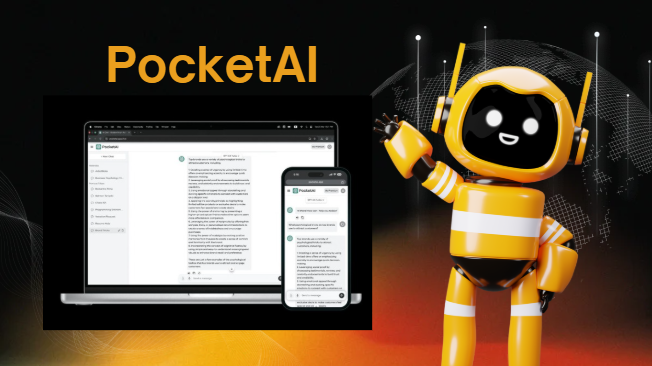
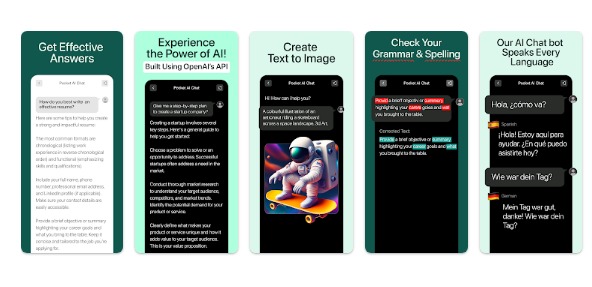
PocketAI App: AI Writing, Image and Task Generator

pocketai worldstan.com

Discover how PocketAI is transforming everyday productivity with its all-in-one AI platform—combining writing, image generation, and smart assistance to simplify work, study, and creativity in one seamless experience.

pocket ai intro features worldstan.com

Introduction

Imagine carrying a powerful personal assistant in your pocket—one that helps you write an email, solve a math equation, brainstorm a logo idea or generate a striking image. That is exactly what PocketAI offers. It is an all-in-one AI platform designed to bring advanced artificial intelligence tools into everyday use, whether you are a student, a professional or a creative explorer. With PocketAI you gain access to writing assistance, image generation, project-planning support and more — all in one place with fewer subscriptions, less hassle and a fair price.

Founding History

PocketAI first emerged as a mobile application offering advanced chatbot capabilities powered by generative AI models. Within the App Store description, it is marketed as “the best GPT-4 AI assistant in your pocket” capable of writing content, generating images and solving problems.

While the precise founding team and company background are less publicly documented, it is clear that the product evolved in an era where users demanded mobile-friendly, versatile AI tools.
As reviews indicate, PocketAI now supports multiple platforms (iOS, Android, desktop via WebCatalog) and integrates GPT-4 Turbo, document processing and art generation.

The transition from simple chatbot to full-suite AI platform reflects a broader trend in which AI tools are bundled into one “productivity + creativity” offering for everyday users and professionals alike.

Features

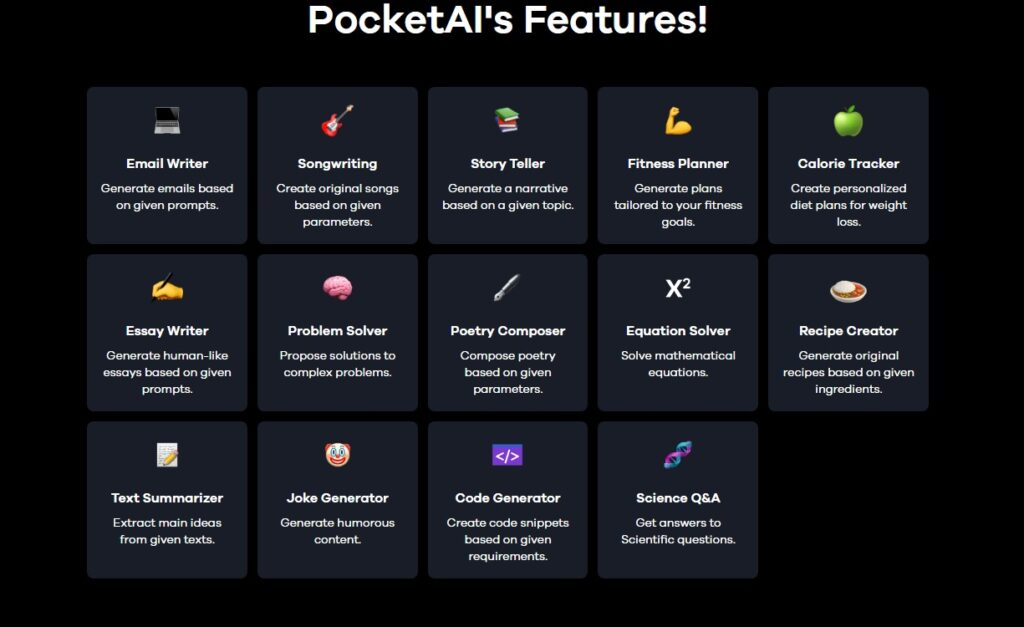
PocketAI stands out through a combination of features designed to support productivity, creativity and flexibility. Here are some of its key capabilities:

pocketai features worldstan.com


  • Writing and productivity assistance: Whether you want to draft a professional email, generate a report or summarise a complex topic, PocketAI offers natural-language generation tools powered by advanced models.
  • Image creation and design support: You can describe an idea and turn it into an image—be it a logo, an avatar or a realistic portrait. In the app description this is explicitly mentioned.
  • Multi-platform accessibility: The service is available on smartphones (iOS and Android) and via desktop (WebCatalog wrapper) so you can use it wherever you are.
  • Affordability and bundled value: Compared to using several different apps or subscriptions for writing, design and productivity, PocketAI offers many tools in one place. According to reviews, starting plans begin around US$4.99/month.
  • Ease of use for work and education: Users report that the app is mobile-friendly, lightweight and effective for both school assignments and work tasks.
  • Customization and advanced model integration: The platform supports GPT-4 Turbo, GPT-3.5, and offers document uploading, image-generation, and over 160 expert-prompts built into the interface.

Together, these features position PocketAI as a versatile AI assistant that supports everyday tasks—from writing and planning to creativity and problem-solving.


Conclusion

In summary, PocketAI is a compelling choice for anyone looking to boost productivity, enrich creativity and streamline workflow—all from a single AI platform. It emerged in response to the growing demand for mobile-friendly, powerful yet affordable AI tools. Its combination of text-generation, image-creation, multi-platform support and value-pricing gives it a strong proposition for students, professionals and creatives alike. If you’re seeking an intelligent companion that helps you write smarter, design faster and think clearer, PocketAI could well be the right fit.

Ideogram AI: The Future of Text to Image Generation

Ideogram AI worldstan.com

This article examines the evolution of Ideogram AI, a pioneering text-to-image generation platform that merges artificial intelligence with creative design, exploring its history, key model updates, features, and growing impact on digital art and visual communication.

Introduction:

Ideogram AI, developed by Ideogram, Inc., represents one of the most significant advancements in generative AI technology. Designed as a freemium text-to-image model, it harnesses deep learning methodologies to create high-quality digital images from natural language descriptions known as prompts. What sets Ideogram apart from other AI image generators is its exceptional ability to generate legible and stylistically accurate text within images—a challenge that has long limited similar tools like DALL-E, Stable Diffusion, and Midjourney. With each version, Ideogram AI continues to redefine the boundaries of AI-driven creativity, offering new opportunities for designers, advertisers, and digital artists worldwide.

Origins and Early Development

Ideogram, Inc. was established in 2022 by a group of leading AI researchers and innovators: Mohammad Norouzi, William Chan, Chitwan Saharia, and Jonathan Ho. These founders, known for their prior work in machine learning and image synthesis, set out to create a model capable of producing precise and contextually relevant visuals with readable embedded text. Their shared vision was to overcome one of the persistent weaknesses in existing AI image generation tools—handling textual content within images.

The company’s mission quickly attracted attention from global investors, and by August 2023, Ideogram had released its initial version, known as Ideogram 0.1. This release followed a successful seed funding round that raised $16.5 million, led by major venture capital firms Andreessen Horowitz and Index Ventures. The early model impressed users with its creative flexibility and text-handling ability, positioning Ideogram as a strong competitor in the rapidly growing generative AI industry.

Growth and Advancements

Building upon the success of its early release, Ideogram continued to improve its algorithms, data architecture, and rendering precision. In February 2024, the company launched its 1.0 model alongside an $80 million funding round, marking a major milestone in its growth. This version brought a significant boost in image clarity, text generation accuracy, and style control, making it particularly appealing for marketing, advertising, and design professionals who require both creativity and accuracy in visuals.

During the summer of 2024, Ideogram welcomed Aidan Gomar to its team, further strengthening its leadership and research capacity. By August 2024, Ideogram introduced the 2.0 model, which expanded its stylistic versatility by including multiple rendering modes such as realistic, 3D, design, and anime. This update also improved text generation quality, allowing users to produce intricate logos, posters, and social media graphics where typography played a central role.

The 2a and 3.0 Model Breakthroughs

In February 2025, Ideogram unveiled the 2a model, a version specifically optimized for speed and efficiency in professional environments like graphic design and photography. This release focused on reducing latency, improving output consistency, and catering to designers who need rapid iterations without compromising on quality.

Just a month later, in March 2025, the company announced its most advanced release to date—the Ideogram 3.0 model. This version introduced enhanced realism, more accurate texture rendering, and a deeper understanding of complex text layouts. While it continued to face limitations in creating ambigrams and mirrored text, it was widely recognized as one of the most capable AI image generation models on the market.

Distinctive Features and Capabilities

What distinguishes Ideogram AI from other generative AI tools is its focus on text comprehension and integration within images. Most AI image generators, such as Midjourney, DALL-E, Stable Diffusion, and Adobe Firefly, have historically struggled to render readable text elements. Ideogram’s architecture overcomes this barrier by combining advanced language modeling with visual pattern recognition.

Among its most praised features are:

  • Accurate Text Rendering: Ideogram generates legible and stylistically cohesive text, making it ideal for use in branding, advertising, and content creation.
  • Multimodal Style Support: The platform supports multiple creative modes such as realistic, 3D, anime, and design aesthetics.
  • Prompt Precision: Its refined prompt interpretation allows users to describe complex visual concepts and textual arrangements with high accuracy.
  • Optimized Performance: The 2a model introduced faster rendering times and better adaptability for graphic design workflows.
  • Realism and Detail: The 3.0 model enhances image depth, texture realism, and contextual understanding, improving overall visual coherence.

These advancements have positioned Ideogram AI as a preferred tool among professionals seeking efficient, AI-powered design capabilities.

Ideogram and the AI Art Industry

The launch and evolution of Ideogram coincide with the ongoing expansion of the AI art industry. With platforms like DALL-E, Midjourney, Stable Diffusion, and Google Imagen leading innovation in text-to-image generation, Ideogram has carved a unique niche by excelling at text synthesis within visuals—a key demand in modern advertising and digital design.

Generative AI tools are now widely used in marketing, film production, architecture, and content creation. Ideogram AI contributes to this ecosystem by empowering creators to turn detailed written ideas into visually compelling imagery without technical design skills. Its text precision makes it particularly valuable for logo design, brand campaigns, and social media assets that require both artistic and linguistic accuracy.

Challenges and Ethical Considerations

Like other major players in the AI image generation field, Ideogram faces questions surrounding AI bias, copyright protection, and ethical usage. The company has emphasized transparency and responsible innovation, implementing guidelines to prevent misuse and ensuring that user-generated content aligns with legal and creative standards.

AI models are often trained on massive datasets sourced from the internet, which can raise concerns about intellectual property and the inclusion of copyrighted material. In the broader context, competitors like Midjourney and Stability AI have already faced lawsuits over copyright infringement. As Ideogram continues to grow, it will likely face similar scrutiny, prompting discussions about fair use, data sourcing, and artist consent in the AI art industry.

The company’s developers have also focused on minimizing representational bias within its model outputs. Generative AI tools are known to sometimes produce skewed results when depicting gender, ethnicity, or culture. Ideogram’s research teams are actively working to address these issues through dataset refinement and ethical model training frameworks.

The Role of Ideogram in the Creative Ecosystem

Ideogram AI’s influence extends far beyond simple image generation. It represents a shift in how creativity is perceived and executed in the digital age. By bridging the gap between human imagination and machine interpretation, it enables professionals and amateurs alike to visualize complex ideas instantly.

The platform is increasingly integrated into creative workflows across industries such as:

  • Graphic Design: Ideogram allows rapid creation of marketing materials, posters, and brand visuals.
  • Advertising: Its high-quality text rendering is ideal for promotional content and social media advertising.
  • Film and Media Production: Storyboard artists and concept designers use it to prototype visual ideas quickly.
  • Education and Research: Educators use Ideogram AI to demonstrate visual storytelling, AI ethics, and computational creativity.

This democratization of design has reshaped creative industries, making professional-grade visuals accessible to everyone, regardless of artistic skill level.

Comparisons with Other AI Image Generators

When compared to other leading AI image generation platforms, Ideogram consistently stands out for its accuracy in handling textual elements and structured layouts.

  • Ideogram vs Midjourney: While Midjourney excels in artistic and cinematic styles, Ideogram provides more accurate and legible text output suitable for commercial use.
  • Ideogram vs DALL-E: DALL-E focuses on versatility and compositional creativity, whereas Ideogram emphasizes typography and graphic design precision.
  • Ideogram vs Stable Diffusion: Stable Diffusion offers open-source flexibility, but Ideogram delivers higher coherence in text and branded content generation.
  • Ideogram vs Adobe Firefly and Google Imagen: These enterprise-oriented tools integrate with design ecosystems, yet Ideogram’s unique text-to-image specialization continues to attract creative professionals seeking focused control over typographic and layout-based design.

The Future of Ideogram AI

As of 2025, Ideogram continues to advance rapidly in its research and development efforts. With each model release, the company refines its neural architecture, expands its stylistic range, and strengthens its position in the generative AI industry. The upcoming versions are expected to integrate more multimodal capabilities, combining text, image, and video synthesis into a single creative framework.

The company’s ongoing commitment to responsible innovation and user-centric design ensures that Ideogram AI will remain a major contributor to the evolution of AI-driven creativity. Future updates may include greater control over image composition, enhanced realism, and possibly the introduction of collaborative tools for team-based design environments.

Conclusion

Ideogram AI stands at the forefront of the AI art revolution, bridging language and imagery with precision and creativity. From its early versions to the advanced Ideogram 3.0 model, the platform has consistently redefined what’s possible in text-to-image generation. Its powerful features, such as accurate text rendering, multiple style modes, and prompt comprehension, have made it a cornerstone for creators and businesses alike.

As the demand for AI-generated art, design, and visual storytelling continues to grow, Ideogram’s dedication to technological refinement and ethical development positions it as a key innovator in the generative AI landscape. Whether used for advertising, design, or content creation, Ideogram AI demonstrates the remarkable potential of artificial intelligence to empower imagination and transform visual communication in the digital era.