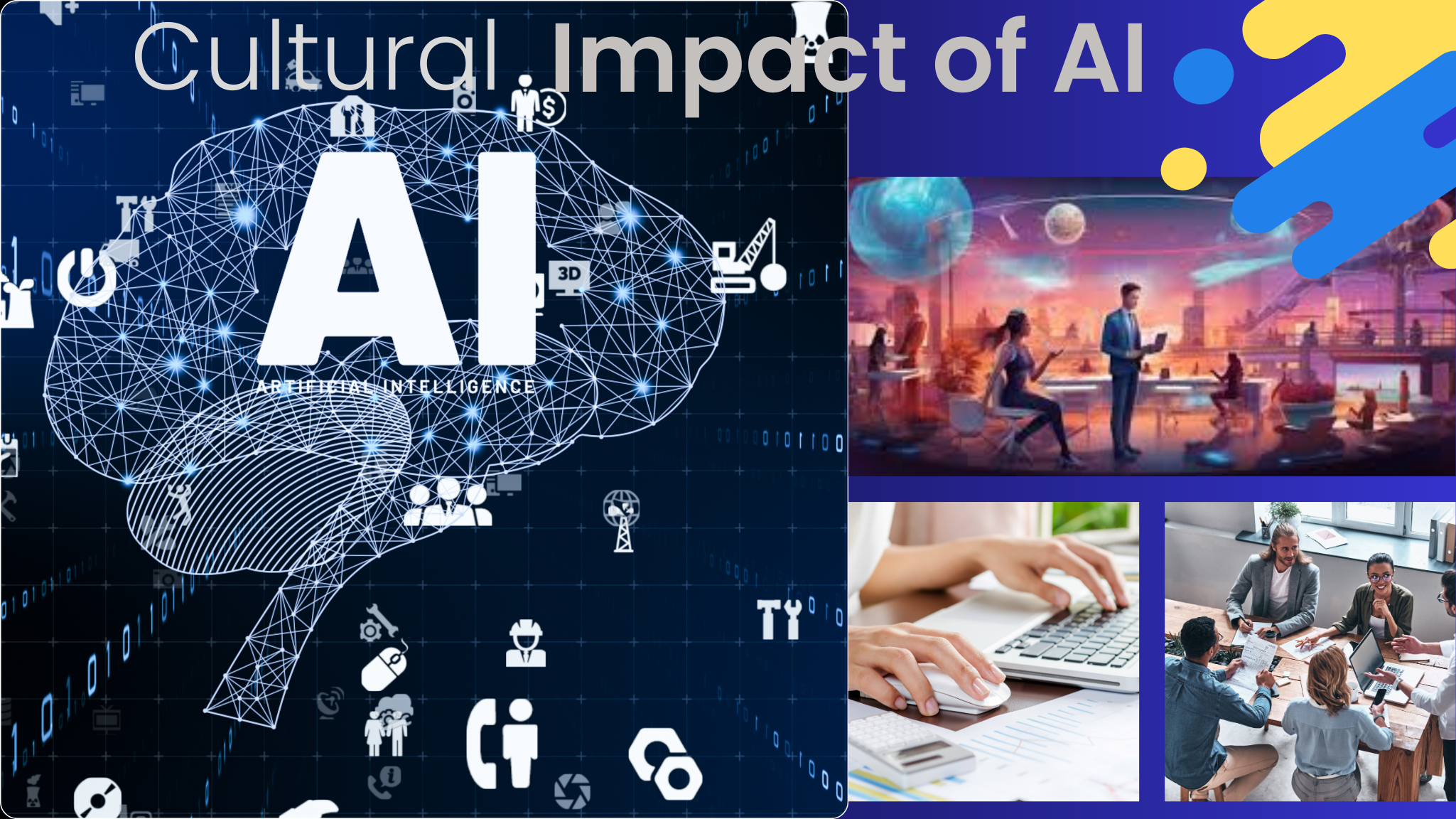
Artificial intelligence is no longer just transforming how work gets done—it is reshaping team dynamics, leadership styles, trust, and workplace culture, making its human impact as significant as its technological promise.
Cultural Impact of AI on Teams: Navigating Transformation in the Modern Workplace
Artificial intelligence has moved beyond being a technical innovation and has become a defining force in how modern organizations function. While much of the discussion around AI focuses on efficiency, automation, and productivity, a deeper and often underexplored dimension lies in its cultural consequences. As organizations integrate intelligent systems into daily operations, the cultural impact of AI on teams is reshaping collaboration, leadership, trust, and identity at work.
This transformation is not merely about replacing tasks or accelerating workflows. It is about redefining how people interact with each other, how decisions are made, and how values are expressed within organizational environments. Understanding the cultural implications of AI is now a strategic necessity for leaders, HR professionals, and policymakers who aim to build resilient, ethical, and inclusive workplaces.
AI as a Cultural Force, Not Just a Tool
Historically, organizations treated technology as an operational enabler rather than a cultural influencer. AI challenges this assumption. Unlike earlier tools, artificial intelligence actively participates in decision-making, evaluation, and communication processes. As a result, AI shapes norms, behaviors, and power dynamics within teams.
When algorithms recommend candidates for hiring, assign tasks, evaluate performance, or prioritize information, they influence perceptions of fairness and accountability. Teams begin to adapt their behavior around AI systems, sometimes trusting them implicitly, and at other times resisting them due to fear or uncertainty. Over time, these interactions accumulate into a distinct AI-influenced organizational culture.
This shift demands a new understanding of workplace culture, one where human values coexist with machine-driven logic.
How AI Is Redefining Workplace Culture
The integration of AI into the workplace introduces new cultural patterns that differ significantly from traditional environments. One of the most noticeable changes is the evolving relationship between autonomy and automation. Employees may experience greater efficiency, yet also feel a reduced sense of control when algorithms dictate workflows or outcomes.
AI workplace transformation also alters communication styles. Teams increasingly rely on AI-powered collaboration tools, predictive analytics, and automated reporting systems. While these technologies can enhance coordination, they may also reduce informal interactions that traditionally foster trust and creativity.
Furthermore, transparency becomes a cultural challenge. When employees do not understand how AI systems reach conclusions, skepticism can emerge. This lack of clarity can erode trust, particularly when AI-driven decisions affect promotions, compensation, or workload distribution.
The Cultural Impact of AI on Teams
At the team level, the cultural impact of AI is both subtle and profound. Teams are social systems built on shared understanding, mutual respect, and collective goals. Introducing AI into these systems alters how teams perceive competence, contribution, and collaboration.
AI decision-making in teams can streamline problem-solving, but it can also shift authority away from human judgment. When algorithms are perceived as more objective or accurate than people, team members may hesitate to challenge outcomes, even when they sense flaws. This dynamic can suppress open dialogue and critical thinking.
Conversely, teams that actively integrate AI as a supportive partner rather than an authoritative force often experience enhanced collaboration. In such environments, AI augments human insight instead of replacing it, allowing teams to focus on strategic thinking and creative problem-solving.
AI and Organizational Culture Alignment
Organizational culture reflects shared values, beliefs, and behaviors. Successful AI adoption in organizations depends heavily on whether intelligent systems align with these cultural foundations. When AI implementation contradicts existing norms, resistance is almost inevitable.
For example, organizations that emphasize empowerment and inclusivity may struggle if AI tools appear to reinforce rigid hierarchies or opaque decision-making. Similarly, cultures that prioritize experimentation may find value in AI-driven insights, provided employees are encouraged to question and refine algorithmic outputs.
AI change management becomes critical in bridging this gap. Leaders must communicate not only how AI works, but why it aligns with the organization’s mission and values. Cultural readiness, rather than technical readiness alone, often determines whether AI initiatives succeed or fail.
Managing AI Adoption in Organizations
Managing AI adoption in organizations requires a holistic approach that integrates technology, people, and culture. Traditional change management strategies must evolve to address the unique challenges posed by AI.
Employees often fear job displacement, loss of relevance, or constant surveillance. These concerns are cultural as much as they are practical. Transparent communication about AI workforce impact is essential to reducing anxiety and building trust.
Organizations that invest in AI reskilling and upskilling initiatives send a powerful cultural message. They signal that AI is a tool for growth rather than replacement. Teams that feel supported during transitions are more likely to embrace AI and integrate it into their workflows constructively.
AI Bias and Fairness in Team Environments
One of the most critical cultural issues with AI is bias. Algorithmic bias in AI systems can reinforce existing inequalities, particularly in hiring, performance evaluation, and promotion processes. When teams perceive AI as unfair, cultural cohesion deteriorates rapidly.
AI bias in hiring and recruitment has been widely documented, often reflecting historical data patterns that disadvantage certain groups. In team contexts, this can undermine diversity and inclusion efforts, leading to homogeneous perspectives and reduced innovation.
Addressing AI bias and fairness requires proactive governance. Organizations must audit algorithms, diversify training data, and involve multidisciplinary teams in AI design and evaluation. Ethical use of AI in the workplace is not just a compliance issue; it is a cultural imperative.
AI Ethics, Trust, and Transparency:
Trust is a foundational element of any organizational culture. AI trust and transparency play a decisive role in determining how teams interact with intelligent systems. When AI operates as a black box, employees may either over-rely on it or reject it entirely.
Transparent AI systems that explain their reasoning foster a culture of accountability. Teams are more willing to collaborate with AI when they understand its limitations and assumptions. Ethical AI governance frameworks further reinforce trust by clarifying responsibility and oversight.
Leaders must model ethical behavior by questioning AI outputs and encouraging teams to do the same. This practice normalizes critical engagement rather than blind acceptance, strengthening both cultural integrity and decision quality.
AI and Team Collaboration in a Digital Era:
AI and team collaboration are increasingly intertwined. Intelligent tools facilitate coordination across time zones, automate routine tasks, and provide real-time insights that support collective decision-making. For global teams, AI can bridge linguistic and cultural gaps through translation and contextual analysis.
However, AI in global teams also introduces cultural complexities. Algorithms trained on dominant cultural norms may misinterpret communication styles or undervalue contributions from diverse backgrounds. This can create friction and misunderstandings if not addressed thoughtfully.
Best practices for teams working with AI include establishing shared guidelines on how AI tools are used, encouraging feedback on system performance, and maintaining space for human judgment. When teams actively shape their relationship with AI, collaboration becomes more inclusive and effective.
Multicultural Challenges and AI Integration:
AI challenges in multicultural teams are particularly pronounced. Cultural differences influence how individuals perceive authority, automation, and risk. In some cultures, AI-driven decisions may be readily accepted, while in others they may be questioned or resisted.
Organizations operating across regions must recognize that a one-size-fits-all approach to AI adoption is rarely effective. Local context matters. Adapting AI systems to reflect regional norms and involving local teams in implementation can mitigate cultural friction.
The cultural impact of AI on teams is therefore not uniform. It varies based on geography, industry, organizational maturity, and leadership philosophy.
AI and Human Creativity at Work:
A common concern is whether AI diminishes human creativity. In reality, the cultural outcome depends on how AI is positioned within teams. When AI is framed as a creative partner rather than a competitor, it can enhance innovation.
AI can generate ideas, analyze trends, and simulate scenarios, freeing team members to focus on interpretation and imagination. Cultures that value experimentation and learning are more likely to harness AI for creative purposes.
However, overly rigid reliance on AI-generated outputs can stifle originality. Teams may default to algorithmic suggestions rather than exploring unconventional approaches. Maintaining a balance between structure and freedom is essential to preserving creative culture.
Leadership’s Role in Shaping AI Culture:
Leadership plays a decisive role in shaping how AI influences organizational culture. Leaders set expectations around ethical use, transparency, and collaboration. Their attitudes toward AI often cascade through teams.
Effective leaders treat AI adoption as a cultural journey rather than a technical rollout. They engage employees in dialogue, listen to concerns, and adapt strategies based on feedback. This participatory approach strengthens cultural alignment and fosters ownership.
AI-driven change management strategies that prioritize empathy, communication, and learning are more likely to succeed than those focused solely on efficiency gains.
Measuring the AI Workforce Impact:
Understanding the AI workforce impact requires looking beyond productivity metrics. Cultural indicators such as engagement, trust, psychological safety, and inclusion provide deeper insight into how AI affects teams.
Organizations should regularly assess employee sentiment regarding AI tools and policies. Surveys, focus groups, and open forums can surface cultural issues before they escalate into resistance or disengagement.
By treating cultural data with the same seriousness as performance data, organizations can make more informed decisions about AI strategy.
Toward a Sustainable AI-Driven Culture:
The cultural impact of AI on teams will continue to evolve as technologies become more sophisticated. The challenge for organizations is not to slow innovation, but to guide it responsibly.
Sustainable AI adoption balances efficiency with humanity. It respects diversity, promotes fairness, and enhances rather than replaces human judgment. Cultures that achieve this balance are better positioned to adapt to future disruptions.
AI is ultimately a reflection of the values embedded within it. Organizations that consciously shape those values through governance, leadership, and collaboration will define the next generation of workplace culture.
Conclusion
The cultural impact of AI on teams represents one of the most significant organizational challenges of the modern era. As artificial intelligence becomes deeply embedded in work processes, it reshapes how teams collaborate, how decisions are made, and how trust is built.
Organizations that approach AI adoption with cultural awareness gain a strategic advantage. By addressing bias, fostering transparency, investing in skills, and aligning AI with human values, they create environments where technology and people thrive together.
The future of work is not solely defined by algorithms, but by the cultures that surround them. Understanding and managing the cultural dimensions of AI is no longer optional; it is essential for building resilient, ethical, and high-performing teams in an AI-driven world.
FAQs:
1. How does AI influence workplace culture beyond automation?
AI affects workplace culture by shaping how decisions are made, how performance is evaluated, and how trust is built within teams. Its influence extends into communication patterns, accountability structures, and the balance between human judgment and machine input.
2. Why is the cultural impact of AI important for team performance?
Team performance depends on trust, collaboration, and psychological safety. If AI systems are introduced without cultural alignment, teams may experience disengagement, resistance, or overreliance on automation, all of which can undermine effectiveness.
3. Can AI adoption change leadership styles within organizations?
Yes, AI encourages leaders to shift from directive management toward facilitative leadership. As data-driven insights become more accessible, leaders are expected to guide interpretation, ethics, and human-centered decision-making rather than control every process.
4. What cultural risks do teams face when using AI-driven tools?
Teams may face reduced autonomy, lack of transparency, and perceived unfairness if AI systems are not clearly explained or governed. These risks can weaken trust and discourage open dialogue if left unaddressed.
5. How can organizations ensure AI supports collaboration rather than replacing it?
Organizations can position AI as an assistive partner by encouraging human oversight, inviting feedback on AI outputs, and preserving space for discussion and creativity. Clear usage guidelines help teams integrate AI constructively.
6. Does AI affect creativity and innovation in team environments?
AI can enhance creativity by handling repetitive tasks and offering data-driven insights, allowing teams to focus on ideation and problem-solving. However, creativity declines if teams rely too heavily on algorithmic suggestions without exploration.
7. What role does ethics play in shaping AI-driven team culture?
Ethics define how responsibly AI is used in decision-making, data handling, and evaluation processes. Ethical AI practices promote fairness, transparency, and inclusion, which are essential for sustaining a healthy and cohesive team culture.