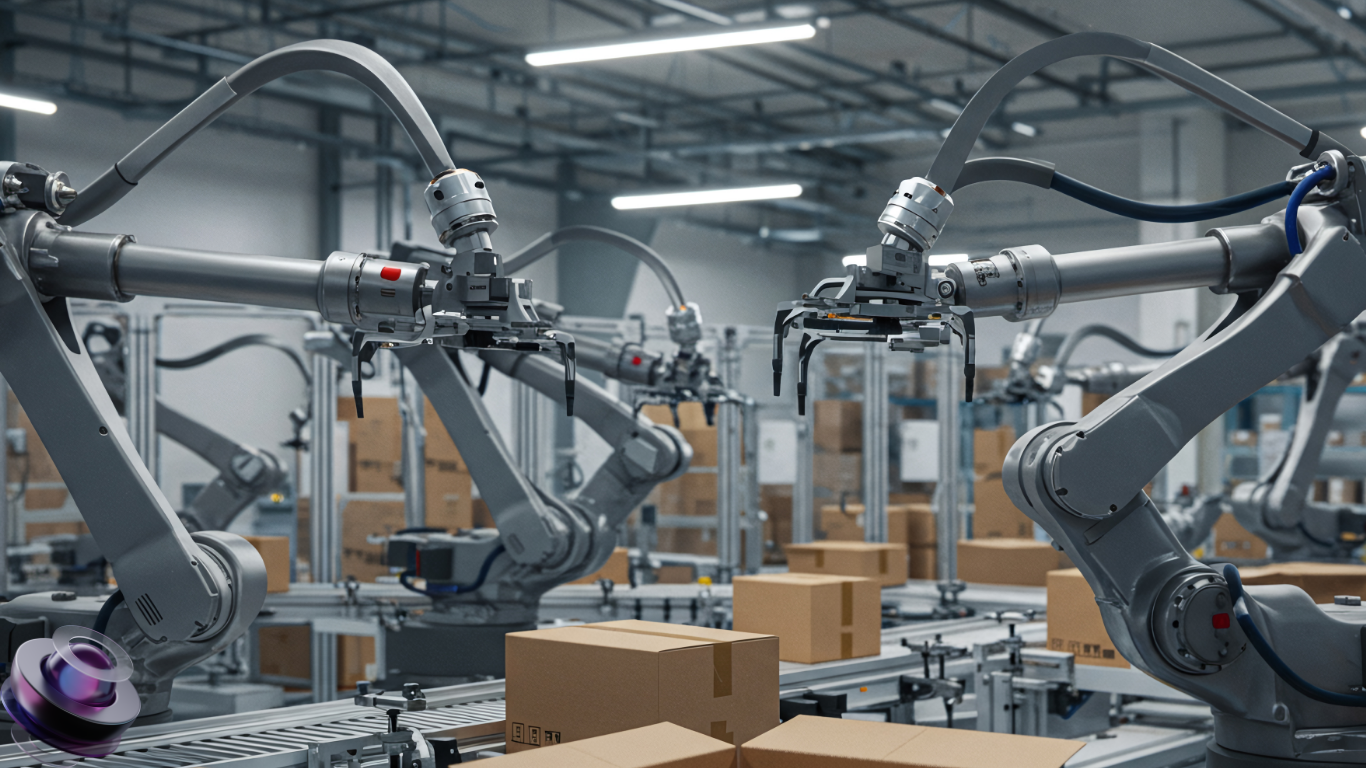
Intelligent automation is quickly becoming the smarter way for businesses to handle everyday tasks, and in my opinion, it is not just an upgrade but a necessary shift for companies that want to stay competitive in a fast-changing digital world.
The rise of intelligent automation in modern business:
For years, robotic process automation has helped companies reduce manual effort by handling repetitive tasks through rule-based systems. From entering data to processing invoices, RPA automation has played an important role in improving efficiency across industries like finance, operations, and customer service.
However, business environments are no longer as simple as they once were. Today, companies deal with complex workflows, changing inputs, and unstructured data such as emails, documents, and customer messages. This is the point where conventional automation begins to fall short. Since RPA relies on fixed rules and structured data, even small changes in processes can cause disruptions, requiring frequent updates and maintenance.
In my view, this limitation has opened the door for a more advanced solution, which is intelligent automation.
Why traditional RPA is no longer enough:
RPA still performs well in stable environments where processes remain unchanged. Tasks like payroll processing, compliance checks, and system integrations continue to benefit from its accuracy and consistency. These areas require strict control, and rule-based bots deliver predictable outcomes.
But as businesses grow and digital systems evolve, the demand for flexibility increases. Modern workflows often involve unpredictable inputs, making it difficult for RPA alone to keep up. This leads to higher maintenance costs and reduced efficiency over time.
Industry analysts, including major research firms, have already highlighted the shift toward adaptive automation systems. These systems are designed to handle uncertainty by combining traditional automation with artificial intelligence capabilities.
From rule-based systems to intelligent automation:
The transition from RPA to intelligent automation is changing how organizations approach business process automation. Instead of relying only on predefined rules, companies are now integrating AI technologies such as machine learning and language models.
This shift allows systems to understand context, process natural language, and even analyze images. For example, generative AI automation can summarize documents, extract key information, and respond to queries in a human-like way. These capabilities make it possible to automate tasks that were previously too complex or unpredictable.
Research from global consulting firms suggests that AI has the potential to automate not only repetitive work but also decision-making and communication tasks. This represents a major leap forward in how automation is applied in real-world business scenarios.
The balance between AI and RPA:
Despite the rapid growth of AI automation, RPA is not disappearing. Instead, it is becoming part of a larger ecosystem. In many cases, intelligent automation combines the strengths of both technologies.
For instance, AI systems can first interpret unstructured data, such as customer emails or scanned documents. Once the information is structured, RPA bots can take over and execute tasks like updating systems or processing transactions. This combination creates a more flexible and efficient workflow.
In my opinion, this hybrid approach is the most practical path forward. It allows businesses to enhance their automation capabilities without completely replacing existing systems.
How companies are adapting to the change:
Technology providers that originally focused on RPA are now evolving their platforms to support intelligent automation. These modern solutions include features like document processing, decision support, and advanced analytics.
Automation platforms are becoming more integrated, bringing together data sources, decision-making tools, and execution steps into a single workflow. This makes it easier for organizations to manage complex processes and improve overall productivity.
At the same time, businesses are taking a gradual approach to adoption. Replacing entire systems can be costly and time-consuming, so many organizations are choosing to enhance their existing RPA setups with AI capabilities instead.
A gradual transformation, not a replacement:
The shift toward intelligent automation is not happening overnight. Many companies still rely on RPA for tasks that are stable and well-defined. In such cases, replacing these systems may not make financial sense.
Instead, businesses are slowly integrating AI into their workflows to extend what automation can achieve. Over time, this will lead to more adaptive and intelligent systems that can handle both structured and unstructured data.
In my view, the future of automation lies in this balance. Intelligent automation does not eliminate RPA; it builds on it. Companies that understand this and invest wisely will be better positioned to handle the challenges of digital transformation.