
高级人工智能编码-Advanced AI Coding Partners For Modern Developers

Advanced AI Coding Partners For Modern Developers worldstan.com

Professional Recrafted Version:

The growing influence of AI-powered software development is reshaping how engineers build, review, and maintain modern applications. As part of the Generative AI for Software Engineers and Developers specialization, this program offers a structured learning pathway designed to help professionals master the latest intelligent coding tools and advance their technical capabilities.


The course consists of four comprehensive modules, each developed to strengthen subject-matter expertise through industry-led instruction and practical, job-focused exercises. Participants gain a clear understanding of generative AI concepts and acquire hands-on experience essential for integrating AI assistance into everyday development workflows.

The curriculum begins with GitHub Copilot, a leading AI coding assistant known for intelligent code suggestions, debugging support, documentation assistance, and collaborative development features. Learners explore how Copilot enhances productivity through personalized completions, automated reviews, and seamless integrations within CI/CD pipelines. These skills help both individuals and teams accelerate development cycles with greater accuracy and efficiency.


The next module introduces Tabnine AI, emphasizing its context-aware completions, inline actions, and AI chat capabilities. Participants learn how to review, refactor, and document code with the support of AI while developing a deeper understanding of security considerations and ethical practices in modern software engineering. Tabnine’s strong integration options and maintenance tools enable developers to streamline large-scale projects with confidence.


The final module focuses on Amazon Q for Developers, Amazon’s powerful AI assistant designed for cloud-based development. The course covers setup, configuration, and the use of commands such as /transform and /dev for generating, refactoring, and testing code. By comparing Amazon Q with GitHub Copilot and Tabnine, learners gain a balanced view of each tool’s strengths and trade-offs, enabling informed decisions when selecting AI solutions for diverse workflows.


Upon completing the program, participants will be able to accelerate software development with intelligent automation, enhance productivity through AI-assisted completions and reviews, and apply responsible AI practices to build secure and maintainable systems. The course also strengthens collaborative skills, preparing developers to work effectively in multi-engineer environments where AI supports pull requests, code reviews, and pair programming.


This program is particularly suited for software engineers, DevOps professionals, and technical leads who aim to integrate advanced AI capabilities into their coding processes. A basic understanding of programming principles, version control, and software development standards is recommended.


this program, learners gain the tools and perspective needed to harness the power of AI in software engineering and transform the way they code, collaborate, and innovate.

Conclusion:


AI-powered software development is rapidly becoming an essential part of modern engineering, allowing teams to work faster, smarter, and more securely. By mastering tools such as GitHub Copilot, Tabnine, and Amazon Q, developers gain the ability to automate repetitive tasks, improve code quality, and streamline collaboration across complex projects. This program equips learners with the practical skills and responsible AI practices needed to thrive in an evolving digital landscape, empowering them to innovate with confidence and build software that meets the demands of today’s fast-paced industry.

FAQs:

  1. What is AI-powered software development?

It refers to using artificial intelligence tools to assist with coding, debugging, documentation, and project workflows, helping developers work more efficiently and accurately.

  1. Who should enroll in this program?

The program is ideal for software engineers, DevOps professionals, technical leads, and anyone interested in integrating AI tools into their development practices.

  1. Do I need prior programming experience to benefit from the course?

Yes, a basic understanding of programming concepts, version control, and software development methods is recommended for smooth learning.

  1. What makes GitHub Copilot useful for developers?

GitHub Copilot provides intelligent code suggestions, automated reviews, debugging support, and powerful integrations that speed up development for individuals and teams.

  1. How does Tabnine AI improve coding productivity?

Tabnine offers context-aware completions, inline actions, and AI chat assistance that simplify code refactoring, documentation, and security-focused development.

  1. What is Amazon Q for Developers?

Amazon Q is an AI assistant designed for cloud-based development, helping engineers generate, test, transform, and optimize code within AWS-powered workflows.

  1. Can these AI tools replace developers?

No. These tools enhance productivity and reduce manual workload, but decision-making, architecture planning, and creative problem-solving remain human-driven.

  1. Are AI coding tools secure to use?

When used responsibly and with proper configuration, tools like Copilot and Tabnine support secure coding practices and help detect potential risks.

  1. Will this program help me work better in a team environment?

Yes. The curriculum emphasizes collaborative workflows, AI-supported code reviews, and improved communication through automation.

  1. How do AI coding assistants support DevOps processes?

They integrate with CI/CD pipelines, automate repetitive tasks, improve code reliability, and enhance deployment workflows with intelligent recommendations.

The Real Advantages and Disadvantages of AI You Need to Know Today

advantage

This article explores the key advantages and disadvantages of artificial intelligence, offering a clear understanding of how AI shapes modern life, business operations, and future possibilities.

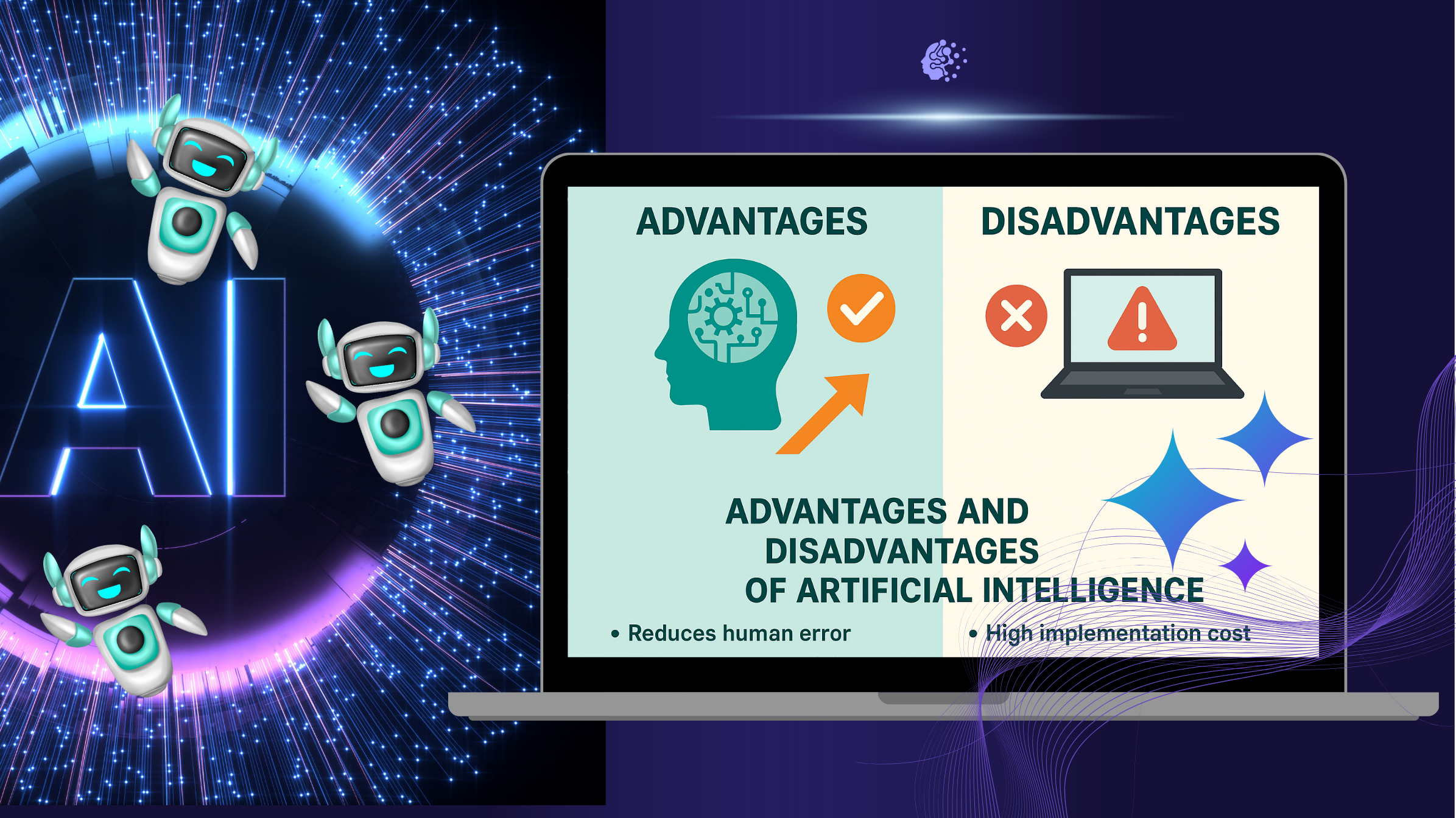
Advantages and disadvantages of artificial intelligence


Artificial intelligence has become an integral part of modern life, influencing how people work, communicate, and make decisions. As AI continues to evolve, conversations around its advantages and disadvantages have become increasingly important for both consumers and businesses. Understanding these pros and cons helps individuals and organizations adopt AI responsibly while maximizing its potential.

Artificial intelligence is a field of computer science focused on creating systems capable of performing tasks that traditionally require human intelligence. These systems analyze massive volumes of data, recognize patterns, and make decisions based on programmed logic or learned behavior. Today, AI is widely used across industries to improve efficiency, enhance accuracy, and support data-driven decision-making. From virtual assistants to complex prediction models, AI has transformed both everyday experiences and business operations.

Every technological advancement offers both opportunities and challenges, and AI is no exception. Its benefits include streamlining operations, reducing human error, automating repetitive processes, and enabling unbiased decision-making when properly trained. However, it also presents challenges such as high implementation costs, reduced human involvement in certain tasks, and the possibility of outdated or biased systems if not maintained correctly.

Key Advantages of AI

A notable advantage of using AI is its consistent reduction of errors that often occur in manual work. AI systems, especially those used for repetitive or hazardous tasks, help minimize mistakes that naturally occur in manual work. In industries where accuracy and safety are crucial, AI-driven robots and software can perform tasks without exposing humans to risk.

AI also operates continuously without the limitations of traditional working hours. Through 24/7 availability, chatbots, monitoring systems, and automated tools ensure that businesses can deliver constant support and maintain productivity without interruptions.

Another major benefit is the ability to make unbiased decisions when AI models are trained using neutral and carefully curated datasets. This allows organizations to support fairer processes such as loan approvals, candidate screenings, and risk assessments. However, regular audits are essential to prevent embedded bias from influencing outcomes.

AI also excels in handling repetitive or mundane tasks, freeing employees to focus on work that requires creativity, strategy, and human insight. By automating data entry, report generation, and process monitoring, AI increases efficiency and lowers the cost of operations.

Finally, AI enhances data acquisition and analysis. With the volume of data growing rapidly, AI tools help organizations quickly process complex information, uncover trends, and support accurate decision-making.

Disadvantages of Artificial Intelligence

Despite its benefits, AI adoption comes with notable drawbacks. The initial cost of AI implementation is often high, especially for businesses requiring custom-built solutions. From development to integration, companies may face significant expenses before achieving long-term savings.

AI also lacks emotional intelligence and creativity. While it can generate new ideas based on patterns, it cannot replicate the originality or empathy that humans bring to decision-making. For tasks requiring compassion, innovative thinking, or nuanced judgment, human involvement remains essential.

Machine degradation and outdated algorithms pose additional challenges. Hardware-based AI systems require regular maintenance, and software models must be updated frequently to stay relevant. Without continuous improvement, AI tools may deliver inaccurate or outdated results.

Another concern is the impact of AI on employment. Automation may reduce opportunities for workers performing routine tasks, creating a need for reskilling and adaptation. While AI is expected to generate new roles, the transition may be difficult for displaced workers.

Ethical concerns, particularly around data privacy and accountability, also affect AI adoption. As AI systems rely on large datasets, safeguarding consumer information has become critical. Issues like unauthorized data use, surveillance, and unclear responsibility in case of AI-driven errors continue to spark debate.

Use Cases of AI in Modern Industries

Artificial intelligence has valuable applications across multiple sectors. In healthcare, AI helps identify diseases early by analyzing medical data and predicting health risks. Customer service teams use AI-powered virtual assistants to streamline routine queries and manage requests outside regular working hours. Financial institutions benefit from AI’s ability to detect fraudulent activities by recognizing unusual patterns. Businesses also rely on predictive analysis to forecast performance, reduce risks, and support long-term planning.

Implementing AI Responsibly

Understanding both the advantages and disadvantages of artificial intelligence allows businesses to adopt it strategically and ethically. While challenges such as cost, bias, and system degradation exist, many can be addressed with careful planning, regular audits, and human oversight. By staying informed and proactive, organizations can harness AI to improve operations and strengthen decision-making.

Companies interested in integrating AI analytics can explore advanced platforms designed to help them make informed and accurate decisions based on real-time data insights.

Conclusion:

Artificial intelligence continues to reshape the way people live and businesses operate, offering powerful tools that enhance efficiency, accuracy, and long-term planning. Yet its rapid growth also brings challenges that require thoughtful oversight, ethical awareness, and ongoing human involvement. By recognizing both the strengths and limitations of AI, organizations and individuals can make informed decisions that balance innovation with responsibility. With the right approach, AI can become a valuable partner in progress rather than a replacement for human judgement.

FAQs:

  1. What is artificial intelligence in simple terms?


Artificial intelligence refers to computer systems designed to perform tasks that normally require human intelligence, such as decision-making, learning, and pattern recognition.


  1. Why is AI becoming important for businesses today?


AI helps businesses improve efficiency, reduce errors, enhance customer service, and make accurate data-driven decisions that support long-term growth.


  1. What is one major advantage of using AI in the workplace?


One key advantage is automation of repetitive tasks, which saves time and allows employees to focus on strategic or creative work.


  1. Does AI completely eliminate human error?


AI reduces many common errors, especially in repetitive or data-heavy tasks, but it can still make mistakes if trained on poor or biased data.


  1. Can AI replace human creativity?


No. AI can generate patterns and suggestions, but it lacks genuine originality, emotional depth, and intuitive thinking that humans bring to creative tasks.


  1. Why is the cost of AI considered a disadvantage?


AI development, customization, and integration require significant investment, which can be expensive for small or mid-sized businesses.


  1. How does AI impact data privacy?


AI relies heavily on data, raising concerns about how personal information is collected, stored, and used, making strong privacy protections essential.


  1. Is AI responsible for job losses?


AI may reduce certain repetitive jobs, but it also creates new roles that require modern technical skills. The challenge lies in reskilling the workforce.


  1. How does AI help in healthcare?


AI assists in early disease detection, analyzing medical data, predicting health risks, and supporting doctors in making more accurate diagnoses.


  1. What should companies consider before adopting AI?


Businesses should evaluate cost, data quality, ethical risks, employee training, and the need for continuous updates to ensure effective and responsible AI use.


免費人工智慧程式碼 Writer for Everyone AI Code

free ai code writer for everyone worldstan.com

A quick overview of how FREE AI ONLINE’s new free coding assistant empowers students and learners by generating code instantly and simplifying the entire programming process.

A New Path for Learners: Free AI Online Launches an Open, No-Limit Coding Assistant

Free AI Online has announced an important breakthrough with the introduction of its free AI-powered coding assistant, created to support students, new learners, and developers across all experience levels. After years of refining advanced artificial intelligence technologies, the platform now provides a fully open, unlimited programming assistant with no subscriptions, fees, or usage restrictions.


Making Coding More Accessible for Everyone

The newly released AI tool enables users to generate clean, ready-to-use code by simply describing the project they want to build. Whether someone needs a website layout, a mobile app component, a game feature, an automation script, or a data analysis model, the system delivers instant results in multiple leading programming languages. Even those without prior exposure to Python, JavaScript, Java, C++, or similar languages can begin creating software as the tool adjusts to different project scopes and complexity levels.

This coding assistant is especially helpful for:

  • Students learning programming through real, working examples
  • Beginners starting their journey in software development
  • Developers who want to speed up their coding tasks
  • Startups building quick prototypes
  • Learners experimenting with new digital concepts

Key Features That Set This AI Coding Tool Apart

Free AI Online’s coding assistant offers a range of capabilities that make it a standout solution for learners and creators:

  • Completely free access with no hidden conditions
  • Unlimited code generation without caps or watermarks
  • Multi-language support for diverse programming needs
  • Suitable for web development, mobile apps, AI projects, automation, cybersecurity tasks, and game development
  • Built-in learning guidance that explains each code output and suggests ways to improve it

Supporting the Next Generation of Digital Skills:

The mission of Free AI Online is to democratize programming education by removing financial and technical obstacles. With this AI coding assistant, students and self-learners gain a simple and supportive environment to explore software development at their own pace. The tool promotes understanding by breaking down coding logic, making it useful for classrooms, home study, and independent innovation.


Students, educators, and developers can begin using the coding assistant today at free-ai-online.com/ai-for-coding-free/ and join a growing community helping shape a more inclusive digital future.

Conclusion

The introduction of this free AI coding assistant marks a major step toward universal access to programming skills. By offering unlimited generation, multi-language capabilities, and clear instructional support, the platform empowers users to learn efficiently and build confidently. As digital technology continues to advance, tools like this redefine how coding is learned and practiced, enabling anyone with an idea to turn it into a functional project. With Free AI Online, the boundaries to learning, experimentation, and creativity are removed—bringing coding within reach for every learner, everywhere.

FAQs:

1. What makes this AI code generator different from other coding tools?
This AI code generator stands out because it is completely free, offers unlimited usage, and supports multiple programming languages without restrictions. It also explains the generated code, making it ideal for learning and project development.

2. Can beginners use this AI tool without knowing any programming language?
Yes. The tool is designed for beginners and students who may have little to no coding experience. Users simply describe what they want to build in natural language, and the AI produces ready-to-use code along with helpful explanations.

3. Does the AI only work for web development projects?
No. It supports a wide range of project types including mobile applications, automation scripts, data science tasks, game development, AI models, and basic cybersecurity tools.

4. Are there any usage limits or hidden charges?
There are no subscriptions, usage caps, or hidden fees. The platform is fully free and can be used anytime to generate as much code as needed.

5. Can this AI tool help me learn programming over time?
Absolutely. By reviewing generated code and understanding the explanations, learners can gradually build strong programming skills. The tool acts as both a coding assistant and an educational resource.

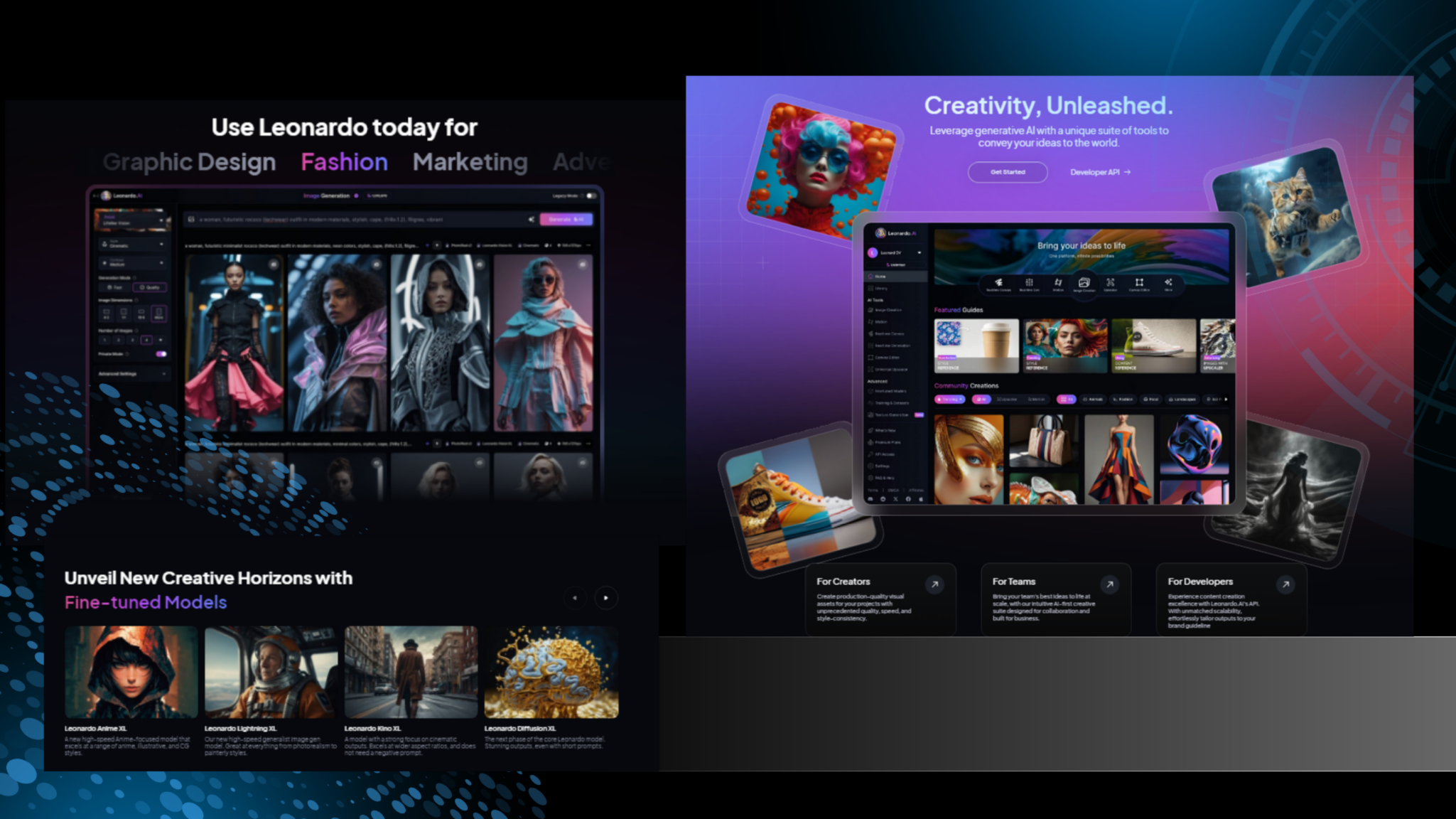
How Leonardo.Ai Empowers Creators with Smart AI Design and Marketing Solutions

Leonardo.Ai worldstan.com

Discover how Leonardo.Ai is revolutionizing the world of marketing and design by blending human creativity with generative AI—empowering creators, brands, and businesses to produce professional, personalized, and high-impact visuals faster than ever before.

Introduction To Leonardo.Ai:

In today’s dynamic digital landscape, creativity and speed define success. Marketers, designers, and creators must constantly deliver fresh, high-quality visuals and campaigns that resonate with their audiences. Leonardo.Ai emerges as a next-generation AI creative platform that bridges imagination and innovation. Through intelligent automation and generative AI, it enables users to produce professional-grade visuals, ads, and branded assets in record time—transforming how teams ideate, design, and execute their marketing strategies.

Accelerating the Creative Process

Leonardo.Ai is built to simplify and enhance the marketing workflow. Whether it’s crafting landing page visuals, developing ad creatives, or generating social media content, the platform empowers teams to move from concept to production seamlessly. Its advanced AI marketing tools allow creators to generate design assets within minutes, ensuring faster project turnaround and consistent brand quality.

With features like image generation, editing, and upscaling, Leonardo.Ai helps marketing teams maximize their creative potential without inflating budgets. It combines automation with precision, ensuring every campaign delivers impact while saving time and resources.

Elevating Marketing and Advertising Performance

In a world where personalization drives engagement, Leonardo.Ai redefines advertising. Users can design customized banners, graphics, and videos that align perfectly with brand identity and audience expectations. The platform’s automated A/B testing capability allows marketers to generate and compare multiple ad versions instantly, helping them identify high-performing creatives and optimize campaigns in real time.

By merging artificial intelligence with human creativity, Leonardo.Ai ensures that every visual connects emotionally and strategically with its audience—enhancing ROI and maintaining authenticity across all marketing channels.

Personalization at Scale

Generic stock imagery no longer meets the expectations of modern audiences. Leonardo.Ai empowers creators to generate custom visuals on demand, enabling businesses to maintain unique, brand-aligned content at scale. With its powerful AI-driven design system, marketers can create distinctive visuals that capture their brand’s tone, values, and storytelling style.

This combination of personalization and scalability allows businesses to communicate more effectively while maintaining creative integrity across campaigns.

From Concept to Production

Leonardo.Ai helps bridge the gap between brainstorming and execution. The platform allows creators to visualize ideas, experiment with multiple directions, and finalize production assets effortlessly. Its intuitive interface requires no coding knowledge—making it accessible to marketers, designers, and creative directors alike.

The platform’s tools enhance concept visualization and streamline the production process, empowering teams to deliver polished content on time and within budget.

Continuous Learning Through Leonardo Learn

Leonardo Learn serves as an educational hub for users of all experience levels. It offers tutorials, webinars, and expert sessions designed to help individuals and teams deepen their understanding of AI-powered creativity. From newcomers exploring generative design to professionals refining their workflows, this learning platform supports users in mastering the full potential of Leonardo.Ai.

Leonardo.Ai image worldstan.com

What Makes Leonardo.Ai Unique

Leonardo.Ai distinguishes itself through the perfect blend of technology and creative freedom. Rather than automating artistry, it enhances it. The system’s backend supports model fine-tuning, fast training speeds, and advanced image processing, ensuring optimal results across all creative applications. Features such as multi-image prompting, superior upscaling, and refined rendering help minimize common issues like image degradation, ensuring consistently high-quality outputs.

Regular updates and performance improvements ensure that creators always have access to cutting-edge innovation and tools that evolve alongside industry trends.

Flexible Access for All

Leonardo.Ai offers both free and premium plans to accommodate diverse user needs. The free plan includes daily creative tokens for experimentation, while paid subscriptions provide faster generation speeds, higher limits, and access to exclusive professional tools. This flexibility allows individuals, studios, and enterprises to scale their creative capacity according to their project demands.

AI Creativity Without Coding

Designed with accessibility in mind, Leonardo.Ai eliminates the need for technical expertise. Its intuitive interface allows anyone—from solo creators to marketing teams—to generate AI-powered assets effortlessly. Step-by-step tutorials, community engagement, and active user support create an inclusive environment where innovation thrives.

Enterprise Integration and Business Use

For agencies and businesses, Leonardo.Ai offers scalable AI integration to streamline creative operations. It ensures consistent branding, reduces production costs, and accelerates delivery timelines. Whether for B2B marketing visuals, digital advertising, or enterprise-level asset generation, Leonardo.Ai guarantees professional, reliable, and high-quality results that align with brand standards.

Community and Collaboration

Leonardo.Ai’s vibrant community is an integral part of its success. On platforms like Discord and Facebook, creators share experiences, participate in design challenges, and collaborate on innovative projects. Regular workshops and contests keep the community engaged and inspired, fostering growth and creativity across the ecosystem.

Real-World Impact

Creative professionals worldwide are already redefining their workflows with Leonardo.Ai. Australian filmmaker and creative director Lester Francois, known for his cinematic campaigns for major brands, transitioned to AI-driven production during the pandemic. Using Leonardo.Ai, he now develops complete campaign concepts—from moodboards to motion prototypes—without the high costs of traditional production. His work demonstrates how AI can deliver cinematic quality and emotional depth efficiently and affordably.

Similarly, 3D artist Maurizio Gastoni leverages Leonardo.Ai for hybrid workflows that blend traditional techniques with AI-generated creativity. His three-stage process—ideation, execution, and refinement—illustrates how AI tools enhance rather than replace human artistry. By automating technical tasks, Leonardo.Ai allows artists to focus on vision, storytelling, and emotional expression.

Redefining the Future of Creative Production

Leonardo.Ai is more than just a design tool—it’s a complete creative ecosystem that empowers individuals and brands to innovate. By integrating generative AI with human insight, it unlocks new possibilities in marketing, architecture, product design, and digital media.

The future of creativity belongs to those who combine imagination with technology. With Leonardo.Ai, marketers and creators are not just adapting to change—they are leading it.

Leonardo.Ai design worldstan.com

AI Design Solutions for Every Need

AI Graphic Design Generator: Create brand-ready visuals and designs for campaigns and digital media.

AI Photography Tools: Generate realistic photos and upscale images with ease.

AI Interior Design: Visualize interior concepts and refine designs virtually.

Print-on-Demand Tools: Convert digital art into print-ready formats for business growth.

AI Architecture Tools: Produce dynamic visualizations and mockups for architectural projects.

Leonardo.Ai transforms creative ambition into achievable results—bridging human imagination with the limitless potential of artificial intelligence.

Conclusion:

Leonardo.Ai stands as a symbol of how technology and imagination can work hand in hand to redefine creativity. It empowers marketers, designers, and businesses to achieve more with less—bridging the gap between ideas and execution through intelligent automation. By offering precision, flexibility, and artistic control, it transforms the way visual content is conceived, produced, and delivered. As creative industries continue to evolve, Leonardo.Ai leads the movement toward a future where human inspiration and artificial intelligence together shape more meaningful, efficient, and limitless possibilities.

What Is AI Product Design? Tools, Benefits and Real-World Applications

ai product design worldstan.com
Discover how AI product design is revolutionizing the way modern products are imagined, built, and refined—merging human creativity with intelligent automation to create smarter, faster, and more adaptive design solutions.
AI Product Design: How Artificial Intelligence Is Transforming Modern Product Development

Theme / Overview:

Artificial Intelligence is reshaping how we conceptualize, design, and deliver digital and physical products. Through generative design, intelligent prototyping, and data-driven decision-making, AI product design is setting new benchmarks for creativity, precision, and efficiency in the global design landscape.

Introduction: The Era of Intelligent Design

In the age of automation and data intelligence, product design is no longer limited to human imagination alone. Artificial Intelligence (AI) has evolved from being a supportive tool into a collaborative partner that drives innovation at every stage of the design process. Whether it’s building user-centered digital interfaces, optimizing automotive components, or crafting immersive e-commerce experiences, AI is redefining how ideas become tangible products.

AI product design integrates machine learning (ML), generative AI, and predictive analytics into every phase of development — from early ideation and prototyping to testing, launch, and post-market optimization. This new approach enables designers and engineers to create smarter, faster, and more adaptive solutions that respond to real-time user behavior and environmental data.

What Is AI Product Design?

AI product design refers to the application of artificial intelligence in the end-to-end process of creating digital or physical products. It leverages algorithms, neural networks, and large datasets to generate design concepts, test usability, predict user interactions, and optimize performance metrics.

Traditionally, product design relied heavily on human expertise, intuition, and manual iteration. Today, AI-powered design systems such as Figma AI, ChatGPT for design, and Claude for creativity are introducing generative design workflows that accelerate decision-making and minimize human error. These systems can produce hundreds of variations of a prototype, evaluate them under different conditions, and recommend the most efficient or aesthetically pleasing options.

At its core, AI product design is not about replacing human creativity—it’s about enhancing it. By offloading repetitive and analytical tasks to AI, designers can focus more on strategy, innovation, and emotional engagement.

How AI Is Transforming the Design Process

The design process is being reshaped by AI at multiple levels. Let’s explore how each stage benefits from AI-driven tools and insights.
  1. Ideation and Concept Generation

Generative AI tools use vast datasets and contextual prompts to produce early-stage design ideas. Designers can input specific requirements — such as target audience, use case, or design constraints — and receive multiple viable concepts in minutes. This approach encourages rapid experimentation and creative diversity, especially in startups and innovation-driven industries.


  1. Prototyping and Visualization

Prototyping with AI has become faster and more precise. Platforms like Figma AI now generate layout variations, adaptive color palettes, and responsive UI components automatically. These smart systems can simulate user behavior, offering predictive insights on how real users might interact with the interface. Designers can then make data-backed adjustments before development begins.


  1. Testing and Optimization

A/B testing with AI enables real-time evaluation of user experiences. Machine learning algorithms monitor user interactions, engagement rates, and conversion metrics to suggest continuous improvements. This makes it possible to personalize digital experiences dynamically — a key advantage in sectors such as AI in e-commerce and AI in automotive design.


  1. Production and Manufacturing

In physical product design, AI integrates with computer-aided design (CAD) and digital twin technology to simulate real-world conditions before production. This predictive modeling allows engineers to detect flaws, reduce material waste, and optimize resource allocation. AI-driven production environments can also adapt designs in real-time based on performance feedback from sensors and connected devices.

Key Benefits of AI Product Design

The adoption of AI in product design brings tangible improvements across creativity, efficiency, and strategic decision-making.


Enhanced Creativity and Innovation

AI expands creative potential through generative design. Designers can explore unconventional forms, textures, and patterns that human logic might overlook. The result is an explosion of new ideas that merge computational precision with artistic freedom.

Streamlined Design Workflows

AI automates time-intensive tasks such as wire framing, layout alignment, and design audits. This speeds up delivery cycles and allows teams to focus on higher-value problem-solving. Real-time collaboration between human and AI systems leads to faster iterations and reduced production costs.

Real-Time Insights and Adaptation

AI analytics dashboards and machine learning models deliver continuous performance feedback. This enables real-time simulation and design optimization based on live data from users or environmental sensors. The outcome is more responsive, context-aware product design.

Personalized User Experiences

Through behavioral analysis and predictive algorithms, AI systems help create personalized digital experiences that align with individual user preferences. For example, AI-driven UX design can adapt navigation, color schemes, or recommendations according to user context.


Resource and Cost Optimization

AI-driven predictive models optimize resource allocation, pricing strategies, and supply chains. By reducing errors and improving accuracy in production planning, organizations can achieve better sustainability outcomes and higher profitability.

Continuous Learning and Upskilling

Design teams benefit from AI-enabled learning environments that enhance their skills. Interactive systems like Claude for creativity and ChatGPT for design act as design mentors, providing instant feedback and recommendations to improve professional growth.

Use Cases Across Industries

AI product design has found wide-ranging applications across industries.

Startups use AI to test prototypes faster and launch market-ready products without large design teams.

Automotive companies employ generative design to develop lighter, safer, and more efficient vehicle components.

E-commerce brands apply AI to personalize shopping interfaces, simulate product visuals, and optimize conversions.

Healthcare innovators use AI to design patient-centric tools and medical devices with enhanced ergonomics and predictive safety features.

Manufacturing enterprises leverage digital twins for real-time simulation and process optimization, minimizing downtime and energy use.

These use cases demonstrate how AI not only enhances creativity but also strengthens the economic and operational fabric of product development.

Challenges and Ethical Considerations

While the advantages are compelling, the rise of AI in product design also introduces complex challenges. Designers must navigate issues related to intellectual property, data bias, and algorithmic transparency. Generative design models learn from massive datasets that may inadvertently include biased or unverified information, influencing design outcomes.

Moreover, maintaining human oversight is essential. AI systems may produce technically accurate but contextually irrelevant designs if left unsupervised. Ethical design frameworks and human-centered review loops must remain integral to every AI-driven design process.

The Future of AI Product Design


The next decade will see AI product design evolve from assistive technology to autonomous creativity. Agentic AI systems will independently manage design tasks, conduct user research, and propose data-informed innovations with minimal human input. Meanwhile, integration between AI design tools, CAD platforms, and cloud-based analytics will enable fully synchronized design ecosystems.

Emerging technologies like digital twin environments and real-time simulation will continue to push the boundaries of predictive design and adaptive prototyping. As organizations embrace AI-powered product development, the line between designer and machine collaborator will blur, leading to a hybrid future of co-creation.

Conclusion: Redefining the Design Frontier

AI product design marks a pivotal transformation in how we create and experience innovation. It represents a new frontier where creativity, computation, and human intuition coexist. From generative design tools to intelligent analytics dashboards, AI empowers designers and businesses to turn complex challenges into adaptive, user-centric solutions.

The future of design will not simply be digital — it will be intelligent, responsive, and continuously learning. For brands and creators who embrace this transformation early, AI will not just enhance design—it will define it.

Xiaohongshu China: Where Lifestyle, Influence, and Commerce Meet

Xiaohongshu, also known as Little Red Book, is China’s rapidly evolving social commerce platform that blends lifestyle sharing, influencer culture, and e-commerce innovation—this article explores its journey from a simple product review app to a global digital powerhouse shaping how young consumers discover, discuss and shop online.

  • When was Xiaohongshu founded?
  • Who are the founders of Xiaohongshu?
  • What is Xiaohongshu known for?
  • How many registered users does Xiaohongshu have as of 2020?
  • What percentage of Xiaohongshu users are born after 1990?
  • What is the primary demographic group that Xiaohongshu attracts?
  • What is the percentage of female users on Xiaohongshu?
  • What type of content is predominantly shared on Xiaohongshu?
  • What is RED Mall on Xiaohongshu?
  • Where are Xiaohongshu’s headquarters located?
  • When did Xiaohongshu transition into a cross-border e-commerce platform?
  • In what year did Xiaohongshu set up its warehouses in Shenzhen and Zhengzhou?
  • How much funding did Xiaohongshu secure in June 2018?
  • What is REDelivery in Xiaohongshu?
  • Why did Xiaohongshu adjust its corporate strategy in 2018?
  • What regulatory setback did Xiaohongshu face in late 2018?
  • What is one of the recent controversies Xiaohongshu faced in October 2021?
  • What did Xiaohongshu do to combat fraudulent content in December 2021?
  • How many brands and merchants did Xiaohongshu take action against in December 2021?
  • How much damages did Xiaohongshu seek in its lawsuit against ghostwriting brokers in January 2022?
  • What was the fine Xiaohongshu received in January 2022 for failing to remove harmful content involving minors?
  • Which government banned public sector employees from using Xiaohongshu in December 2022?
  • What was the reason behind Xiaohongshu’s decision to transfer its IPO from the United States to Hong Kong in October 2021?
  • How much did Sequoia China acquire Xiaohongshu shares for in 2023?
  • What is the primary focus of content shared by users on Xiaohongshu?
  • How does Xiaohongshu facilitate social discovery for its users?
  • Which major Chinese cities have Xiaohongshu warehouses?
  • What is the main function of RED Mall on Xiaohongshu?
  • How many daily active users did Xiaohongshu have in 2021?
  • In what year did Xiaohongshu surpass 50 million users?
  • How did Xiaohongshu evolve from its founding in 2013 to becoming a cross-border e-commerce platform?
  • What significance did the introduction of REDelivery hold for Xiaohongshu’s international operations?
  • Who were the major investors in Xiaohongshu during its rapid growth phase?
  • How did Xiaohongshu respond to regulatory setbacks in late 2018?
  • What changes did Xiaohongshu make in its corporate strategy to adapt to evolving user demographics?
  • What were the primary reasons behind Xiaohongshu’s decision to transfer its IPO to Hong Kong in October 2021?
  • How did Xiaohongshu address concerns regarding content authenticity in October 2021?
  • How did Xiaohongshu respond to regulatory penalties and cybersecurity concerns in January 2022?
  • What impact did Taiwan’s government ban have on Xiaohongshu in December 2022?
  • How did Xiaohongshu attract significant investment despite facing regulatory challenges?
  • What role did Sequoia China play in Xiaohongshu’s investment landscape?
  • How does Xiaohongshu differentiate itself from other social commerce platforms in China?
  • What features contribute to Xiaohongshu’s appeal among its user base?
  • What role do influencers play in shaping content on Xiaohongshu?
  • How does Xiaohongshu foster community engagement among its users?
  • What strategies has Xiaohongshu employed to maintain its growth trajectory?
  • What role does user-generated content play in Xiaohongshu’s ecosystem?
  • How does Xiaohongshu monetize its platform?
  • What opportunities and challenges does Xiaohongshu face in international markets?
  • How does Xiaohongshu handle cross-border transactions?
  • What measures does Xiaohongshu take to ensure the authenticity of product reviews?
  • How does Xiaohongshu leverage data analytics to enhance user experience?
  • What initiatives has Xiaohongshu undertaken to address concerns regarding data privacy and security?
  • How does Xiaohongshu integrate social media and e-commerce functionalities?
  • What partnerships has Xiaohongshu formed with international brands and retailers?
  • How does Xiaohongshu tailor its content to appeal to different demographic groups?
  • What role does artificial intelligence play in Xiaohongshu’s platform?
  • How does Xiaohongshu stay updated with the latest consumer trends?
  • What strategies does Xiaohongshu employ for user acquisition and retention?
  • How does Xiaohongshu balance user-generated content with sponsored content?
  • What are some key metrics Xiaohongshu uses to measure its success?
  • How does Xiaohongshu engage with its user community to gather feedback and suggestions?
  • What measures has Xiaohongshu implemented to ensure a positive user experience?
  • How does Xiaohongshu handle customer complaints and inquiries?
  • What steps does Xiaohongshu take to prevent fraudulent activities on its platform?
  • How does Xiaohongshu comply with regulatory requirements in different markets?
  • What role do customer reviews play in influencing purchasing decisions on Xiaohongshu?
  • How does Xiaohongshu adapt to changing market dynamics and consumer preferences?
  • What measures did Xiaohongshu take to combat fraudulent content in December 2021?
  • What was the outcome of Xiaohongshu’s legal action against ghostwriting brokers in January 2022?
Placeholder

Introduction To Xiaohongshu:

Originating from China in 2013, Xiaohongshu has swiftly become a prominent player in the realm of social commerce and lifestyle content, accumulating a substantial user base of 200 million individuals. Renowned for its unique blend of product discovery, user-generated recommendations, and engaging content, Xiaohongshu has redefined the e-commerce landscape in China. The platform’s success in amassing 200 million users speaks to its influence in shaping consumer trends and preferences, making it a go-to destination for users seeking personalized recommendations and a vibrant community centered around lifestyle and shopping.

Overview of Xiaohongshu

Xiaohongshu, or “Little Red Book,” is a prominent social media and e-commerce platform in China, often likened to Instagram for its combination of social sharing and shopping features.

User Demographics and Usage

As of 2020, Xiaohongshu boasted over 450 million registered users, with more than 121 million monthly active users. The platform primarily attracts younger demographics, with 70% of users born after 1990, and nearly 70% of them being female

Content and Features

Xiaohongshu serves as a hub for users and influencers to post, discover, and share product reviews, particularly focusing on beauty and health products. Additionally, travel bloggers contribute content related to tourism and leisure destinations. The platform hosts the RED Mall, catering to Chinese users by selling international products.

Community Engagement

Users on Xiaohongshu engage through various mediums such as vlogs, shopping experiences, and creative content including photos, text, videos, and live streaming.

Blogging and Social Features

Xiaohongshu allows users to become bloggers covering a wide array of topics including beauty, fashion, food, travel, entertainment, fitness, and parenting. The platform facilitates social discovery of new brands, products, and ideas. It integrates an in-app shopping interface for seamless product browsing, searching, and purchasing.

Growth and Headquarters

Xiaohongshu’s headquarters are situated in Huangpu District, Shanghai. The platform experienced significant growth in 2021, with daily active users (DAU) surging from 20 million to 40 million, while monthly active users (MAU) doubled to exceed 150 million during the same period.

History:

Founding and Early Development (2013-2015)

Xiaohongshu Emergence and Cross-Border Focus Xiaohongshu was established in 2013 by Miranda Qu and Charlwin Mao initially serving as an online tour guide for Chinese shoppers. It evolved into a platform where users could review products and share shopping experiences. By October 2014, it transitioned to a cross-border e-commerce platform, facilitating direct purchases of overseas products by Chinese consumers.

Expansion and Logistics Development In 2015, Xiaohongshu expanded its operations by setting up warehouses in Shenzhen and Zhengzhou, enhancing its logistical capabilities to better serve its growing user base.

Rapid Growth and Investment (2016-2018)

Community Growth and Sales Milestones By May 2017, Xiaohongshu had amassed over 50 million users and achieved significant sales volume, nearing CN¥10 billion, solidifying its position as a major community e-commerce platform. During this period, Xiaohongshu introduced its international logistics system, REDelivery, further streamlining cross-border transactions.

Strategic Investment and Internationalization In June 2018, Xiaohongshu secured a substantial US$300 million funding round led by Alibaba and Tencent, propelling its valuation to US$3 billion. This marked a significant milestone in its internationalization efforts, attracting a diverse user base beyond China’s borders.

Regulatory Challenges and Strategic Adaptation (2018-2021)

Regulatory Setbacks and User Demographics Despite its rapid expansion, Xiaohongshu faced regulatory hurdles toward the end of 2018, leading to the suspension of its app store presence. Initially catering predominantly to female users, the platform sought to diversify its user base, particularly attracting male users.

Corporate Strategy Shift and Advertising Initiatives To address its evolving user demographics, Xiaohongshu adjusted its corporate strategy to appeal to a broader audience, actively promoting male user-generated content. Advertising efforts targeted male-centric online spaces, signaling a shift in its marketing approach.

Recent Developments and Challenges (2021-2023)

IPO Transfer and Regulatory Compliance In October 2021, Xiaohongshu decided to transfer its IPO from the United States to Hong Kong, partly due to regulatory requirements, including cybersecurity reviews for companies holding significant user data. This decision was influenced by the suspension of its US listing.

Government Bans and Investment In December 2022, Taiwan’s government banned public sector employees from using Xiaohongshu over national security concerns. Despite regulatory challenges, Xiaohongshu attracted significant investment interest, with Sequoia China acquiring shares at a valuation of $14 billion in multiple transactions in 2023.

Timeline

Action

Founding and Early Development


(2013-2015)


Xiaohongshu Emergence and Cross-Border Focus: Established in 2013 as a tour guide, transitioned to a cross-border e-commerce platform by October 2014.


Expansion and Logistics Development: Set up warehouses in Shenzhen and Zhengzhou in 2015.

Rapid Growth and Investment


(2016-2018)


Community Growth and Sales Milestones: Surpassed 50 million users by May 2017, with significant sales. Introduced REDelivery for international logistics.


Strategic Investment and Internationalization: Secured US$300 million funding in June 2018, expanding globally and attracting diverse users.

Regulatory Challenges and Strategic


Adaptation (2018-2021)


Regulatory Setbacks and User Demographics: Faced regulatory hurdles in late 2018, sought to diversify user base.


Corporate Strategy Shift and Advertising Initiatives: Adjusted strategy to attract male users and shifted advertising focus accordingly.

Recent Developments and Challenges


(2021-2023)


IPO Transfer and Regulatory Compliance: Moved IPO to Hong Kong in October 2021, responding to regulatory requirements.


Government Bans and Investment: Taiwan banned public sector use in December 2022, while attracting significant investment in 2023.


Controversies:

Content Authenticity Concerns (October 2021)

Xiaohongshu’s Acknowledgment and Response In October 2021, Xiaohongshu faced criticism for the prevalence of heavily filtered and stylized photographs on its platform. This led to an acknowledgment by Xiaohongshu, via a statement on WeChat, regarding the issue of travel influencers posting overly beautified photos of scenic spots. The platform issued an apology, recognizing that users were misled as these images were not clearly labeled as creative photography, leading to discrepancies between expectations and reality.

Combatting Fraudulent Content (December 2021)

Formation of Anti-Fraud Team and Implementation of Systems In response to the erosion of public trust, Xiaohongshu established a dedicated team in December 2021 to identify and remove fraudulent content. They implemented a system combining algorithms and human checks to detect and block falsified content. Subsequently, Xiaohongshu took action against 81 brands and merchants, deleting 172,600 fake reviews, and disabling 53,600 accounts, according to official statements.

Legal Action Against Fraudulent Practices (January 2022)

Lawsuit Against Ghostwriting Brokers In January 2022, Xiaohongshu filed a lawsuit against four companies operating ghostwriting broker sites, aiming to restore consumer trust. These companies were accused of facilitating fraudulent practices like producing fake reviews and click farming. Xiaohongshu sought US$1.57 million in damages for reputational harm and infringement of consumer rights caused by these activities.

Regulatory Penalties and Cybersecurity Concerns (January 2022)

Fine for Content Harmful to Minors In January 2022, Xiaohongshu faced regulatory repercussions, receiving a ¥300,000 fine from local authorities in Shanghai. This penalty stemmed from Xiaohongshu’s failure to remove content deemed harmful to minors, violating cybersecurity laws. The issue came to light after a media report by China Central Television (CCTV) revealed videos on Xiaohongshu featuring underage girls in various states of undress, used in advertisements for underwear brands.

Timeline

Action

October 2021

Xiaohongshu acknowledges criticism for filtered photos and issues an apology via WeChat, addressing the issue of overly beautified images by travel influencers.

December 2021

Xiaohongshu establishes an Anti-Fraud Team and implements systems to identify and remove fraudulent content, resulting in the removal of fake reviews, disabling of accounts, and action against 81 brands and merchants.

January 2022

Xiaohongshu files a lawsuit against four ghostwriting broker companies for facilitating fraudulent practices like fake reviews and click farming, seeking damages for reputational harm and consumer rights infringement.

January 2022

Xiaohongshu receives a ¥300,000 fine from local authorities in Shanghai for failing to remove harmful content involving minors, following a media report by China Central Television (CCTV) revealing such content.

Conclusion:

Xiaohongshu, originating from China in 2013, has rapidly ascended to the forefront of social commerce and lifestyle content, amassing a significant user base of 200 million individuals. Renowned for its innovative blend of product discovery, user-generated recommendations, and engaging content, Xiaohongshu has fundamentally reshaped the e-commerce landscape in China. Its achievement of reaching 200 million users underscores its profound influence in shaping consumer trends and preferences, establishing itself as the premier destination for personalized recommendations and fostering a vibrant community centered around lifestyle and shopping.

Since its inception, Xiaohongshu has evolved into a multifaceted platform that transcends conventional boundaries, offering users a seamless integration of social sharing and shopping experiences. Boasting over 450 million registered users and 121 million monthly active users as of 2020, Xiaohongshu’s appeal spans across diverse demographics, with a notable emphasis on younger generations and female users. Its extensive array of features enables users to explore and engage with a wide spectrum of content, ranging from beauty and fashion to travel and parenting, fostering a dynamic and interactive community.

One of Xiaohongshu’s distinguishing features is its commitment to fostering genuine engagement and authenticity within its ecosystem. In response to content authenticity concerns in October 2021, Xiaohongshu promptly acknowledged the issue of heavily filtered photographs and issued a public apology via WeChat. Subsequently, in December 2021, Xiaohongshu took decisive action by establishing an Anti-Fraud Team and implementing robust systems to combat fraudulent content, resulting in the removal of fake reviews and accounts, and action against brands and merchants engaging in deceptive practices.

Furthermore, Xiaohongshu has demonstrated resilience and adaptability in navigating regulatory challenges and evolving market dynamics. From strategic investments to international expansion efforts, Xiaohongshu has continuously sought to broaden its reach and enhance its offerings. Despite regulatory setbacks and cybersecurity concerns, Xiaohongshu remains steadfast in its mission to provide a safe, authentic, and immersive user experience.

Looking ahead, Xiaohongshu is poised to continue its trajectory of growth and innovation, leveraging its extensive user base, diverse content ecosystem, and unwavering commitment to authenticity. As it continues to expand its presence both domestically and internationally, Xiaohongshu stands as a testament to the transformative power of social commerce, reshaping the way users discover, engage with, and shop for products in an increasingly interconnected world.

FAQs:

When was Xiaohongshu founded?

Xiaohongshu was founded in 2013.

Who are the founders of Xiaohongshu?

The founders of Xiaohongshu are Miranda Qu and Charlwin Mao.

What is Xiaohongshu known for?

Xiaohongshu stands out for its distinctive fusion of social media and e-commerce functionalities, setting it apart from other platforms.

How many registered users does Xiaohongshu have as of 2020?

Xiaohongshu has over 450 million registered users as of 2020.

What percentage of Xiaohongshu users are born after 1990?

70% of Xiaohongshu users are born after 1990.

What is the primary demographic group that Xiaohongshu attracts?

Xiaohongshu primarily attracts younger demographics.

What is the percentage of female users on Xiaohongshu?

Nearly 70% of Xiaohongshu users are female.

What type of content is predominantly shared on Xiaohongshu?

Predominantly beauty and health product reviews are shared on Xiaohongshu.

What is RED Mall on Xiaohongshu?

RED Mall is a section of Xiaohongshu that sells international products to Chinese users.

Where are Xiaohongshu’s headquarters located?

Xiaohongshu’s headquarters are located in Huangpu District, Shanghai.

When did Xiaohongshu transition into a cross-border e-commerce platform?

Xiaohongshu transitioned into a cross-border e-commerce platform in October 2014.

In what year did Xiaohongshu set up its warehouses in Shenzhen and Zhengzhou?

Xiaohongshu set up its warehouses in Shenzhen and Zhengzhou in 2015.

How much funding did Xiaohongshu secure in June 2018?

Xiaohongshu secured US$300 million in funding in June 2018.

What is REDelivery in Xiaohongshu?

REDelivery is Xiaohongshu’s international logistics system.

Why did Xiaohongshu adjust its corporate strategy in 2018?

Xiaohongshu adjusted its corporate strategy to attract a broader audience, including male users.

What regulatory setback did Xiaohongshu face in late 2018?

Xiaohongshu faced regulatory hurdles leading to the suspension of its app store presence in late 2018.

What is one of the recent controversies Xiaohongshu faced in October 2021?

Xiaohongshu faced criticism for the prevalence of heavily filtered photographs on its platform in October 2021.

What did Xiaohongshu do to combat fraudulent content in December 2021?

Xiaohongshu established an Anti-Fraud Team and implemented systems to identify and remove fraudulent content.

How many brands and merchants did Xiaohongshu take action against in December 2021?

Xiaohongshu took action against 81 brands and merchants in December 2021.

How much damages did Xiaohongshu seek in its lawsuit against ghostwriting brokers in January 2022?

Xiaohongshu sought US$1.57 million in damages.

What was the fine Xiaohongshu received in January 2022 for failing to remove harmful content involving minors?

Xiaohongshu received a ¥300,000 fine.

Which government banned public sector employees from using Xiaohongshu in December 2022?

Taiwan’s government banned public sector employees from using Xiaohongshu.

What was the reason behind Xiaohongshu’s decision to transfer its IPO from the United States to Hong Kong in October 2021?

Regulatory requirements, including cybersecurity reviews for companies holding significant user data, influenced Xiaohongshu’s decision.

How much did Sequoia China acquire Xiaohongshu shares for in 2023?

Sequoia China acquired Xiaohongshu shares at a valuation of $14 billion in 2023.

What is the primary focus of content shared by users on Xiaohongshu?

Users on Xiaohongshu share content related to lifestyle, including beauty, fashion, travel, and more.

How does Xiaohongshu facilitate social discovery for its users?

Xiaohongshu facilitates social discovery by allowing users to explore new brands, products, and ideas within its platform.

Which major Chinese cities have Xiaohongshu warehouses?

Xiaohongshu has warehouses in Shenzhen and Zhengzhou.

What is the main function of RED Mall on Xiaohongshu?

RED Mall sells international products to Chinese users.

How many daily active users did Xiaohongshu have in 2021?

Xiaohongshu had 40 million daily active users in 2021.

In what year did Xiaohongshu surpass 50 million users?

Xiaohongshu surpassed 50 million users by May 2017.

Prof. Mian Waqar Ahmad

Prof. Mian Waqar Ahmad

Prof. Mian Waqar Ahmad, a dynamic force straddling the realms of academia and digital media. As a distinguished Lecturer in Information Sciences, he imparts knowledge within the academic sphere, igniting the minds of his students. Beyond the classroom, Prof. Mian Waqar Ahmad dons the hat of a seasoned blogger on Worldstan.com, where his insightful posts delve into the intricacies of information sciences. His digital footprint extends even further as a YouTuber, leveraging the platform to share his expertise and make complex concepts accessible to a global audience. Prof. Mian Waqar Ahmad’s journey embodies the fusion of traditional education and contemporary digital outreach, leaving an indelible mark on the evolving landscape of information sciences. Explore his world at Worldstan.com and witness the convergence of academia and the digital frontier.

Tencent QQ App – Connecting China and the World

QQ image worldstan.com

Originating in China and operated by Tencent, QQ stands as one of the world’s most enduring and influential messaging platforms—this article explores its history, features, global reach, international versions, and the controversies that have shaped its evolution in the digital communication landscape.

Introduction to QQ:

Originating from China in 1999 and operated by Tencent, QQ has evolved into a prominent and enduring instant messaging platform. With an expansive user base of 572 million individuals, QQ stands as a cornerstone in the digital communication landscape. Impressively, the platform sees active daily engagement from 267 million users, underscoring its sustained popularity and integral role in fostering real-time connections and interactions among a vast audience. QQ’s enduring presence reflects its significance in shaping the digital communication habits of users in China and beyond.
Under the guidance of Ma Huateng, Tencent experienced significant expansion, diversifying its offerings to encompass a wide array of “online lifestyle services, as outlined by the company.

Importance in China and Southeast Asia

For individuals engaged in business, residing in, or socializing within China and Southeast Asia, QQ emerges as an indispensable tool. Despite its language barrier, its intuitive interface facilitates seamless communication on the go.

Features and Functionalities

QQ offers a range of features, including native support for group video calls, real-time translation for text conversations, and the ability to share videos, photos, and files. Additionally, users can enhance their messaging experience with exclusive emojis and robust voice calling capabilities.

Pros

  • Voice and Video Chat, Group Calling, and More: QQ boasts a plethora of features such as voice and video calling, group voice and video chat, file sharing, and a built-in translator supporting multiple languages.
  • Over 1,000,000,000 Registered Users: With a staggering user base exceeding one billion, QQ stands out as one of the most utilized chat applications globally, particularly dominating the Asian market.
  • The Best Way to Chat in China: Whether for educational, business, or travel purposes, QQ serves as the optimal platform for staying connected within China’s dynamic environment.


    Language Considerations

    QQ primarily operates in Chinese, requiring users seeking an English version to download QQi (QQInternational). However, it’s essential to note that not all features from the original app are available in the International version.

    Language Barrier

    One notable drawback of QQ is its primary language of operation, which is Chinese. For users who are not proficient in Chinese, navigating the app interface can pose a significant challenge. However, a workaround exists in the form of the QQInternational app, specifically designed to cater to non-Chinese speakers.

Introduction to QQ International

QQ International, an extension of the popular Chinese messaging platform QQ, was introduced to cater to non-Mandarin speakers worldwide. This article delves into the unique features and functionalities of QQ International across various operating systems.

Windows Client

QQ International debuted its Windows client in 2009, marking its venture into the international market. This version offers English-speaking users access to most features available in the Chinese counterpart, facilitating communication through chat, VoIP, and video calls. Additionally, it provides a non-Mandarin interface for accessing Qzone, Tencent’s social network. The client supports multiple languages, including English, French, Spanish, German, Korean, Japanese, and Traditional Chinese, with a standout feature being the optional automatic machine translation in all chats.

Android Application

In September 2013, QQ International expanded its reach with the release of its Android application. The interface of this version is available in several languages, mirroring its Windows counterpart. Users can exchange text messages, images, videos, and audio media messages. Furthermore, the integration of Qzone allows seamless sharing of multimedia content with contacts. Notably, the Android version features a live translation function for incoming messages, supporting up to 18 languages.

iOS Compatibility

By the end of 2013, QQ International made its debut on iOS devices, including the iPhone. The iOS version offers identical functionality to its Android counterpart, ensuring a consistent user experience across platforms.

History:

Origin and Name Change

Tencent QQ made its debut in China in February 1999 under the moniker OICQ, standing for “Open ICQ,” a nod to the popular instant messaging service ICQ. However, due to the threat of a trademark infringement lawsuit from ICQ’s owner, AOL, the name was swiftly altered to QQ. The choice of “Q” and “QQ” was intended to evoke a sense of cuteness.

Evolution and Features

Initially modeled after ICQ, QQ quickly evolved, incorporating not only existing functions but also introducing novel features like software skins, user images, and emoticons. Initially launched as a “network paging” real-time communication service, QQ progressively integrated additional functionalities, including chatrooms, gaming, personal avatars akin to MSN’s “Meego,” online storage, and even internet dating services.

Platform Support

The official client of QQ primarily operates on Microsoft Windows, with a beta version made available for Mac OS X (version 10.4.9 or newer). Previously, two web versions, WebQQ (full version) and WebQQ Mini (Lite version), leveraged Ajax technology, catering to diverse user preferences. However, the support and availability of WebQQ Mini have been discontinued. While Tencent did release an official Linux client in July 2008, it lacks compatibility with the Windows version and lacks voice chat capabilities.

Response to Competition

To counter the rising competition from other instant messengers, such as Windows Live Messenger, Tencent launched Tencent Messenger, specifically targeting business users with tailored features and functionalities.

Exploration of Open Source Clients

Driven by reverse engineering efforts, open-source communities have delved into deciphering the QQ protocol, aiming to develop client core libraries compatible with more user-friendly, advertisement-free clients. These endeavors have resulted in the creation of cross-platform solutions, expanding accessibility to users on operating systems not supported by the official QQ client. However, these alternative implementations have historically offered only a subset of functions compared to the official client, thus limiting their feature set.

Challenges with QQ Protocol Evolution

Despite the strides made by third-party implementations, Tencent, QQ’s parent company, has continually modified the QQ protocol across successive versions. These modifications have rendered many third-party implementations obsolete, unable to support the evolving protocol. Consequently, as of 2009, developers of third-party clients have not disclosed any plans to restore QQ support.

Notable Open Source Clients

Several notable open-source clients have emerged in the pursuit of providing alternative QQ experiences:

Pidgin

Pidgin stands out as an open-source cross-platform multiprotocol client. While it supports QQ through third-party plugins, its compatibility with the protocol has faced challenges over time.

Adium

Adium, an open-source client exclusive to macOS, also offers QQ support through third-party plugins built upon libqq-pidgin. However, similar to Pidgin, its QQ functionality has been affected by protocol modifications.

Kopete

Designed for KDE environments, Kopete is an open-source multiprotocol client. Although it previously supported QQ through libpurple, changes to the protocol have led to the discontinuation of QQ support in older versions.

Miranda NG

Miranda NG is an open-source multiprotocol client tailored for Microsoft Windows. It offers QQ support through the MirandaQQ2 plugin, providing an alternative QQ experience on the Windows platform.

Eva

Eva is another open-source client aiming to provide QQ functionality. However, its development status and compatibility with recent QQ protocol iterations may vary.


Evolution of Membership Policies

In 2002, Tencent made a pivotal decision to halt free membership registrations, mandating all new members to pay a fee. However, this strategy was short-lived as it faced backlash from competitors like Windows Live Messenger and Sina UC. Consequently, in 2003, Tencent reversed its membership policy, reinstating free registration.

Premium Membership Scheme

Presently, Tencent offers a premium membership scheme wherein subscribers unlock exclusive features and benefits. Premium members gain access to QQ mobile services, ringtone downloads, and the ability to send and receive SMS messages through the platform. Moreover, Tencent introduces “Diamond” level memberships, comprising seven distinct schemes tailored to diverse user preferences:

Red Diamond Scheme

  • This scheme is dedicated to the QQ Show service, offering superficial abilities such as colored account names.

Yellow Diamond Scheme

  • Subscribers to this scheme enjoy additional storage and decorations within Qzone, a popular blog service.

Blue Diamond Scheme

  • Designed for avid gamers, this scheme grants special abilities within various QQ games.

Purple Diamond Scheme

  • Tailored for gaming enthusiasts, this scheme provides special abilities in specific games like QQ Speed, QQ Nana, and QQ Tang.

Pink Diamond Scheme

  • Geared towards players of the QQ Pet game, subscribers receive different boosts to enhance their pet-raising experience.

Green Diamond Scheme

  • Enthusiasts of QQ music benefit from this scheme, allowing users to stream music online seamlessly.

VIP Diamond Scheme

  • Subscribers to this scheme enjoy enhanced features within the chat client, including the removal of advertisements for an uninterrupted messaging experience.

Black Diamond Scheme

  • This scheme caters to players of Dungeon & Fighter (DNF), a multiplayer PC beat ’em up video game, offering various benefits related to the game.


Tencent has forged a strategic partnership with ibibo in India, introducing a range of services including chat, email, and gaming to the burgeoning Indian internet landscape. This collaboration aims to cater to the evolving needs of Indian internet users and enhance their online experience.

Expansion into Vietnam

In Vietnam, Tencent has entered into a partnership with VinaGame, a prominent player in the Vietnamese gaming industry. Through this collaboration, Tencent introduces the QQ Casual Gaming portal and QQ Messenger, enriching the vibrant Vietnamese gaming communities with innovative gaming and communication solutions.

Venture into the US Market

Tencent has joined forces with AOL in the United States to introduce QQ Games, positioning itself in the competitive US social gaming market. Launched in 2007, QQ Games was bundled with the AIM installer, providing a platform for users to engage in social gaming experiences. This partnership aimed to rival AOL’s own games.com and offer a diverse gaming ecosystem to the AIM user base.

Coral QQ Copyright Lawsuit

Coral QQ, a modification of Tencent QQ developed by Chen Shoufu, aimed to provide free access to certain services while blocking Tencent’s advertisements. However, in 2006, Tencent filed a copyright lawsuit against Chen Shoufu, asserting that his distribution of the modified Tencent QQ was illegal. Subsequently, Chen released his modification as a separate add-on. The legal dispute escalated, leading to Chen’s detainment in 2007 on allegations of profiting from his ad-blocking add-on, ultimately resulting in a three-year prison sentence.

Dispute with Qihoo 360

In 2010, Qihoo 360, a Chinese anti-virus company, accused QQ of unauthorized scanning of users’ computers and uploading their personal information to QQ’s servers. Tencent retaliated by labeling 360 as malware and restricting access to QQ’s services for users who installed 360. The Chinese Ministry of Industry and Information intervened, criticizing both companies for “improper competition” and urging them to resolve the dispute.

Government Surveillance Concerns

Critics have raised concerns regarding QQ’s cooperation with Chinese government surveillance and censorship efforts. Reports suggest that QQ allows authorities to monitor online conversations for specific keywords or phrases, facilitating user tracking by their unique identifiers. This collaboration with government surveillance practices has drawn scrutiny from privacy advocates.

Adware Allegations

The Chinese version of QQ has faced criticism for its embedded advertisements. Some antivirus and anti-spyware vendors have labeled older versions of the client as malicious adware. Tests conducted in 2013 identified QQ as malware by several antivirus programs, with detections primarily categorizing it as a trojan, raising questions about its security and integrity.

Conclusion:


QQ, originating from China in 1999 and operated by Tencent, has established itself as a cornerstone in the realm of digital communication. With a staggering user base exceeding 572 million individuals, QQ remains an integral part of the online interaction landscape. Its active daily engagement from 267 million users underscores its enduring popularity and significance in facilitating real-time connections and interactions on a massive scale.

The platform’s importance extends beyond China, playing a vital role in Southeast Asia and beyond, particularly in business, social, and educational contexts. Despite its initial language barrier, QQ International bridges linguistic gaps, ensuring seamless communication for non-Mandarin speakers worldwide.

QQ’s feature-rich environment, including group video calls, real-time translation, and multimedia sharing capabilities, caters to diverse communication needs. Furthermore, its premium membership scheme, offering exclusive benefits and features, reflects Tencent’s commitment to enhancing user experience and satisfaction.

However, QQ has not been immune to controversies and criticisms. Legal disputes, such as the Coral QQ copyright lawsuit, and allegations of unauthorized data scanning and government surveillance have marred its reputation. Additionally, concerns regarding adware and malware allegations raise questions about its security and integrity.

Despite these challenges, QQ remains resilient, continuously evolving to meet the evolving demands of its vast user base. Its enduring presence speaks volumes about its enduring relevance and impact in shaping digital communication habits, not only in China but globally. As technology advances and user preferences evolve, QQ’s ability to adapt and innovate will be crucial in maintaining its position as a leader in the digital communication landscape.

FAQs:

  1. What is the origin of QQ and who operates it?
  • QQ originated in China in 1999 and is operated by Tencent.
  1. How many users does QQ have, and what is its daily engagement rate?
  • QQ boasts a user base of 572 million individuals, with 267 million users engaging daily.
  1. What are some notable features of QQ?
  • QQ offers native support for group video calls, real-time translation for text conversations, multimedia sharing, and exclusive emojis.
  1. What is the primary language of operation for QQ, and how can non-Chinese speakers access it?
  • QQ primarily operates in Chinese, but non-Chinese speakers can use the QQ International (QQi) app, available for download.
  1. When was the QQ International Windows client introduced, and what languages does it support?
  • The Windows client of QQ International debuted in 2009, supporting languages such as English, French, Spanish, German, Korean, Japanese, and Traditional Chinese.
  1. What functionalities does the QQ International Android application offer?
  • The Android application allows users to exchange text messages, images, videos, and audio messages, with support for live translation of incoming messages in up to 18 languages.
  1. What is the significance of QQ’s partnership with ibibo in India?
  • Tencent’s partnership with ibibo introduces QQ services such as chat, email, and gaming to the Indian internet landscape.
  1. How did QQ respond to the dispute with Qihoo 360 in 2010?
  • QQ labeled Qihoo 360 as malware and restricted access to QQ’s services for users who installed 360.
  1. What concerns have been raised regarding QQ’s cooperation with Chinese government surveillance efforts?
  • Critics have raised concerns that QQ allows authorities to monitor online conversations for specific keywords or phrases, facilitating user tracking.
  1. How has the Chinese version of QQ been criticized regarding advertisements?
  • Some antivirus programs have labeled older versions of the Chinese QQ client as malicious adware due to embedded advertisements.


Prof. Mian Waqar Ahmad

Prof. Mian Waqar Ahmad

Prof. Mian Waqar Ahmad, a dynamic force straddling the realms of academia and digital media. As a distinguished Lecturer in Information Sciences, he imparts knowledge within the academic sphere, igniting the minds of his students. Beyond the classroom, Prof. Mian Waqar Ahmad dons the hat of a seasoned blogger on Worldstan.com, where his insightful posts delve into the intricacies of information sciences. His digital footprint extends even further as a YouTuber, leveraging the platform to share his expertise and make complex concepts accessible to a global audience. Prof. Mian Waqar Ahmad’s journey embodies the fusion of traditional education and contemporary digital outreach, leaving an indelible mark on the evolving landscape of information sciences. Explore his world at Worldstan.com and witness the convergence of academia and the digital frontier.